
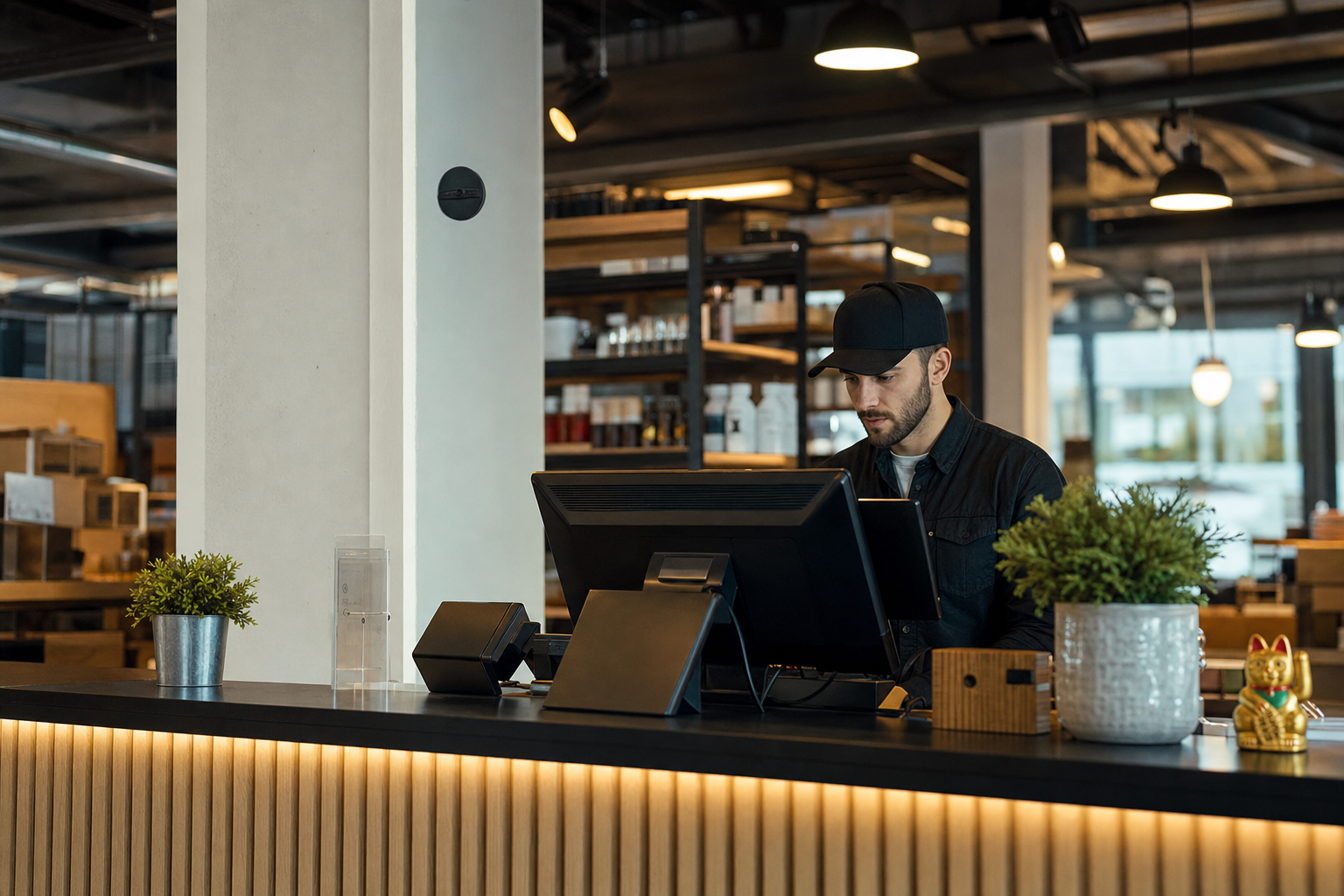
How to Choose a Hidden Camera for Small Business Security That Delivers Useful, Defensible Footage
Small business owners often shop for surveillance in a hurry. A cash discrepancy appears, stock starts disappearing, a side entrance is found unlocked after hours, or a customer complaint raises questions that nobody can answer with confidence. In that moment, the market for covert video devices looks deceptively simple: pick something small, hide it well, and let it record. In practice, that approach usually produces weak results. The camera is either too obvious, poorly placed, dependent on unstable power, blind in low light, or unable to retain footage long enough to help when a real incident is reviewed days later.
For shops, offices, reception areas, workshops, salons, storage rooms, and service counters, the right hidden camera is not the one with the most aggressive marketing claims. It is the one that fits the operational reality of the space. That means understanding what you are trying to verify, which behavior matters, how people move through the environment, what lighting conditions change across the day, and how quickly you need to access footage after an event. If your goal is loss prevention, access monitoring, or incident clarification, the camera must capture usable detail at the moment something relevant happens.
This guide focuses on choosing hidden surveillance for real business use rather than novelty appeal. We will look at coverage strategy, image requirements, remote access, storage discipline, legal boundaries, and how to build a setup that supports investigation without creating constant false confidence. If you are still comparing formats, the broader spy camera range is a useful starting point for understanding the types of devices available before narrowing down to a business-specific deployment.
Start with the business problem, not the camera shape
The first decision is not whether you want 1080p, Wi-Fi, or a particularly tiny lens. The first decision is what question the camera needs to answer. Many hidden camera projects fail because the buyer wants “general surveillance” without defining an actual investigative objective. Useful objectives are much narrower:
- Verify who accessed a back room after closing time.
- See whether stock loss occurs at a shelf, a till, or during goods handling.
- Confirm whether a cash drawer was opened outside normal transaction flow.
- Monitor a side door, loading point, or internal corridor that is not well covered by visible CCTV.
- Review customer-employee interactions when disputes arise.
- Identify repeat process failures such as missed locking procedures or unauthorized access.
Each of these goals requires different framing, different detail, and sometimes a different type of hidden device. If you need to identify a hand entering a till area, close framing matters more than broad room coverage. If you need to know who entered a storage room, the ideal viewpoint is usually at the entry path rather than inside a corner of the room. If you need to understand movement around a building exterior or stock area, an outdoor-capable device may be more relevant than a decorative indoor solution.
That is why hidden camera selection should start with a map of events, not a list of features. Draw the room. Mark entry points, sightlines, shelving height, service counters, reflective surfaces, windows, expected subject distance, and where lighting changes between opening and closing. Then define the minimum useful evidence: face, hand movement, object transfer, entry timing, or sequence of actions. Once that is clear, camera choice becomes much easier.
When a hidden camera makes sense in a small business
Visible surveillance is often the right first layer because it deters. Hidden surveillance serves a different purpose: documenting behavior that may shift when people know exactly where cameras are. In a small business, covert monitoring is typically considered in a few practical cases.
Blind spots left by visible CCTV
Many businesses already have standard security cameras covering front entrances or customer-facing areas, but gaps remain around stock rooms, side doors, temporary storage, office desks, or internal transfer points. A hidden unit can help clarify events in these neglected spaces without redesigning the whole CCTV system.
Focused investigation after repeated unexplained loss
If losses are localized and patterns suggest a specific process failure, a covert camera may be used as a time-limited tool to observe one zone more closely. This is very different from trying to secretly monitor every room all the time. The narrower the objective, the more likely the footage will be useful.
Discreet monitoring in customer-sensitive environments
Some hospitality or service spaces do not lend themselves well to adding more visible dome cameras everywhere. A carefully selected hidden device can provide incident visibility while preserving the visual feel of a reception area, consultation room entrance, or merchandise display zone, subject to local legal limits.
Temporary security during workflow changes
Renovations, staff turnover, pop-up storage areas, seasonal inventory peaks, and delivery bottlenecks create short-term vulnerabilities. A hidden camera can be deployed as a flexible measure during periods when normal security design is temporarily weakened.
For installations where discretion is the primary requirement, browsing dedicated hidden camera options can help you compare form factors that are better suited to blending into indoor business environments than conventional visible security housings.
The most common mistake: choosing for concealment alone
Business users often over-prioritize invisibility and under-prioritize image usefulness. A camera that is perfectly hidden but captures only the tops of heads, overexposed window glare, or blurred movement is not a security solution. It is just a hidden object with a lens.
Concealment matters, but it has to be balanced against four practical requirements:
- Correct angle: the camera must see the action zone, not just the room.
- Sufficient subject size: faces, hands, tills, doors, or stock movement must occupy enough of the frame.
- Lighting compatibility: morning sun, evening dimness, reflective counters, and backlit doorways must not destroy detail.
- Operational stability: power, recording, timestamps, and storage must keep working without constant intervention.
If a tiny lens can only be placed too high, too far away, or behind obstructive material, a slightly larger but better-positioned device may deliver vastly stronger evidence. In small business security, discretion should support the mission, not dominate it.
Choose the right camera type for the space
There is no single best hidden camera for every business. The right product family depends on access to power, network conditions, viewing distance, and whether you need local-only recording or remote visibility.
Mini cameras for close-range, targeted coverage
A compact covert unit is often ideal when you know exactly what needs to be seen: a till area, a drawer, a stock handover point, a door handle, or a corridor entrance. Small units are easier to conceal in shelves, displays, small fixtures, or office objects. Their limitation is that buyers often expect them to cover too much area. In reality, the smaller the lens and body, the more disciplined the placement must be. If you are comparing very compact formats, a selection of mini and nano cameras is most relevant for short-distance business monitoring where discreet placement is possible.
Wi-Fi cameras for quick access to footage and alerts
If you want to review events without physically retrieving the device, wireless access becomes attractive. A business owner may want to receive alerts, check whether staff opened a room before closing, or quickly confirm whether a delivery arrived. In that case, a wireless Wi-Fi camera can be useful, especially in premises with stable network coverage and secure access controls. However, Wi-Fi convenience should not be confused with reliability under all conditions. Weak signal, router resets, bandwidth limits, and local IT policies can all disrupt live access.
GSM or cellular cameras for remote sites and backup visibility
Some business environments do not have dependable Wi-Fi where surveillance is needed. Storage rooms in detached units, temporary kiosks, workshops, building sites, or secondary entrances may benefit more from a wireless GSM camera. Cellular-based deployment is especially useful when you need remote monitoring without relying on the site network, though data usage, signal quality, and power planning become central to performance.
Internal-memory models for simple, self-contained recording
Not every business needs live access. In some cases, a self-contained device with onboard recording is safer, simpler, and easier to manage. A strong option for short-term investigations or low-complexity deployments is an internal memory camera, particularly when you want to avoid network setup, reduce visible infrastructure, and keep the system focused on local evidence capture.
Night-capable cameras for late closing, storerooms, and low-light zones
Many incidents happen outside peak trading hours: during cleaning, stock handling, opening routines, or after close. If the camera must work in dim corridors, back rooms, or front-of-house spaces with decorative low lighting, low-light performance matters as much as daytime sharpness. For these scenarios, looking at a dedicated night vision camera category helps avoid the mistake of buying a device that looks good only under bright daytime conditions.
Outdoor-capable devices for rear access and perimeter risk
A surprising amount of small business loss begins outside the main retail space: rear deliveries, side gates, outbuildings, bins, loading doors, temporary yard storage, or perimeter movement before entry. If your risk starts beyond the interior, a discreet exterior-capable solution from the outdoor surveillance camera range may be more appropriate than forcing an indoor covert camera to survive weather, condensation, or long exposure to changing light.
Placement strategy: where hidden cameras succeed or fail
Once the camera family is chosen, placement becomes the decisive factor. A well-positioned average camera will usually beat a premium camera placed poorly. In small business security, the best positions are not always the most secret ones. They are the positions that reliably capture the evidence event.
Cover choke points, not open volume
Entrances, narrow corridors, stock-room doors, payment stations, service hatches, and handover points compress movement into predictable paths. These choke points make better targets than trying to observe an entire room from a distant corner. When people pass through a narrow area, faces stay larger in frame and movements are easier to interpret.
Watch hands and transactions, not just faces
Loss events often depend on hand activity: items being pocketed, cash being removed, drawers opened, bags placed under counters, products transferred between shelves and boxes. A camera that sees faces but misses the transaction zone may not answer the real question. In some cases, a second device focused on the action area is more useful than a wider overview.
Avoid strong backlight
Windows, glass doors, illuminated menu boards, and street-facing entrances create exposure problems. If the subject stands between a bright window and the camera, their face may become a dark silhouette. Shift the angle or height so the key action takes place against a more balanced background.
Control subject distance
The farther away the subject, the less detail remains usable, especially on compact hidden devices. For business use, the most effective hidden cameras are often installed closer than buyers first imagine, but aimed at a very specific zone. Reducing distance is frequently more valuable than upgrading resolution.
Think about normal line of sight
A hidden device should be placed where it can naturally observe activity without looking physically implausible. If the camera is disguised within an object, that object should make sense in the room and at that height. Forced concealment can create awkward angles that compromise footage.
Image quality: what actually matters for business evidence
In marketing copy, image quality is usually reduced to resolution. But businesses do not investigate incidents by counting pixels on a box. They need footage that preserves sequence, timing, recognition, and context. Several factors matter more than headline numbers alone.
Frame composition beats maximum resolution
A properly framed 1080p recording of a till area can be far more useful than a 4K wide shot from the back of the shop. If the person and action occupy only a tiny portion of the frame, extra resolution will not magically restore missing detail. Start by making the subject large enough in the image.
Dynamic range matters in mixed light
Retail and service spaces often mix daylight, ceiling LEDs, signs, screens, and reflective packaging. This creates high contrast and rapidly changing exposure. A camera that manages mixed light consistently is more valuable than one that looks impressive under ideal laboratory conditions.
Motion clarity is essential
Incidents happen in movement: passing a doorway, opening a drawer, taking an item, exchanging cash. If compression is too aggressive or shutter behavior causes blur, critical moments become hard to interpret. Review sample footage for movement, not just still frames.
Audio may help, but should not be your main plan
Some hidden cameras include sound recording, but business users should be careful here. Audio law can be stricter than video law, and ambient noise in shops or work areas often reduces intelligibility. If your case depends on visual confirmation of actions, build the deployment around visual reliability first.
Low-light performance is often underestimated
Many small businesses are not brightly lit all day. Lights dim before closing, storerooms are intentionally subdued, office corridors may rely on automatic lighting, and exterior rear-access zones can be dark for long periods. Yet buyers often test cameras in daylight and assume night use will be fine.
Low-light performance is where poor hidden cameras reveal their limitations. The image becomes noisy, motion smears, faces lose structure, and dark clothing merges into the background. In a business context, this usually matters most during the very hours when suspicious activity is likely: opening, closing, cleaning, inventory movement, and after-hours access.
Look for a solution adapted to the actual nighttime environment. That may mean infrared support, better sensor sensitivity, or strategic ambient-light preservation rather than total darkness. The goal is not cinematic night footage; it is enough clarity to reconstruct what happened, who moved where, and what object changed hands.
Field of view: wider is not always better
Wide-angle coverage is appealing because it seems to reduce blind spots. But an extremely wide field of view spreads pixels across a larger area, making distant subjects smaller and harder to identify. In small business environments, overly wide framing often creates a false sense of coverage while reducing investigative usefulness.
The better approach is to match field of view to the task:
- Narrower view: tills, safes, stock counters, drawers, door handles, inventory handover points.
- Moderate view: side entrances, short corridors, office doors, reception desks.
- Wider view: small rooms where sequence of movement matters more than close identity detail.
Rather than asking for the widest image possible, ask what must be recognizable in the frame and at what distance. Coverage without interpretable detail is rarely enough.
Power strategy: the hidden cause of failed surveillance
One of the biggest operational failures in covert surveillance is power loss. A camera can be perfectly chosen and perfectly placed, then fail during the exact window when an incident occurs because battery assumptions were unrealistic.
Battery-only setups are best for short, defined missions
If you are investigating a specific recurring event over a limited period, battery operation may be practical. But do not assume advertised autonomy reflects real use. Motion triggers, night mode, Wi-Fi access, and cold conditions all reduce runtime. In business settings, battery-only is strongest when deployment is temporary and retrieval is easy.
Continuous power is better for fixed monitoring
For long-term use near counters, offices, or stock rooms, continuous power usually offers better reliability. It reduces maintenance burden and avoids the classic problem of forgetting to recharge during a busy operating week.
Power must remain discreet and logical
If the cable path gives away the device or requires unsafe improvisation, the concealment benefit is lost. Business installations should be tidy, secure, and believable within the room layout.
Storage and retention: footage is only useful if it still exists
Businesses often discover incidents after the fact. A customer reports a problem two days later. Stock reconciliation reveals a pattern at the end of the week. A keyholder notices a door issue only after a shift change. If the camera overwrote the relevant footage or never stored it reliably, even excellent placement becomes irrelevant.
Your storage plan should answer four questions:
- How many hours or days of relevant recording do you need to retain?
- Will the device record continuously, on schedule, or only on motion?
- How quickly can you review or export footage after an event?
- What happens when storage becomes full?
For narrow, event-focused deployments, motion or scheduled recording may be enough. For high-traffic zones with constant movement, continuous recording may fill storage quickly and produce difficult review workflows. In some cases, a camera that stores locally and records only when activity occurs offers the best balance. In others, continuous recording is necessary because the event begins before motion logic triggers.
Whatever the approach, test retention in real conditions. Do not rely on estimated hours from packaging. Compression, resolution, frame rate, and scene complexity all influence actual storage life.
Remote viewing and alerts: useful, but only when designed carefully
Many owners want instant notifications and mobile access, which can absolutely be useful. But poorly designed alerting produces fatigue rather than security. If your phone vibrates all day because people are doing normal work in front of the camera, you will quickly stop paying attention.
Remote features are most valuable when they support one of three outcomes:
- Fast verification: confirming whether a door was opened or a person entered a restricted room.
- Operational awareness: checking whether a site is occupied, open, or secure.
- Priority incident response: reviewing a relevant motion alert during off-hours.
To make this practical, place cameras in zones where motion is meaningful, define active alert windows, and avoid treating every movement as an emergency. A hidden camera in a stock room might produce highly valuable after-hours alerts, while the same logic at a customer counter would be constant noise.
Legal and ethical boundaries for small business use
Covert monitoring in a workplace carries legal and ethical implications that vary by jurisdiction. Businesses should never assume that because they own the premises, any hidden recording is automatically lawful. Rules may differ based on whether the area is public-facing, staff-only, highly private, or whether audio is captured.
As a practical principle, covert surveillance should be justified, proportionate, and targeted to a genuine security or investigative need. It should not be used casually in spaces where people have a strong expectation of privacy. Bathrooms, changing areas, and similar locations are off-limits in any credible legal and ethical framework. Audio recording can also be subject to stricter restrictions than video.
For business owners, the safest path is to seek local legal guidance before deploying covert monitoring and to document the reason for use, scope of deployment, retention practices, and access controls. The narrower and more incident-focused the purpose, the easier it is to defend the measure as proportionate if questions later arise.
Scenario-based recommendations
Retail counter and till area
Prioritize a stable close view of the transaction zone, drawer access, and hand movement. Moderate field of view is usually better than a very wide shot. Good mixed-light handling matters because tills often sit near screens, signage, or windows. Local recording plus easy review is often enough unless after-hours alerts are required.
Back office and document access
Focus on door entry, desk access, cabinet opening, and item handling. Since these spaces are usually quieter and lower traffic than a shop floor, motion-based recording can be effective. Discreet placement is often easier because the environment is more controlled.
Stock room or storage area
Lighting is often poor, so low-light performance becomes critical. Place the camera where goods change hands or where entry must occur, not necessarily where the entire room is visible. If after-hours access is a concern, remote alerts may add value.
Rear entrance, loading point, or service alley
Weather resistance, lighting shifts, and signal reliability dominate this scenario. Exterior-capable devices and independent connectivity may be more important than ultra-small size. Think carefully about mounting stability and night-time detail.
Reception or client-facing desk
Use caution here. Customer-facing spaces create stronger sensitivity around privacy and transparency. If the purpose is incident clarification, the deployment must be legally justified and carefully scoped. From a technical standpoint, mixed lighting and changing subject distance are the main challenges.
How to test a hidden camera before relying on it
Never assume a camera works simply because it powers on and records a clip. A short acceptance test can prevent weeks of false confidence.
Run a realistic movement test
Have someone perform the actions you actually care about: opening a drawer, passing through a doorway, handling stock, placing items in a bag, standing at the counter, entering in low light. Review the footage on the screen you will actually use for investigation.
Test day and night separately
A camera that is adequate at noon may be nearly useless at closing time. Review footage in all expected lighting states, including partial lighting, automatic lights, and exterior spill light.
Check retention after real recording time
Leave the device recording under normal traffic conditions and then verify how much footage remains, whether timestamps are correct, and whether files are easy to retrieve.
Test power continuity
If battery-operated, measure real runtime. If mains-powered, verify that accidental unplugging, socket switching, or cable movement does not silently stop recording.
Validate placement discretion
Stand where staff, customers, or visitors would stand. If the device is meant to remain hidden, check whether it looks natural from ordinary sightlines rather than from the installer’s ideal angle.
Building a practical deployment policy
Technology alone does not create a good surveillance outcome. A business also needs a clear internal policy for who can access footage, how incidents are logged, how long recordings are retained, and when covert monitoring is reviewed or ended. Without this discipline, even technically strong footage can become difficult to trust or operationally messy.
A practical policy should define:
- The exact purpose of each hidden camera deployment.
- The areas covered and why those areas were selected.
- Who is authorized to view footage.
- How footage is exported and preserved after an incident.
- How long recordings are kept before deletion or overwrite.
- When the deployment is reassessed for necessity and proportionality.
For many small businesses, the best use of hidden cameras is temporary or highly focused. Once a specific risk is clarified or a procedural weakness is fixed, the business may no longer need the same covert setup.
When to consider newer products or discounted inventory
Some buyers want the latest release because they assume newer always means better concealment or connectivity. Others want the cheapest option because they view hidden surveillance as a temporary expense. Both instincts can be sensible, but only if evaluated against the real deployment need.
If your use case depends on updated app support, better remote features, or newer miniaturization, it can be worth checking new hidden camera releases to see whether current models solve limitations found in older designs. On the other hand, if you need a straightforward local-recording device for a tightly scoped investigation, browsing spy cameras on sale may reveal cost-effective options without compromising the core mission.
What not to buy for small business security
Some products are simply poor matches for serious commercial monitoring. Avoid cameras chosen only because they are unbelievably tiny, unbelievably cheap, or advertised with unrealistic battery or night-vision claims. Be cautious with devices that provide no clear information about storage behavior, timestamp reliability, app stability, or real operating limits. Hidden surveillance in a business should be treated as evidence infrastructure, not as a novelty gadget category.
You should also avoid buying a single camera and expecting it to solve multiple unrelated problems at once. A device optimized for a stock-room door may not be suitable for a front counter. A compact battery model may be excellent for a short test but poor for month-long fixed monitoring. Clear scope produces better results than all-purpose expectations.
Final decision framework
To choose the right hidden camera for small business security, narrow your decision with this sequence:
- Define the incident or behavior you need to verify.
- Select the exact action zone or choke point that must be seen.
- Determine whether you need local recording, remote review, or live alerts.
- Assess lighting at the actual time risk occurs, not only during daytime.
- Choose a field of view that preserves subject detail at the real distance.
- Decide on battery versus continuous power based on maintenance reality.
- Confirm storage retention under real traffic and recording settings.
- Review legal proportionality and privacy boundaries before deployment.
- Test the full setup in realistic conditions before trusting it.
When business owners follow this process, hidden cameras become much more than discreet gadgets. They become targeted tools for answering specific operational questions with reliable footage. The best hidden camera for a small business is not the most secret, the smallest, or the most heavily advertised. It is the one that fits the site, survives the workflow, respects legal limits, and records the evidence you actually need when something goes wrong.
Frequently Asked Questions
What makes a hidden camera setup actually useful for small business security?
A useful setup is built around the business problem, not just a small device. The article explains that a hidden camera should match the space, the behavior you need to verify, the lighting conditions, and how quickly footage must be accessed. It also needs to capture usable detail when something relevant happens, rather than simply being well hidden.
Should I start by choosing camera specs or by defining what I need to investigate?
Start with the question the camera needs to answer. The guide says many projects fail because buyers want general surveillance without a clear objective. A narrower goal, such as confirming who entered a back room or whether a cash drawer was opened outside normal transaction flow, makes it much easier to choose the right framing, placement, and device type.
When does a hidden camera make sense if I already have visible CCTV?
According to the article, hidden cameras are useful when visible CCTV leaves blind spots or when behavior may change if people know exactly where cameras are. They can help in stock rooms, side doors, office desks, internal transfer points, or other neglected areas without redesigning the entire visible CCTV system.
Are hidden cameras a good choice for investigating repeated unexplained loss?
Yes, the guide presents covert monitoring as a practical option when losses are localized and patterns suggest a specific process failure. In that case, a hidden camera can be used as a time-limited tool to observe one zone more closely. The article stresses that a narrow objective usually produces more useful footage than trying to monitor everything secretly.
What is the most common mistake when choosing a hidden camera for a business?
The most common mistake is choosing for concealment alone. The article warns that a perfectly hidden camera is not helpful if it records only the tops of heads, blurred movement, or heavy glare. Discretion matters, but it has to be balanced with viewing angle, subject size in frame, lighting compatibility, and stable operation.
Why can a slightly larger hidden camera be better than the smallest model available?
The guide explains that an ultra-small camera may force poor placement, such as being too high, too far away, or behind obstructive material. In those cases, a slightly larger device placed in a better position can produce much stronger evidence. For business security, the goal is useful footage, not maximum invisibility at any cost.
How do I decide what part of a room the camera should cover?
The article recommends mapping the events you need to capture. Draw the room, mark entry points, sightlines, shelving, counters, windows, reflective surfaces, subject distance, and changing light. Then define the minimum useful evidence, such as a face, hand movement, object transfer, entry timing, or sequence of actions. That process makes coverage decisions far more practical.
Is it better to cover a whole room or focus on specific choke points?
The guide says hidden cameras work better at choke points than across open volume. Entrances, narrow corridors, stock-room doors, payment stations, service hatches, and handover points compress movement into predictable paths. That usually keeps faces larger in frame and makes actions easier to interpret than a distant wide view from a room corner.
Should a hidden camera focus on faces or on hands and transactions?
It depends on the question you need answered. The article notes that many loss events depend on hand activity, such as items being pocketed, cash being removed, or products being transferred. A camera that captures faces but misses the action zone may not help. In some situations, a second camera aimed at the transaction area is more useful than a wider overview.
How important is lighting when choosing and placing a hidden camera?
Lighting is critical. The guide highlights problems such as morning sun, evening dimness, reflective counters, backlit doorways, windows, and glass doors. These conditions can wash out or hide important detail. If the subject stands in front of a bright background, the face may appear as a dark silhouette, so placement and angle need to account for changing light.
When should I choose a mini hidden camera for my business?
A mini hidden camera is best for close-range, targeted coverage. The article suggests it for areas like a till, drawer, stock handover point, door handle, or corridor entrance. These devices are easier to conceal in shelves, displays, fixtures, or office objects, but they are not ideal for trying to cover a large area from far away.
When is a Wi-Fi hidden camera the right option for a small business?
A Wi-Fi model is useful when you want quick access to footage, alerts, or live checks without physically retrieving the device. The guide gives examples like confirming whether staff opened a room before closing or whether a delivery arrived. However, it also warns that weak signal, router resets, bandwidth limits, and local IT policies can affect reliability.
What kind of business locations are better suited to a GSM or cellular camera?
The article points to detached storage rooms, temporary kiosks, workshops, building sites, and secondary entrances as examples where dependable Wi-Fi may not be available. In those situations, a GSM or cellular camera can provide remote monitoring without relying on the site network. The guide notes that signal quality, data usage, and power planning then become especially important.
Why might an internal-memory hidden camera be a better fit than a connected model?
The guide says not every business needs live access. A self-contained camera with onboard recording can be safer, simpler, and easier to manage for short-term investigations or low-complexity deployments. It also helps avoid network setup, reduces visible infrastructure, and keeps the system focused on local evidence capture rather than remote convenience.
Do I need a night-capable hidden camera for a business interior?
If incidents may happen during cleaning, stock handling, opening routines, late closing, or in dim storerooms and corridors, then low-light performance matters. The article warns against choosing a device that only looks good in bright daytime conditions. For darker business areas, night-capable models are more suitable because daytime sharpness alone may not be enough.
Can an outdoor-capable hidden camera be a better choice than an indoor covert model?
Yes, if the risk begins outside the main business interior. The article mentions rear deliveries, side gates, outbuildings, loading doors, bins, temporary yard storage, and perimeter movement as common exposure points. In those cases, an exterior-capable solution is more appropriate than trying to force an indoor covert camera to handle weather, condensation, and changing outdoor light.