
How to Choose a GPS Tracker That Provides Reliable, Actionable Tracking
The market for the GPS tracker has expanded dramatically in recent years. What was once a niche product for fleet operators and specialist investigators is now used by businesses, vehicle owners, equipment managers, families, and security professionals. Yet one problem remains common across almost every buyer profile: many people choose a traceur GPS by looking at the wrong specifications.
They focus on headline claims such as “real-time tracking,” “strong magnet,” or “30 days battery life,” without asking the more important operational questions. How often does the device actually transmit? What happens when the vehicle enters an underground car park? How quickly can you recover an asset after an alert? Does the battery estimate assume one position report per day or one every 10 seconds? Is the device using GPS only, or GPS plus cellular triangulation and Wi-Fi assistance? Can the mounting method survive vibration, water, dust, and road grime over time?
These questions matter because a tracking device is not just a gadget. In professional use, it is part of a location intelligence workflow. A good tracking unit must do more than place a dot on a map. It must produce usable information at the right time, under imperfect conditions, with enough reliability to support decision-making. That could mean recovering a stolen vehicle, monitoring mobile equipment, confirming route discipline, protecting high-value assets, or managing duty-of-care responsibilities.
This guide takes a practical, expert-level approach to choosing a GPS locator. Instead of ranking products by marketing language alone, it explains how real-world tracking performance is shaped by update interval, network dependency, installation environment, battery strategy, alert logic, concealment constraints, and post-alert response procedures. The goal is simple: help you choose a tracking device that works in the field, not just on paper.
Whether you are selecting a hidden tracker for a vehicle, a magnetic unit for occasional deployment, a hardwired solution for long-term asset visibility, or a battery-powered beacon for equipment protection, the principles are the same. Reliable tracking comes from matching the technology to the operational reality.
Why most GPS tracker buying decisions go wrong
A surprising number of tracking failures start long before the device is deployed. They begin at the selection stage, when the buyer assumes that all trackers perform similarly and that differences are mostly about price, size, or app design. In reality, two devices that look almost identical online can behave very differently once installed.
The most common mistake is confusing position acquisition with usable tracking. A unit may be able to obtain a GPS fix in open sky during testing, but that does not guarantee consistent reporting in dense urban areas, under dashboards, inside metal asset housings, or during intermittent movement. Another frequent error is trusting battery claims without checking the reporting profile behind them. A tracker advertised with a 60-day battery life may achieve that only under very low reporting frequency, which is of little use if you need minute-by-minute movement alerts.
Buyers also tend to underestimate the role of the cellular network. Many GPS tracking devices do not send position data directly by satellite to your phone. Instead, they use satellite navigation to calculate location and then use 4G, LTE-M, NB-IoT, or older mobile networks to transmit that data to a platform. If the transmission path is weak, the quality of the user experience drops, even if the GNSS chip itself is good.
Finally, some users choose the smallest or most covert-looking model without considering servicing and operational endurance. A fully concealed tracker that cannot be recharged easily may be less effective than a slightly more visible unit that delivers stable power, better antenna orientation, and consistent alerts.
In short, the right question is not “Which GPS tracker has the best advertised features?” It is “Which tracker architecture fits my use case, my risk level, my environment, and my response plan?”
Understand what a GPS tracker really does
To choose correctly, it helps to separate the main technical layers involved in modern tracking.
1. Positioning layer
This is the part that determines where the device is. Most modern trackers use GNSS, a broader term that includes GPS as well as systems such as Galileo, GLONASS, and BeiDou. Multi-constellation support often improves acquisition speed and resilience, especially in difficult environments.
2. Communication layer
Once the position is calculated, the device typically sends it via a mobile network. This may be 4G LTE, LTE-M, NB-IoT, or in older devices 2G. This layer is essential because a tracker that cannot transmit cannot provide timely remote visibility, even if it knows where it is.
3. Power layer
The unit must be powered either by an internal battery, external battery pack, vehicle electrical system, or a hybrid arrangement. Power design influences update rate, alert frequency, installation flexibility, and maintenance burden.
4. Platform layer
The software side matters more than many buyers realize. A tracking platform determines how you view movement history, receive alerts, manage geofences, configure reporting intervals, and export data. A hardware device with poor platform support often becomes frustrating in day-to-day use.
5. Physical deployment layer
This includes enclosure quality, magnet strength, waterproofing, antenna placement, cable routing, and concealment. The physical deployment often decides whether the tracker continues working after rain, vibration, washing, or accidental inspection.
When evaluating any vehicle tracker or portable location beacon, assess all five layers together. A weakness in one can undermine the whole system.
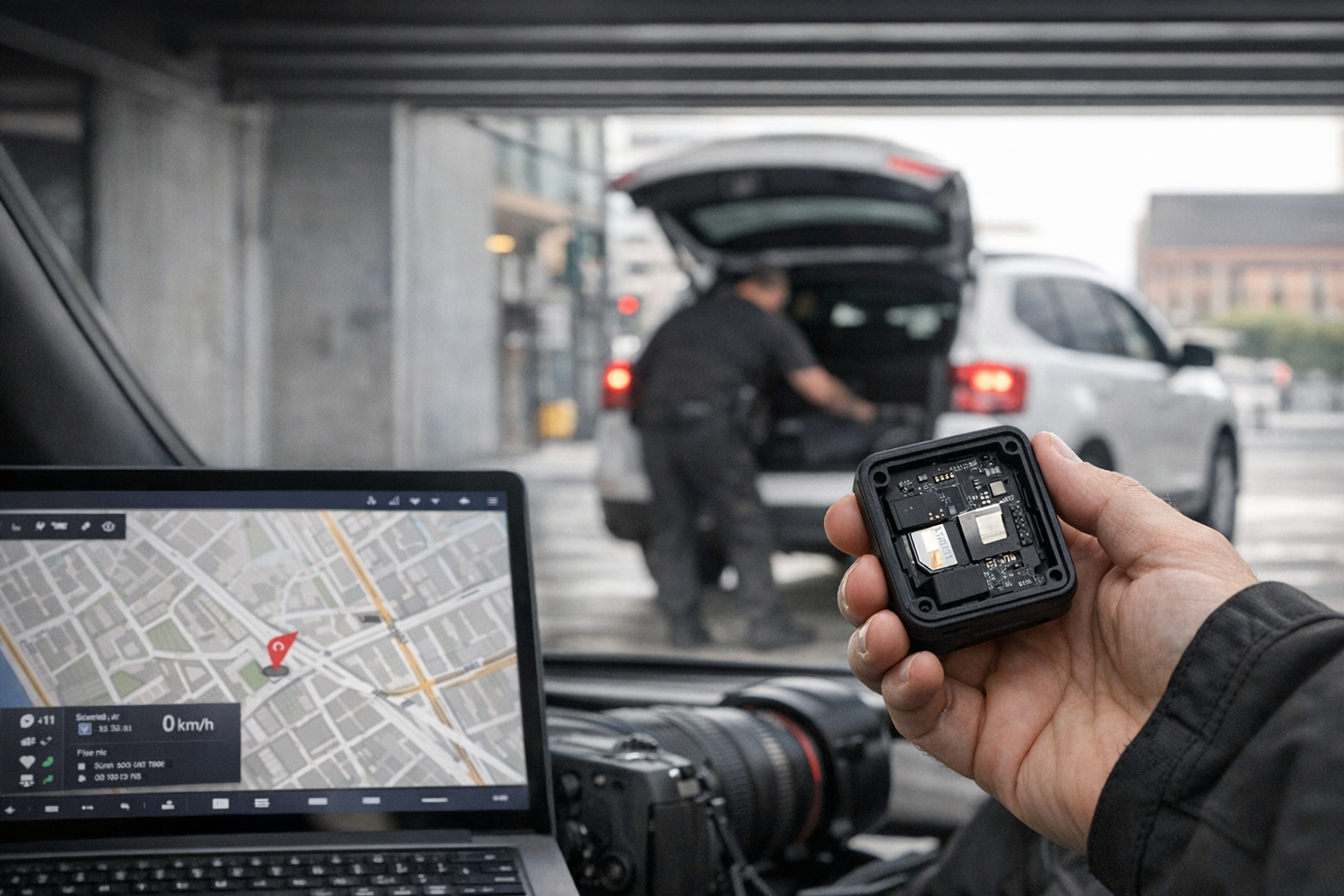
Start with the mission, not the product category
Before comparing technical specifications, define the mission in plain operational terms. This is the single best way to avoid buying the wrong device.
Ask yourself:
- What exactly am I tracking? A car, motorcycle, trailer, tool chest, generator, container, luggage, or agricultural equipment?
- Is the asset usually stationary or frequently moving?
- Do I need live pursuit visibility or only movement history?
- How quickly do I need an alert after movement starts?
- How long must the tracker operate without maintenance?
- Will it be installed openly, semi-hidden, or fully covertly?
- Will it face water, mud, vibration, impact, or extreme temperature?
- Who will respond when an alert arrives?
These questions turn a vague buying process into a defined operational requirement. For example, a private car owner worried about theft may prioritize ignition alerts, tow alerts, and fast update intervals during movement. A construction manager protecting a generator may prioritize long standby time, rugged waterproofing, and geofencing. A logistics operator may prioritize route playback, driver behavior reporting, and hardwired installation.
Without this mission-first thinking, buyers often overpay for advanced features they never use or under-specify the functions that actually matter in a real incident.
Update interval: the most misunderstood specification
If there is one parameter that most strongly shapes the usefulness of a GPS tracking device, it is the update interval. This is how often the device records or transmits a new position. Yet many users misunderstand what the number means in practice.
A unit that reports every 5 seconds during movement gives a very different operational picture than one that reports every 2 minutes. On a map, both are “real-time” in marketing language. In actual use, they are not equivalent at all.
Why update rate changes the outcome
Imagine a stolen vehicle traveling through an urban area. At 50 km/h, a 2-minute interval means the vehicle may move more than 1.5 kilometers between updates. In a dense road network, that creates ambiguity. A 10-second interval is much more actionable. It reveals turns, pauses, and likely direction of travel.
Now consider a rented trailer parked for days at a depot. In that scenario, a constant 10-second report interval is unnecessary and wasteful. Instead, a smart device might stay in low-power mode and switch to a rapid update profile only when motion is detected.
Look for configurable reporting logic
The best trackers allow different behaviors based on state:
- Sleep mode when stationary
- Wake-on-motion when movement starts
- Fast reporting during active movement
- Reduced interval when battery drops
- Scheduled check-ins for asset heartbeat visibility
This matters because a static battery claim tells you little without knowing how the tracker balances idle time and motion time. A good deployment is rarely about one fixed interval. It is about adaptive reporting aligned with operational risk.
Battery life claims: read them like a professional
Battery life is one of the most aggressively marketed aspects of the traceur GPS category. But battery numbers are easy to present in ways that sound impressive while hiding important trade-offs.
Whenever you see a claim such as “up to 90 days” or “6 months standby,” ask the following:
- How many GPS fixes per day is the estimate based on?
- How many cellular transmissions per day?
- Is motion detection active?
- Are alerts enabled?
- What network technology is used?
- What temperature range is assumed?
- Is the tracker sleeping most of the time?
A battery-powered hidden GPS tracker may last a long time in standby, but heavy movement, poor cellular reception, and frequent wake cycles can reduce endurance dramatically. Cold weather can also cut practical battery performance, especially in outdoor use.
Battery-powered vs hardwired trackers
Each has a place.
Battery-powered trackers are useful when:
- You need portability
- Installation time must be minimal
- You cannot access a power source
- You want flexible placement on different assets
- You need a magnetic tracker for temporary deployment
Hardwired trackers are better when:
- The asset has a stable power system
- You need long-term continuous tracking
- Frequent updates are required
- You want ignition status information
- You need reduced maintenance
For professional reliability, the decision should not be driven by convenience alone. A battery-powered model may be easier to deploy, but if it requires frequent recharging and you miss a critical event because the battery is flat, convenience becomes a liability.
Network dependency: why GPS alone is not enough
Many buyers still assume that a tracker sends location directly through satellites in all circumstances. That is not how most commercial consumer and professional trackers work. The device generally uses satellites to calculate position, then relies on mobile data connectivity to send that position to the platform.
This means tracking quality depends not only on satellite view but also on network conditions. A unit in a remote rural area, an underground facility, a shipping yard full of metal structures, or a border region may experience delayed uploads or cached transmissions if cellular service is weak.
What to check
- Supported bands and regions: ensure the tracker is compatible with the countries where it will operate.
- Roaming capability: critical for cross-border movement.
- Fallback behavior: can the unit store data and upload later if signal is lost?
- SIM management: is the SIM embedded, user-replaceable, or tied to a subscription?
- Network sunset risk: avoid older devices dependent on obsolete 2G networks in regions where support is declining.
For international or high-mobility use, communication architecture deserves as much attention as satellite sensitivity. A tracker with excellent GNSS performance but poor cellular support can feel unreliable in practice.
Placement and mounting: small physical details, major operational impact
A GPS tracker can fail simply because it was mounted in the wrong place. This is one of the least glamorous aspects of tracking, but one of the most important.
Signal visibility and material interference
GNSS signals are relatively weak by the time they reach the earth. Thick metal panels, enclosed machinery housings, and some vehicle structures can degrade reception significantly. A tracker hidden too deeply inside a metal environment may show longer acquisition times, inaccurate positions, or intermittent loss of fixes.
Similarly, cellular signal can be weakened by poor placement. A hidden device behind metal, near engine compartments, or inside shielded storage areas may struggle to transmit promptly.
Mounting security
For a magnetic GPS tracker, magnet quality is only part of the equation. Surface condition, curvature, vibration exposure, road spray, and installation orientation all matter. A strong magnet attached to a dirty or corroded surface is not truly secure. A waterproof case also needs the right IP rating and seal quality to survive repeated weather exposure.
Practical placement advice
- Test signal quality in the intended installation area before final deployment.
- Avoid assuming that “hidden” automatically means “effective.”
- Prioritize a balance between concealment, service access, and radio performance.
- Account for heat, moisture, and mechanical vibration.
- Re-check the mounting after initial travel to confirm stability.
In professional environments, the best placement is often the one that offers consistent performance and maintainability, not the one that is theoretically the most secret.
Environmental conditions: where many trackers are overestimated
A tracker that works perfectly in office testing may perform poorly in the field if environmental factors were not considered. Outdoor and industrial tracking introduces stresses that cheap consumer-grade units may not handle well.
Weather exposure
Rain, standing water, road spray, snow, and condensation can all affect a tracker. If you are deploying on vehicles, trailers, boats, or external equipment, enclosure quality matters. Look beyond generic “water resistant” wording and verify actual design credibility.
Temperature extremes
Battery chemistry suffers in cold conditions, while heat can accelerate degradation and affect electronics over time. Units installed in engine-adjacent zones, direct sun, or freezing outdoor sites need suitable operating tolerances.
Vibration and shock
Construction equipment, off-road vehicles, motorcycles, generators, and agricultural machines create vibration patterns that can loosen poor mountings or stress internal components. Ruggedized design is not a luxury in these contexts.
Dust and contaminants
Industrial debris, mud, fuel vapors, and fine dust can damage ports and seals. If the tracker requires regular charging, pay attention to connector durability and protective caps.
The lesson is straightforward: do not choose a location tracker based only on electronic specs. The enclosure and mounting system are part of the tracking system.
Alerting and geofencing: where tracking becomes operationally useful
Location history is valuable, but the real power of a well-configured GPS tracking solution often lies in alerts. Alerts turn passive monitoring into actionable security intelligence.
Core alerts worth considering
- Movement alert: notifies when a stationary asset begins to move
- Geofence exit or entry: useful for yards, job sites, depots, and restricted zones
- Ignition alert: relevant for hardwired vehicle trackers
- Tow alert: helps detect unauthorized relocation
- Low battery alert: essential for battery-powered devices
- Offline alert: warns when the device stops checking in
- Tamper alert: available on some advanced systems
However, not all alerts are equally useful in every scenario. Poorly designed alerting creates fatigue, and alert fatigue is dangerous. If users receive too many irrelevant notifications, they start ignoring the ones that matter.
Build alerts around response capability
If no one can act on a midnight movement alert within minutes, then the configuration should reflect that reality. Some organizations need immediate push notifications to a control room. Others need scheduled summaries plus only high-priority exceptions. The best setup is the one that matches your operational response capacity.
Geofencing is especially effective when it is carefully scoped. A geofence around a storage yard, rental area, or maintenance base can reduce unnecessary monitoring and focus attention on meaningful movement. Good security design is often about relevance, not maximum notification volume.
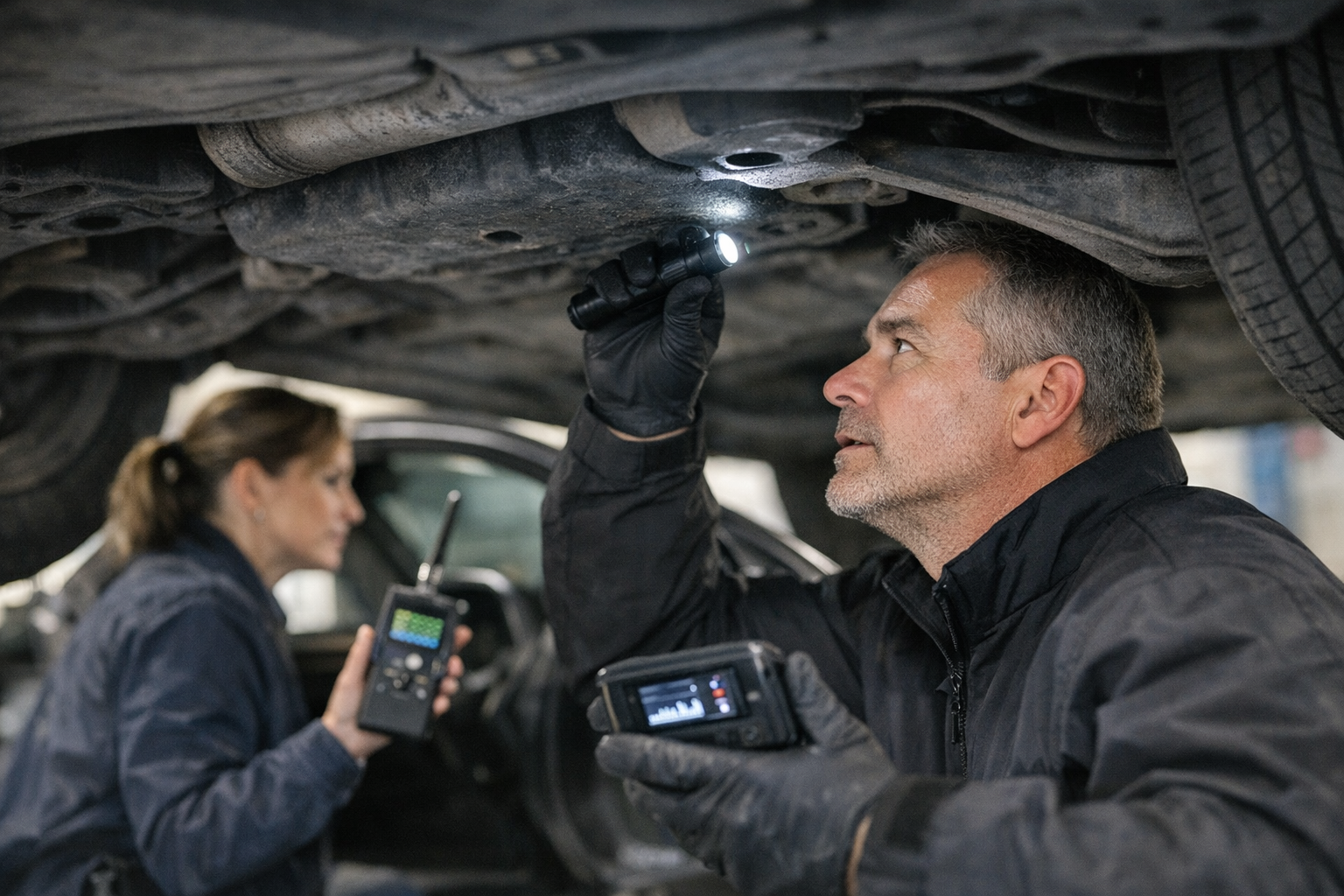
Recovery workflow: the missing half of GPS tracking
Buying a tracker without planning the recovery workflow is like buying a fire alarm without defining evacuation procedures. The device is only the first half of the solution.
When an alert occurs, what happens next?
- Who receives the first notification?
- Who validates whether the movement is authorized?
- Who has platform access?
- Is there a secondary contact if the primary person is unavailable?
- How quickly can the latest position be checked?
- Are law enforcement or recovery partners involved where appropriate?
- Is historical route data easy to export or share?
These practical steps determine whether a car GPS tracker or asset beacon contributes to a successful outcome. In theft scenarios, minutes matter. In fleet and equipment management, clarity and accountability matter.
A simple professional workflow
- Alert received
- Movement or geofence breach verified against authorized use
- Latest live position checked
- Historical path reviewed for context
- Response party informed
- Escalation initiated if required
- Tracker status monitored until resolution
Even basic users benefit from documenting this process in advance. A tracking device delivers the most value when response is structured and immediate.
Use-case based recommendations
The right tracker depends heavily on what you are trying to protect. Below are practical scenarios that illustrate how selection criteria change by mission.
Vehicle theft protection for private owners
For private cars and motorcycles, the priority is often early theft detection and location visibility during movement. A hardwired tracker can be a strong option for a regularly used vehicle because it supports stable power and frequent updates. For motorcycles or special vehicles where wiring is less practical, a compact battery-powered unit may be suitable if maintenance is realistic.
Key priorities include:
- Fast movement alerts
- Reliable mobile connectivity
- Good map playback
- Low battery or offline notifications
- Installation that balances concealment with signal quality
Trailer and caravan protection
These assets are often stationary for long periods and then moved unexpectedly. Here, ultra-fast continuous reporting is less important than low standby drain, strong wake-on-motion behavior, and geofence breach alerts. Waterproofing and secure external mounting may matter more than app sophistication.
Construction and industrial equipment
Generators, compressors, mini excavators, containers, and mobile tool stores often operate in harsh environments. The ideal tracker should be rugged, weather-resistant, vibration-tolerant, and configured for movement detection plus periodic health reporting. Long battery life can be important, but only if it does not compromise event visibility when theft or relocation occurs.
Fleet and company vehicle oversight
In fleet use, the challenge is not hiding the device but ensuring dependable, continuous operational data. Hardwired power, ignition reporting, route history, and scalable platform management become central. The best system is one that produces clean reports and manageable alerts across multiple vehicles, not simply the smallest tracker.
Temporary covert deployment
Some scenarios require a discreet, short-term portable GPS tracker. In these cases, rapid deployment, quiet operation, magnetic attachment, and battery endurance over the planned timeframe are essential. But temporary deployment still requires proper test placement, battery checks, and a clear recovery plan.
What separates consumer-grade from professional-grade tracking
Not every user needs a top-tier professional platform, but it is useful to understand the difference between low-cost entry devices and more serious tracking systems.
Consumer-grade strengths
- Lower upfront cost
- Simpler apps
- Easy basic setup
- Suitable for casual monitoring
Consumer-grade weaknesses
- Less reliable network support
- Optimistic battery claims
- Limited configuration flexibility
- Weaker alert logic
- Lower build quality
- Less robust platform history and export functions
Professional-grade strengths
- Better hardware consistency
- More stable firmware and server support
- Advanced alert profiles
- Configurable reporting logic
- Improved enclosure durability
- Better support for multi-asset management
In practice, professional-grade value is not just about better electronics. It is about predictability. A professional user wants the tracker to behave consistently, month after month, under realistic conditions.
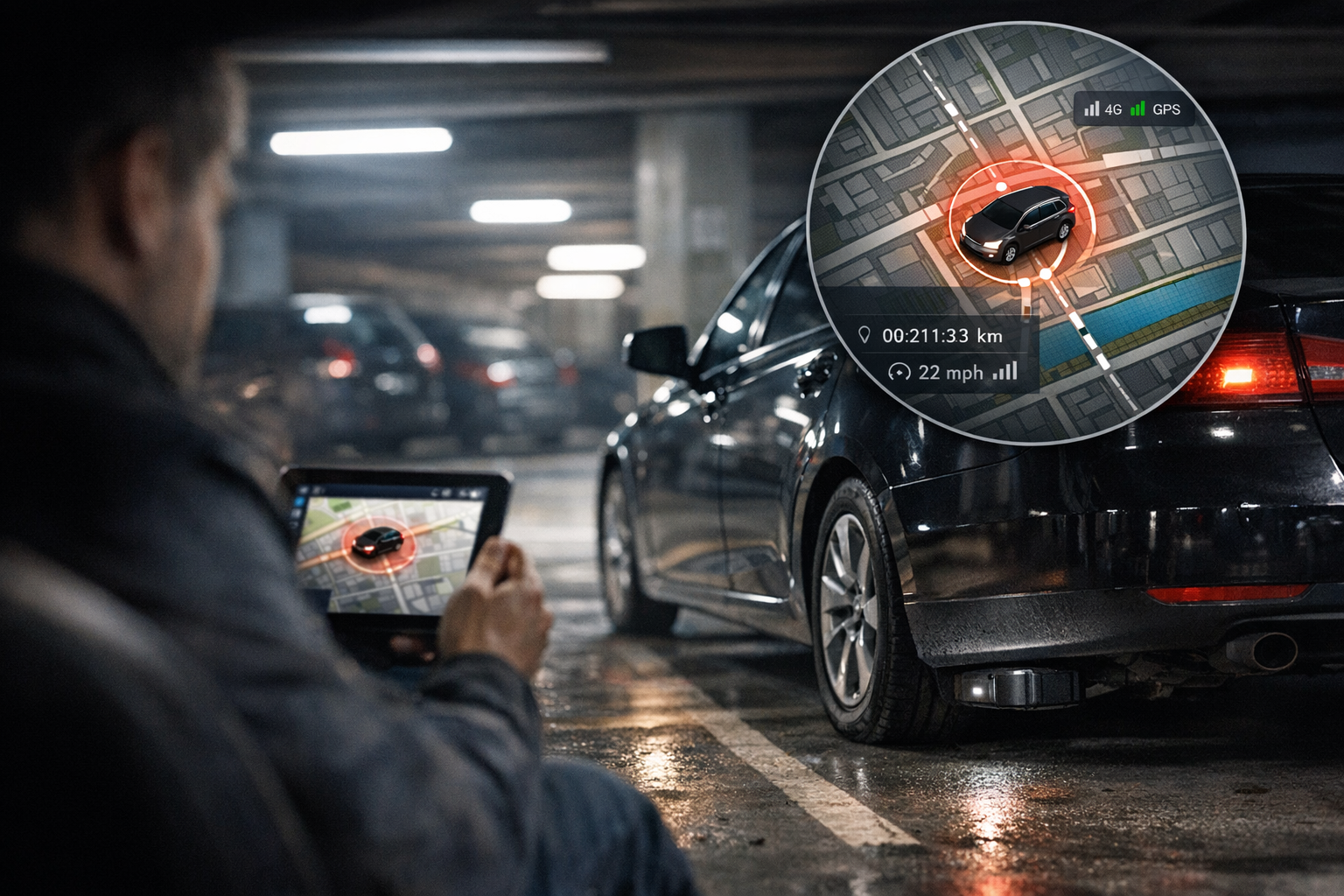
Questions to ask before buying any GPS tracker
If you want to evaluate a product seriously, ask these questions before purchasing:
- How often can it report during movement?
- Can the interval change automatically based on motion or ignition?
- What is the realistic battery life under my actual reporting profile?
- What mobile networks does it support in my region?
- Does it store positions if coverage is lost?
- How rugged is the enclosure?
- How is it mounted and how secure is that mounting in vibration and weather?
- What alerts are available and how configurable are they?
- How easy is it to share or export tracking history?
- What happens if the device goes offline?
- How often will I realistically need to recharge or service it?
- Is the platform subscription transparent and sustainable?
These questions reveal far more about real suitability than product photos or inflated marketing phrases.
Common mistakes that reduce tracking reliability
Even a good device can disappoint if the deployment is poor. Here are some of the most common mistakes professionals see in the field.
Choosing by battery size alone
A bigger battery is helpful, but not if the device lacks efficient motion logic, reliable communication, or a suitable mounting strategy.
Ignoring test installation
Always perform a live test in the actual installation area. Map visibility, update timing, and signal stability should be checked before relying on the system.
Over-concealing the tracker
Excessive concealment can degrade GNSS and cellular performance. A hidden tracker is only useful if it still works reliably.
Failing to plan maintenance
Battery-powered devices need recharge schedules. Hardwired devices need installation checks. Magnets and enclosures need inspection after harsh exposure.
Using default alert settings forever
Initial settings are rarely ideal. Fine-tune after observing real-world behavior for several days or weeks.
Relying on outdated networks
Legacy 2G-dependent units may become problematic as network support changes. Long-term buyers should think ahead.
How to evaluate a tracker during the first week of use
The first week after installation is the right time to confirm whether the tracker matches its intended role.
Run a structured field test
- Check startup acquisition time in open sky and in the real mounting position
- Drive or move the asset through urban and weak-signal areas
- Compare actual update intervals with configured settings
- Verify movement alerts and geofence alerts
- Test platform usability from both phone and desktop if relevant
- Inspect battery consumption over real usage patterns
- Review whether the route history is detailed enough for your needs
This early validation period allows you to correct placement, adjust reporting frequency, and refine alert logic before the device is needed in a real incident.
Legal and ethical reminder
Although this guide focuses on technical and operational selection, buyers should remember that the use of a GPS surveillance device can be subject to local law, privacy rules, employment obligations, and property rights. The legality of placing a tracker on a vehicle, company asset, or personal item depends on jurisdiction and context. Professional deployment should always be aligned with applicable law and internal policy. This is particularly important in workplace monitoring, shared vehicles, family contexts, and any scenario involving third-party privacy expectations.
From a security perspective, legal compliance is not separate from good practice. An improperly deployed tracker can create liability, undermine evidence value, and damage trust.
Final selection framework: the five-factor method
If you want a simple expert framework for choosing the right traceur GPS, use these five factors:
1. Mission fit
What outcome do you need: theft recovery, route visibility, equipment protection, or temporary tracking?
2. Reporting logic
How often must the device update, and can it adapt intelligently to movement and idle states?
3. Power reality
Will battery maintenance be practical, or do you need hardwired continuity?
4. Deployment environment
Can the tracker survive the weather, vibration, and mounting conditions it will actually face?
5. Response workflow
When an alert occurs, do you have the people, permissions, and process to act on it quickly?
Any product that scores well across these five factors is far more likely to deliver value than one chosen for size, price, or marketing claims alone.
Conclusion
A high-performing GPS tracker is not defined by the boldest advertisement or the longest standby figure on a product page. It is defined by whether it can deliver timely, reliable, actionable location data under the conditions that matter to you. That depends on far more than simply having a GNSS chip inside the device.
To choose well, start with the mission. Then assess update interval, power strategy, cellular dependency, mounting method, environmental durability, alert configuration, and response workflow as one integrated system. This approach is what separates casual gadget buying from professional security planning.
For vehicle protection, equipment monitoring, fleet oversight, or asset recovery, the best GPS locator is the one that remains dependable when conditions are imperfect: when coverage drops, when the weather turns, when the battery ages, when the asset starts moving unexpectedly, and when someone needs to make a fast decision based on the data.
If you evaluate trackers through that real-world lens, you will avoid the most common purchasing mistakes and select a device that does what it is supposed to do: not just show dots on a map, but support clear, practical, security-oriented action.
Frequently Asked Questions
Why do many people choose the wrong GPS tracker?
Many buying mistakes start when people focus on headline claims instead of real operating conditions. Features like “real-time tracking,” magnet strength, or long battery life can sound impressive, but they do not explain how the device performs in poor signal areas, during frequent movement, or after an alert. The guide stresses that the right choice depends on use case, environment, power strategy, and response plan rather than marketing language alone.
What should matter more than advertised “real-time tracking”?
The article explains that buyers should look at practical questions behind the claim. Key points include how often the tracker actually transmits, what happens when it enters places like underground car parks, whether it can still help you recover an asset quickly, and how it behaves when signal conditions are poor. “Real-time” can describe very different update intervals, so it is not enough on its own.
What does a GPS tracker need to deliver besides a dot on a map?
According to the guide, a good tracker must provide usable information at the right time and under imperfect conditions. It should be reliable enough to support decisions such as recovering a stolen vehicle, monitoring equipment, checking route discipline, protecting valuable assets, or meeting duty-of-care needs. In other words, effective tracking is about actionable location intelligence, not just displaying a position.
Why is it risky to assume all GPS trackers work similarly?
The article warns that two trackers that look nearly identical online can behave very differently once installed. One may obtain a location in open-sky testing but perform poorly in dense urban areas, under dashboards, or inside metal housings. Differences in communication, power design, platform support, and physical deployment can all affect actual field performance, which is why product appearance and price are not enough.
Why can battery life claims be misleading on GPS trackers?
Battery figures often depend on very light usage profiles that may not match your needs. A tracker advertised with long battery life may only achieve that with very few GPS fixes or transmissions each day. If you need regular movement alerts or faster updates, actual endurance can drop sharply. The guide recommends checking how many reports, alerts, and wake cycles are assumed behind any battery claim.
Does a GPS tracker send its location directly to your phone through satellites?
Usually not. The guide explains that most trackers use satellite systems to calculate their location, then rely on a mobile network to transmit that location to a tracking platform. That means tracking quality depends on both positioning and cellular connectivity. Even a device with a good GNSS chip may feel unreliable if the transmission path is weak or interrupted.
What are the five main layers to assess when choosing a GPS tracker?
The article breaks tracker evaluation into five layers: positioning, communication, power, platform, and physical deployment. Positioning determines where the device is, communication sends the data, power affects endurance and reporting, platform controls visibility and alerts, and physical deployment covers enclosure, mounting, waterproofing, and concealment. A weakness in any one of these layers can reduce the effectiveness of the whole system.
Why should you start with the mission instead of the product category?
The guide says defining the mission in plain operational terms is the best way to avoid buying the wrong tracker. You should identify what is being tracked, how often it moves, how fast alerts must arrive, how long it must work without maintenance, and who will respond to notifications. This helps match the technology to the real need instead of choosing based on generic categories or features.
What operational questions should you ask before buying a GPS tracker?
The article recommends asking what asset you are tracking, whether it is mostly stationary or frequently moving, whether you need live pursuit visibility or just movement history, how quickly alerts must arrive, how long the device must operate without maintenance, and whether installation will be open or covert. You should also consider weather, vibration, impact, and who will act when an alert is triggered.
Why is the update interval so important in real-world tracking?
The guide describes update interval as one of the most important factors shaping usefulness. It determines how often the device records or transmits a position. A tracker reporting every few seconds gives a much clearer picture of movement than one updating every two minutes. In theft or pursuit situations, this difference can affect whether movement is understandable and actionable or too delayed to be useful.
How can different update rates change the outcome during a theft?
The article gives a practical example of a stolen vehicle moving through an urban area. At 50 km/h, a two-minute interval can leave more than 1.5 kilometers between updates, creating uncertainty on a dense road network. A 10-second interval gives a far more useful picture, showing likely direction, turns, and pauses. This illustrates why two devices marketed as “real-time” may perform very differently in practice.
Do all assets need the fastest possible reporting interval?
No. The guide explains that the right interval depends on the mission. For a parked trailer sitting for days, a constant 10-second reporting rate would waste power without adding much value. In that case, a smarter approach is for the tracker to stay in low-power mode and switch to rapid updates only when motion is detected. Useful tracking depends on matching reporting logic to operational risk.
What configurable reporting features are worth looking for?
The best trackers, according to the article, can adapt behavior based on state. Helpful options include sleep mode when stationary, wake-on-motion when movement starts, faster reporting during active movement, reduced intervals when battery is low, and scheduled check-ins for heartbeat visibility. These features matter because a good deployment is rarely about one fixed interval; it is about reporting that adjusts to real conditions and priorities.
What should you verify when a tracker claims “up to 90 days” or similar battery life?
The guide advises checking the assumptions behind the claim. Important questions include how many GPS fixes and cellular transmissions are included per day, whether motion detection is active, whether alerts are enabled, what network technology is being used, what temperatures are assumed, and whether the device spends most of its time sleeping. Without that context, a headline battery number tells you very little.
When is a battery-powered GPS tracker a good choice?
The article says battery-powered trackers are useful when you need portability, minimal installation time, no access to a power source, flexible placement across different assets, or a magnetic tracker for temporary deployment. They are practical in situations where wiring is not possible or where the tracker may need to be moved. However, their convenience must still be weighed against recharge frequency and maintenance demands.
When is a hardwired GPS tracker a better option?
Hardwired trackers are better when the asset has a stable power system and you need long-term continuous tracking. The guide also highlights them for cases where frequent updates are required, ignition status information is useful, and reduced maintenance is important. If reliability over time matters more than deployment simplicity, hardwired installation can be a stronger fit than a battery-powered model.
Why is network dependency just as important as satellite positioning?
The article makes clear that GPS alone is not enough for most commercial trackers. After calculating position, the unit still needs mobile connectivity to upload data to the platform. In remote areas, underground sites, metal-heavy yards, or border regions, weak cellular service can delay or interrupt updates. That means overall user experience depends on communication architecture as much as satellite performance.
What network-related checks should you make before choosing a tracker?
The guide recommends checking supported bands and regions to ensure compatibility where the tracker will operate. Roaming capability is important for cross-border movement. You should also review fallback behavior, such as whether the tracker can store data and upload later if signal is lost, understand how SIM management works, and avoid older devices that rely on declining 2G networks in areas where support is fading.
How can poor placement cause a GPS tracker to fail?
The article notes that trackers can fail simply because they are mounted in the wrong place. Thick metal panels, enclosed machinery housings, and some vehicle structures can weaken GNSS reception and cellular transmission. If the device is hidden too deeply inside a metal environment, it may acquire fixes slowly, report inaccurate positions, or transmit inconsistently. Placement affects reliability more than many buyers expect.
What should you consider when using a magnetic GPS tracker?
The guide explains that magnet strength alone does not guarantee secure mounting. Surface condition, curvature, vibration exposure, road spray, and installation orientation also matter. A powerful magnet on a dirty or corroded surface may still be unreliable. If the tracker is exposed to weather, enclosure quality and seal design matter too. For dependable use, mounting must be assessed as part of the whole tracking system.
What practical placement advice does the guide give for GPS trackers?
The article recommends testing signal quality in the intended installation area before final deployment instead of assuming a hidden position will work well. It also advises balancing concealment with service access and radio performance, accounting for heat, moisture, and vibration, and re-checking the mounting after initial travel. In professional use, the best location is often the one that supports consistent performance and easy maintenance.
Why do environmental conditions matter so much for tracker performance?
A tracker that works well in office testing may perform poorly in the field if environmental stress was ignored. The guide points to rain, standing water, road spray, snow, condensation, heat, cold, vibration, shock, dust, mud, and industrial contaminants as common challenges. These factors can affect batteries, seals, connectors, and internal components, so enclosure quality and ruggedness are part of the real performance picture.
How can weather and temperature affect a GPS tracker?
The article explains that outdoor exposure can challenge both the enclosure and the power system. Rain, spray, snow, and condensation can affect a device if protection is inadequate. Cold weather can reduce practical battery performance, while heat can accelerate degradation and stress electronics over time. This is especially important for trackers installed outside, near engines, or in direct sun or freezing outdoor conditions.
Why are vibration, dust, and contaminants important in tracker selection?
The guide highlights that construction equipment, motorcycles, generators, agricultural machines, and off-road vehicles create vibration and shock that can loosen poor mountings or stress internal parts. Dust, mud, fuel vapors, and industrial debris can also damage ports and seals. If a tracker needs regular charging, connector durability matters even more. In these environments, ruggedized design is not optional if you want reliable long-term use.
What types of alerts make a GPS tracker more operationally useful?
The article lists several core alerts that can turn passive monitoring into actionable tracking. These include movement alerts when a stationary asset starts moving, geofence entry or exit alerts, ignition alerts on hardwired vehicle units, tow alerts for unauthorized relocation, low battery alerts, offline alerts when check-ins stop, and tamper alerts on some advanced systems. The value comes from configuring the right alerts for the use case.
Why can too many tracker alerts become a problem?
The guide warns that poorly designed alerting creates alert fatigue. When users receive too many irrelevant notifications, they begin ignoring them, including the important ones. This reduces the practical security value of the system. Good alerting is therefore not about sending the maximum number of notifications, but about setting relevant triggers that align with the risks you actually need to monitor and the actions users can realistically take.
How should alert settings match your response capability?
According to the article, alert configuration should reflect who can act and how quickly. If nobody can respond to a midnight movement alert within minutes, the setup should take that into account. Some operations need immediate push alerts to a control room, while others need only scheduled summaries plus high-priority exceptions. The best alert strategy is the one that fits actual operational response capacity.
When is geofencing especially useful on a GPS tracker?
The guide says geofencing works best when it is carefully scoped around meaningful locations such as storage yards, job sites, depots, rental areas, or maintenance bases. This helps reduce unnecessary monitoring and focuses attention on movement that really matters. Instead of watching everything all the time, users can rely on geofence events to highlight unauthorized exits or relevant arrivals in defined zones.
Why is the recovery workflow just as important as the tracker itself?
The article argues that buying a tracker without planning what happens after an alert leaves the job half done. A device may detect movement, but value only appears when someone receives the alert, checks whether it is authorized, reviews the latest and historical positions, and takes action. In theft cases, minutes matter, so a structured response process is essential if the tracker is to support a successful outcome.
What questions should be answered in a tracker recovery workflow?
The guide recommends deciding in advance who receives the first notification, who verifies whether the movement is authorized, who has access to the platform, whether there is a backup contact, how quickly the latest position can be checked, and whether route history can be exported or shared. It also asks whether law enforcement or recovery partners are involved where appropriate. These details shape whether alerts lead to action.
What is a simple professional workflow after a tracking alert?
The article outlines a straightforward sequence: receive the alert, verify movement or geofence breach against authorized use, check the latest live position, review the historical path for context, inform the response party, escalate if required, and keep monitoring the tracker status until resolution. Even for basic users, documenting this process in advance helps turn tracking data into faster, clearer, and more effective decisions.