
Cart
0
How to Choose a Spy Microphone That Records Clear, Usable Audio
Buying a spy microphone sounds simple until you listen to the recordings. On paper, many covert audio products appear impressive: long battery life, high-capacity storage, compact design, voice activation, and “long range” claims. In practice, however, the difference between a useful hidden audio recorder and a disappointing gadget often comes down to one question: can it capture intelligible speech in the real environment where it will actually be used?
That is the real standard professionals care about. Not whether a device can technically record sound, but whether it can preserve enough clarity to identify speakers, understand key phrases, and maintain a reliable audio timeline. A recording filled with air conditioning hum, fabric rustle, vibration noise, clipped voices, or over-compressed audio may be nearly useless for review, documentation, or evidence support.
This is why choosing a covert microphone should start with the acoustic environment, not with marketing language. A small office is different from a moving car. A quiet hallway is different from a restaurant. A recorder hidden in a bag behaves differently from one placed on a shelf or mounted near a hard surface. The room, distance, concealment method, and expected speech level all shape the result far more than most buyers realize.
In this expert guide, we will look at how to select a hidden microphone or discreet audio recorder based on actual recording conditions. We will cover microphone sensitivity, directionality, noise floor, compression, battery management, recording triggers, concealment trade-offs, and realistic expectations for range. We will also explain the common mistakes that cause poor recordings and the practical setup choices that consistently improve results.
If your goal is to capture clear speech rather than vague sound, this article will help you make a smarter choice.
Why speech intelligibility matters more than raw audio pickup
Many first-time buyers assume a stronger microphone automatically means better performance. In reality, a microphone that picks up more sound is not always better. It may also capture more fan noise, traffic rumble, keyboard impact, clothing friction, electrical buzz, and reverberation. For covert audio, the objective is not maximum sensitivity in isolation. The objective is the best balance between speech pickup and unwanted noise rejection.
Speech intelligibility depends on several factors working together:
- Distance between the speaker and the microphone
- Background noise level in the environment
- Room acoustics, including echo and hard reflective surfaces
- Microphone placement and whether the device is obstructed
- Microphone type, including omnidirectional or directional capture
- Recording format and compression level
- Mechanical isolation from vibration and handling noise
- Power stability and storage reliability over time
A hidden audio recorder that performs well in a quiet conference room may fail in a vehicle cabin. A tiny covert microphone concealed inside a soft object may lose clarity because fabric attenuates high frequencies, which are important for understanding consonants. Likewise, a recorder placed too close to a hard wall may emphasize reflections that blur speech.
This is why professionals evaluate the recording scenario first. Product selection comes second.
SPY MICROPHONES
Start with the environment, not the device
Before comparing models, define where and how the recorder will be used. This alone narrows the correct category dramatically.
Quiet rooms
In a quiet office, meeting room, study, or bedroom, you typically have lower ambient noise and more predictable speech levels. In these conditions, a compact hidden audio recorder with good microphone sensitivity and moderate storage compression may work very well, even if it is physically small. Placement usually matters more than raw specifications.
Key concerns in quiet rooms include:
- Clock ticking, HVAC noise, and distant exterior noise
- Reverberation from hard floors or empty walls
- Obstruction from books, drawer panels, or decorative materials
- Battery life for long unattended sessions
Noisy indoor spaces
Restaurants, reception areas, warehouses, retail spaces, and shared offices are much more demanding. These environments often contain overlapping voices, music, fans, movement, and equipment noise. Here, the main challenge is not whether the microphone can record sound, but whether the target speech remains distinguishable from the acoustic clutter.
In these scenarios, buyers should prioritize:
- Closer placement to the expected speaker position
- Better microphone tuning for speech frequencies
- Stable mounting to reduce structure-borne noise
- Higher-quality recording rather than excessive compression
Vehicles
Cars are among the most misunderstood environments for covert audio. People assume the cabin is small, so any recorder will work. In reality, vehicles create a difficult mix of road rumble, engine vibration, air vents, indicator clicks, seat movement, and changing speaker orientation. A device hidden poorly inside a compartment may pick up more mechanical resonance than conversation.
In vehicle recording, the best results usually come from:
- Mounting that minimizes vibration transfer
- Placement away from vents and loose plastics
- Using voice activation carefully, since road noise may trigger constant recording
- Testing with the engine off, idling, and moving
Outdoor or semi-outdoor locations
Wind is the main enemy of intelligible audio outdoors. Even a light breeze can overwhelm speech on a miniature microphone. Clothing movement, foliage rustle, traffic, and changing orientation also reduce reliability. In general, covert microphones are not ideal for long-range outdoor speech capture unless placement is very close and well sheltered.
This is where realistic expectations are essential. Marketing language often overstates practical range. Outdoors, distance degrades usable speech much faster than buyers expect.
The biggest myth in this market: “long-range” recording claims
One of the most common misconceptions in the spy microphone category is the idea that a small device can clearly capture conversation from far away simply because the specification mentions a range number. These figures are often theoretical, poorly defined, or based on favorable conditions that do not resemble normal use.
Audio does not work like a zoom camera lens. A microphone does not selectively enlarge a voice at distance while ignoring everything else. As the source gets farther away, the target voice becomes weaker relative to ambient noise and reflected sound. This reduces speech intelligibility quickly.
When evaluating “range,” ask the following:
- Is the claimed distance for detecting sound or understanding speech?
- Was the test done in a quiet room or a real environment?
- Was the speaker facing the microphone directly?
- Was the microphone exposed or concealed inside an object?
- What recording bitrate or format was used?
A more useful way to think about range is this: for covert audio, placement beats specifications. A well-placed recorder two meters from the speaker will often outperform a “high sensitivity” device placed six meters away behind clutter or inside an acoustically poor hiding spot.
Understanding microphone sensitivity without being misled
Microphone sensitivity describes how efficiently the microphone converts acoustic pressure into an electrical signal. Higher sensitivity can be beneficial when speech is quiet or distant, but it is not automatically desirable in every scenario. If the environment is noisy, a highly sensitive microphone may capture too much irrelevant sound, making the recording less useful.
What matters is not sensitivity alone, but sensitivity in relation to:
- The expected speech volume
- The noise floor of the recorder electronics
- The distance from the speaker
- The acoustic obstruction created by concealment
- The gain structure and internal processing of the device
Many budget devices advertise strong sensitivity but pair it with poor preamps or aggressive automatic gain control. The result can be hiss, pumping, clipping, or unnatural changes in volume. A better-engineered recorder may seem less impressive in raw marketing terms yet deliver far clearer speech.
For buyers, the practical takeaway is simple: choose a recorder designed for speech capture in realistic conditions, not just one that claims to hear from the greatest distance.
Omnidirectional vs directional microphones in covert audio
Another critical decision involves microphone directionality. This affects how the microphone responds to sound coming from different angles.
Omnidirectional microphones
An omnidirectional microphone captures sound from all directions. This is the most common design in miniature hidden recorders because it is compact, practical, and forgiving in terms of orientation. If the speaker may move around the room or change position, omni pickup can be advantageous.
Benefits include:
- More flexible placement
- Less risk of missing a speaker due to orientation
- Natural capture in small rooms
- Simpler concealment inside everyday objects
Limitations include:
- More background noise pickup
- Less focus on a specific voice source
- Reduced advantage in noisy environments
Directional microphones
A directional microphone is designed to favor sound from one direction more than others. In theory, this can improve focus on a target speaker. In practice, covert use introduces constraints: the microphone must be aimed correctly, the device may be harder to conceal, and off-axis speech may become weak or unnatural.
Directional pickup can help in:
- One-sided room coverage where the speaker location is predictable
- Fixed installations with controlled orientation
- Reducing some lateral ambient noise
But it can also fail when:
- The speaker moves unpredictably
- The microphone is hidden at an awkward angle
- Reflections dominate the room acoustic
For most small concealed installations, omnidirectional microphones remain more practical. Directional designs are more useful when the environment and placement are controlled.
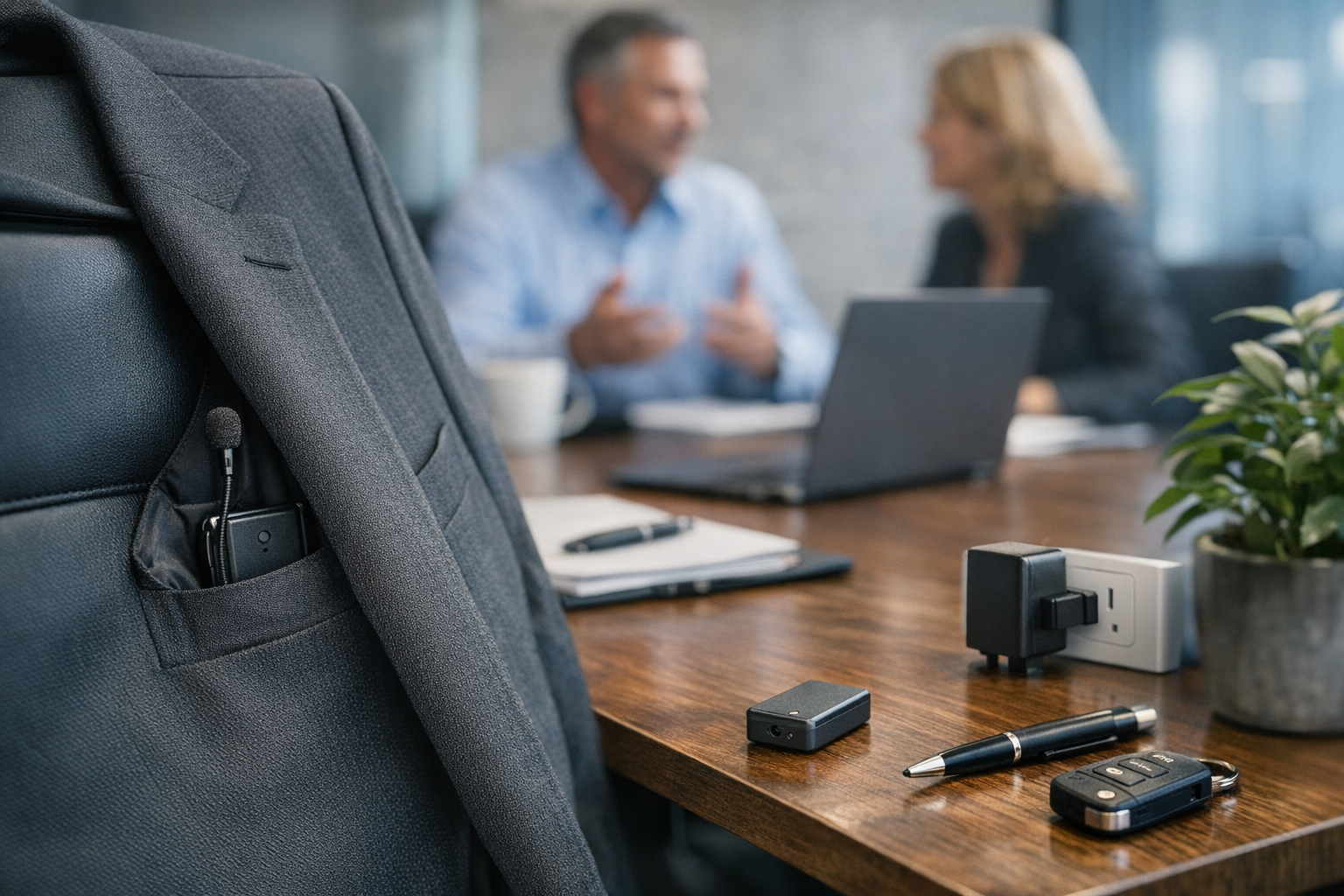
Why concealment changes sound quality
Concealment is necessary in covert applications, but every hiding method affects the recording. This is one of the least understood aspects of selecting a hidden microphone.
When a recorder is placed openly on a surface, the microphone capsule interacts with the room directly. When it is concealed inside another object, the sound must pass through materials, cavities, and small openings. These can alter the frequency response, reduce clarity, and increase internal resonances.
Common concealment issues include:
- Fabric attenuation: soft materials can reduce clarity in the upper frequencies that carry consonant detail
- Plastic resonance: thin housings can add hollow coloration
- Blocked ports: if the microphone opening is covered, speech becomes muffled
- Object vibration: furniture, dashboards, and metal surfaces can transfer low-frequency rumble
- Handling noise: portable concealment inside bags or clothing often creates rubbing and impact noise
For that reason, buyers should not only ask “can this device be hidden?” but also “can it be hidden without ruining speech intelligibility?” The best covert setup is usually the one that balances discretion with an acoustically sensible microphone path.
Recording formats, compression, and why audio files matter
Audio quality is not determined by the microphone alone. The recorder’s file format, bitrate, and internal processing can substantially influence intelligibility.
Highly compressed formats
Some covert audio devices use aggressive compression to save storage. This is convenient for long recording times but can damage subtle speech details, especially in noisy environments. Compression artifacts may smear consonants, exaggerate background noise, or make voices sound metallic.
For casual note-taking this may be acceptable. For security, review, or documentation, it can be a serious weakness.
Higher-quality recording modes
Devices that allow better bitrate or less aggressive compression usually produce more natural and intelligible voice recordings. Storage fills faster, but the trade-off is often worthwhile when clarity is the main objective.
As a general principle:
- Use higher-quality recording for shorter critical sessions
- Use more compressed settings only when extended duration is the top priority
- Test the exact setting in the intended environment before relying on it
Automatic gain control and noise reduction
Many modern devices include automatic gain control, noise suppression, or voice enhancement. These features can help in some situations, but they are not magic. Poorly implemented processing may raise background noise during quiet moments, crush transient speech peaks, or create unnatural pumping.
Professionals generally prefer predictable audio over excessive processing. If a recorder offers multiple modes, compare them using real-world speech at realistic distance. Do not assume the “enhanced” mode is always best.
Continuous recording vs voice activation
One of the most important setup decisions in covert audio is the recording trigger method. Both continuous recording and voice-activated recording have legitimate use cases, but each introduces trade-offs.
Continuous recording
Continuous recording captures everything from start to finish. This provides a complete timeline and eliminates the risk of missed speech due to delayed triggering.
Advantages:
- No clipped first words
- Reliable chronology of events
- Simpler review of uninterrupted conversations
- Less dependence on trigger sensitivity tuning
Disadvantages:
- Higher battery consumption
- Greater storage use
- More time needed to review recordings
Voice activation
Voice activation starts recording when sound exceeds a threshold. This can greatly extend battery life and conserve storage, but setup quality matters. If the threshold is too high, low-volume speech may not trigger the recorder. If it is too low, ambient noise may trigger constant false starts.
Best use cases for voice activation include:
- Quiet environments with intermittent speech
- Long deployments where battery efficiency is essential
- Scenarios where occasional missed ambience is acceptable
Less suitable use cases include:
- Noisy vehicles
- Busy offices
- Situations where the first seconds of speech are important
For many professional users, a practical approach is to reserve continuous mode for critical short-duration windows and voice activation for longer, lower-intensity monitoring periods.
Battery life is more complicated than the number on the box
Quoted battery runtime can be misleading because it often reflects ideal settings. Real battery life depends on recording mode, file quality, indicator lights, wireless features if any, standby behavior, and temperature conditions.
To evaluate battery suitability, consider:
- Is the quoted runtime based on continuous recording or standby?
- Does voice activation reduce power consumption significantly?
- Does higher recording quality shorten runtime?
- Can the unit operate while externally powered?
- How long does a full recharge take?
Smaller devices are easier to conceal but often have limited power reserves. Larger units may support extended deployment yet be harder to position discreetly. As with every covert tool, there is a trade-off between discretion, endurance, and audio performance.
In practice, battery planning should include margin. If you expect a six-hour session, relying on a device rated for six hours is risky. Real-world conditions rarely match the best-case test figure.
Storage capacity and file management for audio surveillance
Storage is usually less demanding for audio than for video, but it still matters. A covert recorder with inadequate storage may overwrite files, stop unexpectedly, or force the use of lower-quality compression that reduces speech clarity.
Important storage considerations include:
- Total capacity in relation to recording bitrate
- Overwrite behavior when full
- File segmentation into manageable time blocks
- Timestamp accuracy for event reconstruction
- Export convenience for later review and archiving
File segmentation is especially important. Very long single files can become inconvenient to transfer, review, or verify. Sensible time-based file splitting can make analysis far easier while preserving continuity.
Where possible, verify timestamp settings before deployment. An incorrect clock can reduce the value of otherwise good recordings, especially when correlating audio with other records, logs, or events.
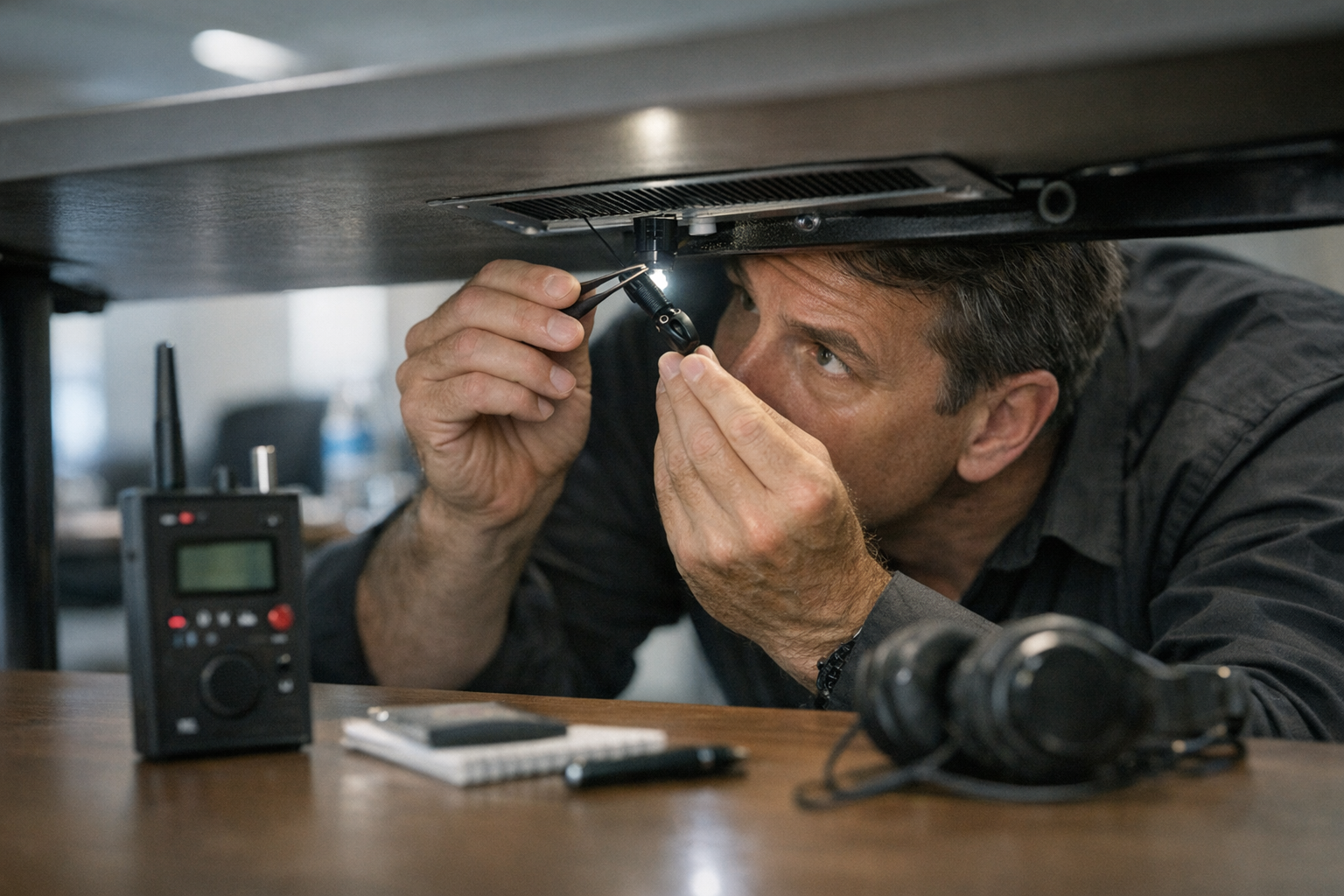
Placement strategy: the single biggest factor in usable audio
If there is one principle that consistently improves covert recordings, it is this: reduce distance to the speaker while maintaining plausible concealment. No specification sheet can compensate for poor placement.
General placement rules
- Place the recorder as close as practical to the expected speaking position
- Avoid enclosing the microphone behind thick or padded materials
- Keep the microphone away from vibration sources such as fans, engines, ducts, and loose panels
- Avoid corners if the room is highly reverberant
- Test the device at realistic speech level, not exaggerated loud talking
Surface effects
Hard surfaces can either help or hurt. A stable shelf or table can provide a useful reflective boundary for nearby speech, but a resonant cabinet or thin panel may amplify low-frequency vibration. Likewise, placing a recorder directly on a desk may expose it to keyboard and impact noise.
Simple isolation methods, when compatible with concealment, can noticeably improve results.
Height and line of sound
Microphone height affects clarity more than many users expect. In seated conversation, a recorder placed near chest-to-head level often captures better speech definition than one hidden near the floor. The less obstructed the sound path, the better the chance of preserving intelligibility.
Real-world use cases and what they require
Documenting conversations in a private office
A private office is often a favorable environment for a covert microphone, provided HVAC noise is moderate and the recorder is placed near the main desk area. In this scenario, a compact device with strong battery life, continuous mode, and medium-to-high recording quality is often appropriate.
Best practices include:
- Test with both one-person and two-person speech
- Check whether desk vibrations or chair movement create low-frequency thumps
- Place the device where paper shuffling and keyboard strikes will not dominate
Capturing speech in a vehicle
Vehicle cabins are difficult but manageable with proper testing. A small hidden recorder should be mounted securely, away from direct vent airflow and away from loose trim that can rattle. Voice activation is often unreliable in moving vehicles because constant road noise may keep the recorder active or mask speech transitions.
For cars, look for:
- Good mechanical isolation
- Reliable continuous recording
- Enough battery for the full journey plus margin
- Storage that can handle long sessions without interruption
Monitoring in a shared workspace
Shared offices and coworking environments present privacy, legal, and acoustic complexity. Overlapping voices and office machinery can make speech separation difficult. In such spaces, a recorder should be placed as close as possible to the relevant speaking zone. Expect lower clarity if conversations occur at varying distances.
The main challenge here is not just capture, but target discrimination. Without close placement, you may record many voices but obtain little usable detail.
Temporary room deployment for intermittent meetings
For short-term deployment in a room used occasionally, voice activation may be practical, especially if the room is otherwise quiet. However, pre-testing is essential to ensure the trigger threshold does not cut off initial words or fail to activate for low-volume speech.
How to evaluate a spy microphone before relying on it
Too many users deploy covert audio equipment without conducting a realistic test. This is a mistake. Every recorder should be validated in conditions that match actual use.
A practical pre-deployment test checklist
- Test at the intended placement location
- Use normal speech, not exaggerated volume
- Record at multiple distances
- Include ambient noise typical of the environment
- Test both continuous and voice-activated modes if available
- Review recordings with quality headphones, not only a phone speaker
- Confirm timestamps, battery endurance, and file saving behavior
Listen specifically for:
- Muffled consonants
- Background hum or hiss
- Pops from handling or impact
- Clipping on louder speech
- Trigger delay at the start of sentences
- Unexpected file corruption or gaps
One of the most useful techniques is to have two people converse naturally while moving slightly within the expected area. This reveals whether the recorder remains intelligible when orientation and distance change.
Common buying mistakes in the hidden microphone market
Choosing the smallest device without considering acoustics
Ultra-miniature devices are attractive for concealment, but reduced size often brings compromises in battery, microphone aperture, thermal stability, and ease of placement. Smaller is not always better.
Trusting vague “high sensitivity” marketing
Without real context, this phrase has little meaning. Sensitivity alone does not guarantee clear speech in noise.
Ignoring the concealment material
How and where the recorder is hidden can matter as much as the device itself. Thick material, soft packing, and blocked sound ports can ruin otherwise decent hardware.
Relying on voice activation in noisy spaces
Busy environments often trigger false recordings or delayed starts. Continuous mode may be more reliable when every word matters.
Underestimating battery and storage margin
Always plan for longer than expected. Sessions run over, ambient noise keeps the device active, and high-quality modes consume resources faster.
Legal and compliance considerations
Any use of a spy microphone, hidden audio recorder, or covert listening device can raise serious legal and privacy issues depending on jurisdiction. Audio recording laws are often stricter than video laws, especially where consent requirements apply. Rules may differ across countries, states, workplaces, vehicles, and private property settings.
Before purchasing or deploying any covert audio device, users should verify:
- Whether one-party or all-party consent rules apply
- Whether workplace policies restrict audio monitoring
- Whether recording in vehicles or private rooms is regulated differently
- Whether retention, sharing, or disclosure obligations exist
The right technical setup does not remove legal responsibility. A professional approach always includes local legal review and clear justification for use.
What to prioritize when comparing products
If you are comparing several hidden microphones or audio surveillance devices, focus on the factors that most directly affect usable speech:
- Realistic audio clarity in your target environment
- Placement flexibility without obstructing the microphone
- Reliable battery performance under the intended mode
- Sufficient storage at an acceptable recording quality
- Predictable triggering if using voice activation
- Stable file handling with accurate timestamps
- Mechanical quietness and low self-noise
In other words, compare devices as recording systems, not as isolated specification lists.
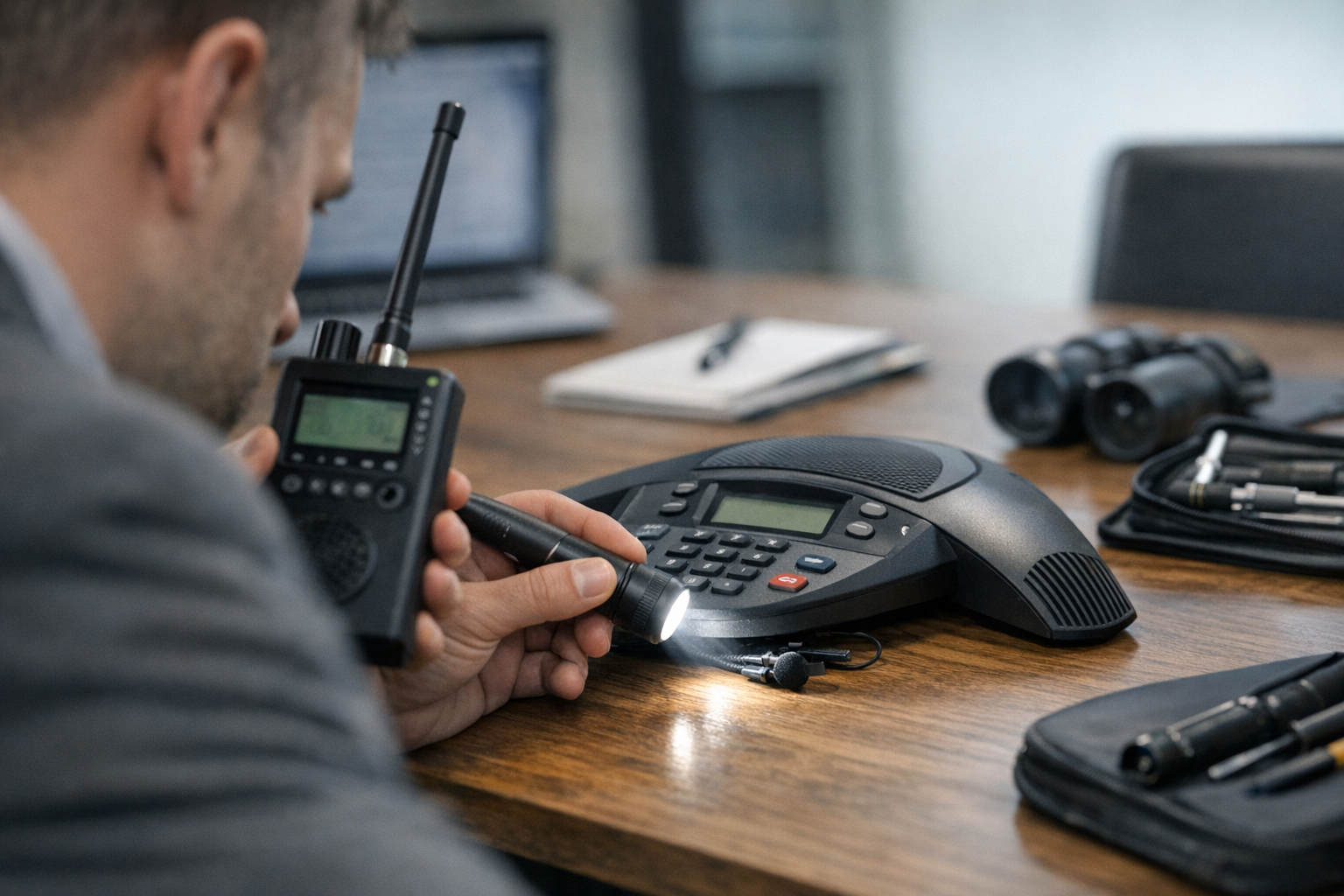
An expert framework for choosing the right covert audio recorder
A practical selection framework looks like this:
1. Define the environment
Quiet room, vehicle, noisy office, or intermittent meeting space? This determines the acoustic difficulty.
2. Define the speech goal
Do you need general awareness that speech occurred, or clear understanding of specific words and speakers? These are different requirements.
3. Define the concealment constraints
Can the recorder be placed openly but discreetly, or must it be fully hidden inside another object? The answer affects audio quality.
4. Define duration
Is this a one-hour session or an all-day deployment? This affects battery, storage, and recording mode.
5. Test the exact setup
Never rely solely on manufacturer claims. A short real-world test reveals far more than a product description.
This framework is simple, but it prevents most costly mistakes.
Conclusion: the best spy microphone is the one matched to the acoustic reality
The market for spy microphones and hidden audio recorders is full of oversized claims, especially around range and sensitivity. But clear, usable audio is rarely the result of one spectacular feature. It comes from the right match between device, environment, placement, recording mode, and concealment method.
If your true objective is speech intelligibility, start by analyzing where the recorder will operate. Consider room size, background noise, expected speaking distance, mounting stability, and whether the hiding method will muffle the microphone. Then choose a recorder with adequate battery life, sufficient storage, sensible recording quality, and a trigger mode that fits the scenario. Finally, validate everything with a realistic test before relying on the device.
In professional covert audio work, the most successful users are not the ones who buy the product with the most aggressive marketing. They are the ones who understand that audio is environmental. A modest device in the right position often delivers better results than an expensive one used badly.
When you evaluate a hidden microphone through that lens, you make better decisions, reduce disappointment, and greatly improve the odds of obtaining recordings that are actually clear enough to review and use.
Frequently Asked Questions
Why is speech intelligibility more important than simply recording sound?
Because a covert recorder is only useful if the speech can actually be understood afterward. The article explains that professionals care less about whether a device technically captures audio and more about whether it preserves enough clarity to identify speakers, understand key phrases, and keep a reliable timeline. Recordings filled with hum, rustle, vibration, clipping, or heavy compression may be difficult to use for review or documentation.
What should I consider first when choosing a spy microphone?
Start with the real recording environment, not the marketing claims. The source text stresses that room type, background noise, distance from the speaker, concealment method, and expected speech level have a much bigger impact on results than many buyers realize. A recorder that works in a quiet office may perform poorly in a restaurant, vehicle, or bag, even if the specification sheet looks impressive.
Does a more sensitive microphone always give better results?
No. Higher sensitivity can help when speech is quiet or distant, but it can also capture more unwanted sound such as fans, traffic, clothing friction, keyboard noise, or electrical buzz. The article says the goal is not maximum sensitivity by itself, but the best balance between speech pickup and unwanted noise rejection, based on the actual environment and placement.
Why do some hidden audio recorders sound disappointing in real use?
Many products look strong on paper, but real-world audio depends on much more than battery life or storage. Poor recordings often come from bad placement, noisy environments, obstructed microphones, vibration transfer, aggressive compression, or unrealistic expectations about range. The article emphasizes that a device hidden in the wrong place may produce muffled, noisy, or unusable speech even if its advertised features seem attractive.
How does the recording environment affect hidden microphone performance?
The environment shapes the result more than most buyers expect. Quiet rooms usually allow smaller recorders to work well if placement is good, while noisy indoor spaces make speech separation much harder. Vehicles introduce road rumble, vents, clicks, and vibration, and outdoor areas add wind and changing conditions. The article recommends choosing the recorder type only after defining the actual acoustic conditions where it will be used.
What matters most in a quiet room recording setup?
In quiet rooms, placement usually matters more than raw specifications. The article notes that lower ambient noise and predictable speech levels make compact hidden recorders more effective, but buyers still need to consider HVAC noise, ticking clocks, distant exterior sounds, reverberation from hard surfaces, concealment obstacles like drawers or books, and enough battery life for unattended sessions.
What should I prioritize in noisy indoor spaces like restaurants or shared offices?
The main challenge in noisy indoor spaces is keeping the target speech distinguishable from overlapping voices, music, fans, and movement. According to the article, buyers should focus on closer placement to the expected speaker, microphone tuning that favors speech frequencies, stable mounting to reduce structure-borne noise, and higher-quality recording instead of overly compressed file settings.
Why are vehicles difficult for covert audio recording?
Vehicles are acoustically demanding even though the cabin is small. The article explains that road noise, engine vibration, air vents, indicator clicks, seat movement, and changing speaker orientation all interfere with clarity. A recorder hidden in a compartment may collect more mechanical resonance than conversation. Better results usually come from minimizing vibration transfer, avoiding vents and loose plastics, and testing under multiple driving conditions.
Are hidden microphones effective outdoors?
They are usually less reliable outdoors, especially for distant speech. The article says wind is the main enemy of intelligible audio, and even a light breeze can overwhelm a miniature microphone. Clothing movement, foliage noise, traffic, and changing orientation also reduce clarity. In general, covert microphones are not ideal for long-range outdoor speech capture unless placement is very close and well sheltered.
Can a spy microphone really record clear conversations from far away?
The article strongly challenges that idea. It explains that many long-range claims are theoretical, poorly defined, or based on favorable conditions that do not reflect normal use. Microphones do not work like zoom lenses. As distance increases, the target voice becomes weaker relative to ambient noise and reflections, so usable speech clarity drops quickly, especially when the device is concealed or the environment is noisy.
How should I judge a microphone’s claimed recording range?
The article suggests asking practical questions instead of trusting the number alone. Check whether the claimed distance refers to simply detecting sound or actually understanding speech. Consider whether testing happened in a quiet room or a real environment, whether the speaker faced the microphone, whether the microphone was hidden inside something, and what recording format or bitrate was used. Placement usually matters more than range claims.
What is usually better for covert recording: omnidirectional or directional microphones?
For most small concealed setups, omnidirectional microphones are more practical. The article says omni designs are common because they are compact, forgiving about orientation, and better when a speaker may move around. Directional microphones can help when the speaker’s position is predictable and orientation is controlled, but they are harder to hide and can fail if the speaker moves or the angle is wrong.
What are the advantages of an omnidirectional hidden microphone?
An omnidirectional microphone captures sound from all directions, which makes placement more flexible in covert use. The article notes that this can reduce the risk of missing speech when a speaker changes position. It also tends to provide more natural capture in small rooms and is easier to conceal inside everyday objects. The trade-off is that it also picks up more background noise in challenging environments.
When can a directional microphone help in covert audio?
A directional microphone can help when the speaker location is predictable and the recorder can be aimed properly. The article mentions one-sided room coverage, fixed installations, and situations where reducing some side noise is useful. However, it also warns that covert conditions often limit correct orientation, and if the speaker moves or reflections dominate the room, the result may become weak or unnatural.
How does concealment affect sound quality?
Concealment changes the way sound reaches the microphone. The article explains that when a recorder is hidden inside another object, audio passes through materials, cavities, or openings that can alter frequency response, reduce clarity, and create resonances. Fabric may soften important consonant detail, plastic housings may sound hollow, blocked microphone ports can muffle speech, and vibrating surfaces can add rumble that harms intelligibility.
Why can hiding a recorder in a bag or soft object reduce clarity?
Soft materials can absorb or weaken upper frequencies that are important for understanding consonants. The article specifically notes that fabric attenuation may make speech less clear, while portable concealment in bags or clothing can also introduce rubbing and impact noise. So even if the device is well hidden, the recording may become much less usable if the concealment method interferes with the microphone path.
Does audio file format and compression really affect speech clarity?
Yes. The article says the microphone is only part of the equation. Aggressive compression can save storage, but it may smear consonants, exaggerate background noise, and make voices sound metallic. In noisy environments, those losses can matter a lot. Higher-quality recording modes usually take more space, but they often produce more natural and intelligible speech when clarity is the priority.
Should I always use the highest recording quality setting?
Not necessarily, but the article recommends matching the setting to the goal. Higher-quality modes are generally better for shorter, important sessions where speech clarity matters most. More compressed settings may be useful when long duration is the top priority. The key advice is to test the exact mode in the intended environment before relying on it, because practical results can differ significantly.
Do automatic gain control and noise reduction always improve covert recordings?
No. The article warns that these features are not magic. While they can help in some situations, poor implementation may raise background noise during quiet moments, flatten speech peaks, or create unnatural pumping. Professionals usually prefer predictable audio over excessive processing. If a recorder offers multiple modes, the best approach is to compare them with real speech at realistic distances rather than assuming enhancement is better.
What is the difference between continuous recording and voice activation?
Continuous recording captures everything from start to finish, which gives a complete timeline and avoids losing the first words of speech. Voice activation only records when sound crosses a threshold, which saves battery and storage. The article explains that both methods have valid uses, but each involves trade-offs in chronology, review time, battery consumption, and the risk of missing low-volume or sudden speech.
When is continuous recording the better choice?
According to the article, continuous recording is best when complete chronology matters and missing the beginning of speech would be a problem. It is useful for critical shorter sessions because it avoids clipped first words and does not depend on trigger sensitivity. The downsides are higher battery use, more storage consumption, and more time spent reviewing long recordings afterward.
When is voice activation useful for a hidden recorder?
Voice activation is most useful in quiet environments with intermittent speech, long deployments where battery efficiency matters, and situations where missing some ambient context is acceptable. The article also notes its limits: if the threshold is too high, quiet speech may not trigger recording, and if too low, normal background noise may start recordings constantly. It is less suitable in vehicles and other noisy spaces.
Why can advertised battery life be misleading?
The article explains that runtime numbers often reflect ideal settings rather than realistic use. Actual battery life depends on whether the device is recording continuously or waiting in standby, what file quality is used, whether indicator lights or wireless functions are active, and even the temperature. A small recorder may hide easily but still have limited endurance, so practical battery planning should always include extra margin.
What battery questions should I ask before choosing a recorder?
The source text recommends looking beyond the headline number. Check whether the quoted runtime is for continuous recording or standby, whether voice activation lowers power use significantly, whether higher audio quality reduces runtime, whether the unit can work while externally powered, and how long recharging takes. This helps you judge whether the device can realistically cover the intended session length.
Why does storage capacity matter for audio surveillance?
Even though audio needs less storage than video, insufficient capacity can still create serious problems. The article warns that a recorder may overwrite files, stop unexpectedly, or force lower-quality compression that hurts intelligibility. Storage should be judged in relation to bitrate, overwrite behavior, file segmentation, timestamp accuracy, and how easily recordings can be exported for review or archiving.
What is file segmentation and why is it important?
File segmentation means splitting recordings into manageable time-based files instead of one very long file. The article says this can make transfer, review, and verification much easier while still preserving continuity. It also highlights the importance of accurate timestamps, because if the clock is wrong, even a clear recording may become less useful when compared with other logs, records, or related events.
What is the single biggest factor in getting usable covert audio?
Placement. The article states that no specification sheet can compensate for poor placement. The most reliable improvement is to reduce distance to the speaker while still keeping the setup plausibly concealed. A recorder placed close to the expected speaking position will usually outperform a supposedly stronger device hidden farther away behind clutter, padding, or acoustically bad materials.
How close should a hidden recorder be to the speaker?
The article does not give a fixed universal distance, but it makes the principle clear: place the recorder as close as practical to the expected speaking position without ruining concealment. It also stresses testing at realistic speaking levels rather than exaggerated loud talking. In covert audio, a shorter distance usually improves intelligibility far more than chasing marketing claims about extreme sensitivity or range.
Where should I avoid placing a hidden microphone?
The article advises avoiding thick or padded barriers around the microphone, vibration sources such as engines, fans, ducts, and loose panels, and highly reverberant corners. It also notes that placing a recorder directly on a desk can expose it to keyboard and impact noise. In general, any location that blocks the microphone path or transfers mechanical noise is likely to reduce speech clarity.
Do hard surfaces help or hurt hidden audio recordings?
They can do either, depending on the surface. The article explains that a stable shelf or table may provide a useful reflective boundary for nearby speech, but a resonant cabinet or thin panel may amplify low-frequency vibration. Hard walls can also increase reflections that blur speech. This is why testing the actual placement surface matters instead of assuming any flat surface will perform well.
Why does microphone height matter in covert recording?
Height affects how directly the microphone receives speech. The article notes that in seated conversation, a recorder placed closer to chest-to-head level often captures better speech definition than one hidden near the floor. The clearer and less obstructed the sound path, the better the intelligibility is likely to be. This is one more reason placement strategy often matters more than the spec sheet.