
How Far Can a Spy Microphone Really Record Clear Audio?
One of the most misunderstood specifications in the covert audio market is range. Buyers often see a product page for a spy microphone, hidden audio recorder, covert microphone, or surveillance listening device that promises a certain number of meters and assume that the figure tells them exactly how far away a conversation can be captured. In practice, that is rarely how audio surveillance works. A hidden microphone does not operate like a laser measure. There is no universal distance at which speech is clean and another at which it suddenly becomes unusable.
What matters in real deployments is not simply whether a microphone can technically detect sound from across a room, down a hallway, or through a partition. The critical question is whether it can record intelligible speech under the acoustic conditions that actually exist. That distinction is essential. A covert recorder may pick up voices, chair movement, HVAC rumble, keyboard taps, street traffic, and room reflections all at once. If the target speech is buried in noise or smeared by reverberation, the recording may be loud enough to hear but still too poor to understand.
This article focuses on that practical reality. Rather than repeating generic buying advice, it examines what truly determines the usable recording distance of a spy microphone: sound pressure level, room acoustics, self-noise, microphone directionality, placement geometry, barriers, vibration paths, gain staging, compression, and recording mode . It also explains why two devices with similar advertised sensitivity can produce completely different results in the field.
If your goal is to evaluate a hidden microphone for office monitoring, room documentation, vehicle use, temporary deployments, or evidence-oriented audio capture, understanding range in this way will save you from poor purchases and weak results. The best covert audio setup is not necessarily the one with the most aggressive marketing claim. It is the one whose microphone design, recorder electronics, placement strategy, and operating mode match the environment you are dealing with.
Below, we break down the real-world factors that determine how far a surveillance microphone can record clearly, how to estimate realistic expectations before deployment, and what practical steps increase speech intelligibility without relying on guesswork.
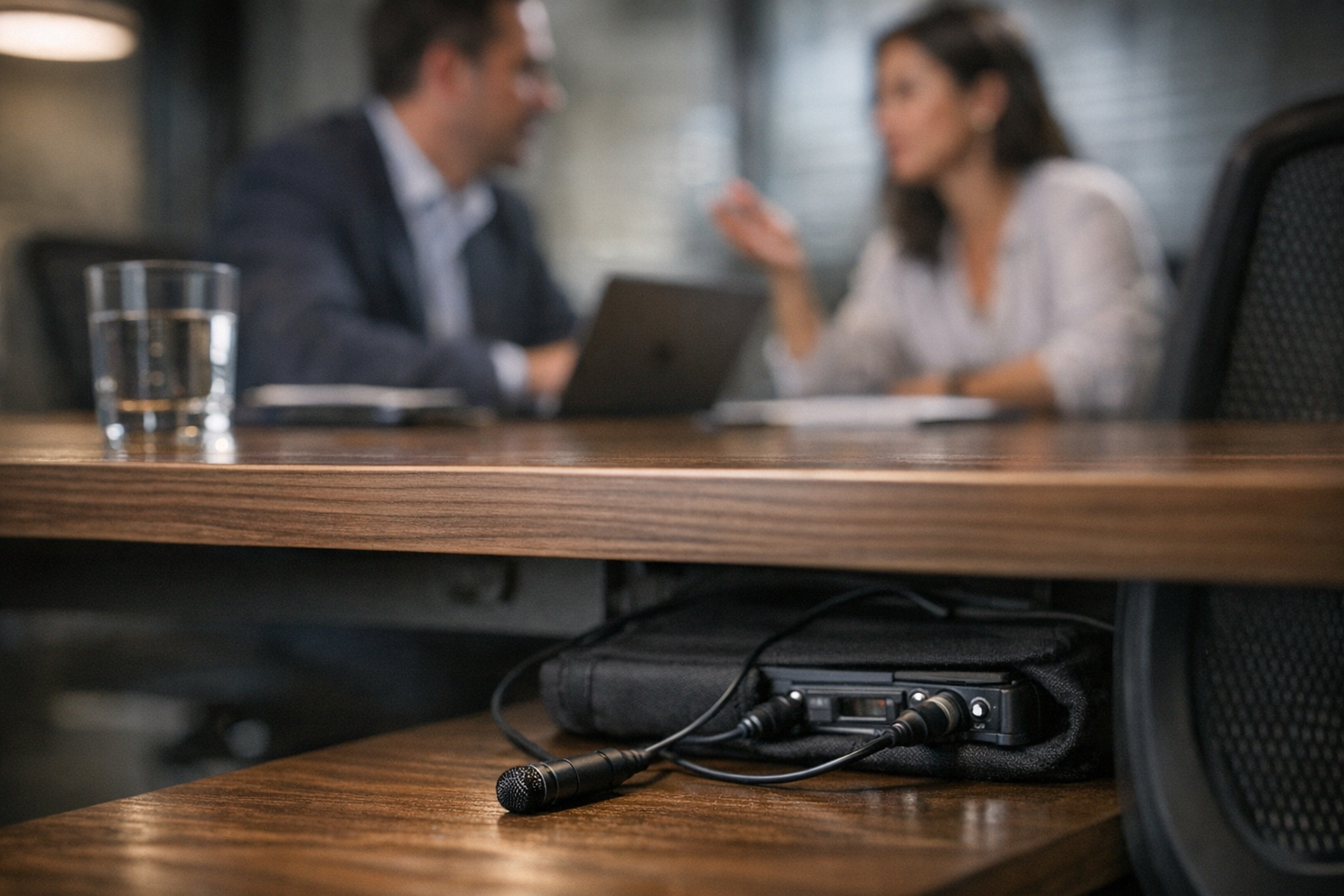
Why advertised microphone range is often misleading
Many listings for hidden microphones use simplified phrases such as range up to 10 meters, records conversations from 15 meters, or long-distance spy microphone . These descriptions can be attractive for SEO and retail conversion, but they usually fail to explain the conditions under which those claims were observed.
A manufacturer may have tested a device in a quiet room with a single speaker, limited background noise, hard gain settings, and minimal competing sound sources. In such a scenario, the microphone may indeed detect speech at that distance. But that does not mean the same recorder will deliver clear dialogue in a furnished living room with an air conditioner running, in a car cabin with road noise, or in an office with reverberant walls and open laptops.
The phrase recording range is misleading because it implies a fixed boundary. Audio capture is really a matter of ratio:
- Target speech level versus background noise
- Direct sound versus reflected sound
- Microphone sensitivity versus self-noise
- Recorder gain versus overload and hiss
- Distance versus intelligibility
A hidden microphone can often hear something from farther away than it can record usable speech. That is why professionals tend to judge performance not by maximum audibility, but by speech clarity, signal-to-noise ratio, and consistency across changing environments.
The difference between hearing sound and understanding speech
In covert audio work, the most important concept is the distinction between sound presence and speech intelligibility. A recorder may capture the existence of voices in a room while failing to preserve enough detail to identify words, names, numbers, or key statements. This difference has major operational consequences.
Speech understanding depends heavily on midrange frequencies and transient consonant detail. Vowels carry energy and are easy to hear at a distance, but consonants often contain the information that makes words distinct. As the distance between speaker and microphone increases, high-frequency content drops faster, room reflections become more prominent, and background noise masks softer phonetic detail. The result is familiar: you can tell that two people are talking, but you cannot reliably tell what they are saying.
That is why professional users evaluate a spy microphone based on questions such as:
- Can it preserve names, numbers, addresses, times, and short phrases?
- Does speech remain intelligible when the speaker turns away?
- Can the recorder handle multiple voices without collapsing into noise?
- Is the audio still understandable after compression, transfer, and playback on normal devices?
In practice, a covert microphone is successful when it captures speech with enough clarity for interpretation, review, and if applicable, lawful evidentiary use. Raw distance alone does not answer that question.
The acoustic factors that really determine spy microphone range
1. Speech volume at the source
A whisper, a normal conversation, and a raised voice do not create the same capture conditions. The louder the speaker, the farther the microphone can generally be placed while maintaining usable speech. However, volume is not constant. People lower their voices during sensitive discussions, turn their heads, cover their mouths, or move around the room. Any claimed microphone range that ignores speaker behavior is incomplete.
For example, in a small office, a concealed audio recorder placed three meters away may capture normal speech adequately when two seated individuals talk directly toward the room. The same setup may fail if one person pivots toward a window, speaks softly, and the HVAC fan cycles on.
2. Background noise floor
The ambient noise floor is one of the biggest determinants of usable recording distance. Common noise sources include:
- Air conditioning and ventilation systems
- Computers, printers, and server fans
- Street traffic and construction
- Kitchen appliances and refrigerators
- Television, music, or adjacent conversations
- Vehicle engine, tire, and road noise
If background noise is high, increasing microphone sensitivity or recorder gain will not magically create clean speech. It will simply amplify the unwanted sound along with the target conversation. In many cases, users mistake this for poor microphone quality when the real issue is an unfavorable signal-to-noise ratio.
A surveillance microphone deployed in a quiet conference room may perform well at five meters, while the same model in a café or moving car may struggle at one meter. This is why real-world range is environment-specific.
3. Room acoustics and reverberation
Distance does not only reduce volume. It changes the balance between the direct voice and reflected sound from walls, glass, tables, floors, and ceilings. In acoustically hard spaces, reverberation can blur speech detail and make recordings sound hollow or smeared.
Rooms with a lot of reflective surfaces tend to produce worse long-distance covert audio than spaces with curtains, carpet, upholstered furniture, and softer finishes. A hidden microphone in a minimalist meeting room with glass walls may capture more echo than expected, even if the room is quiet.
From an operational perspective, the best placement is often not simply the closest hidden location. It is the position that maximizes direct-path speech while minimizing obstructive surfaces and echo-heavy geometry.
4. Obstacles between source and microphone
Any physical barrier between a speaker and a covert microphone affects clarity. Fabrics, furniture, cabinetry, decorative panels, and enclosures can attenuate higher frequencies. Those are the frequencies often needed for intelligibility.
Concealment is always a compromise. A hidden recorder deeply buried inside a bag, drawer, or padded object may remain visually discreet but lose essential speech detail. That trade-off becomes more severe as distance increases.
When evaluating realistic range, always ask not just how far the device is from the speaker, but what lies between them. A microphone one meter away behind heavy material may perform worse than one three meters away with a cleaner acoustic path.
5. Placement height and angle
Microphone placement geometry matters more than many buyers realize. Speech is directional. Mouth orientation, tabletop reflections, and body obstruction can all affect what reaches the microphone capsule. Devices placed below table height may pick up chair noise, clothing movement, and structural vibration. Units hidden too high may capture more room ambience than direct speech.
In room monitoring, intelligibility often improves when the covert microphone has a reasonably direct line toward the speaking area without being blocked by the speaker’s own body, table edges, or large objects. A slight change in angle can alter results significantly.
How microphone design affects real capture distance
Electret, MEMS, and miniature covert microphone capsules
Most spy microphones and hidden audio recorders use very small capsules because concealment is a priority. Miniaturization is useful, but it comes with design constraints. Smaller microphones can be excellent for discreet recording, yet they may have limitations in noise handling, frequency response, dynamic range, and low-noise performance compared with larger professional microphones.
That does not mean small covert microphones are ineffective. It means that their range depends heavily on the quality of the capsule and the electronics around it. Two hidden recorders that look similar externally may perform very differently because one uses a better microphone element and cleaner preamp circuit.
Microphone sensitivity versus self-noise
Retail descriptions often celebrate high sensitivity. Sensitivity matters, but it is not enough by itself. A sensitive microphone with high self-noise can still produce weak recordings in quiet or distant conditions. Self-noise is the low-level hiss generated by the microphone and circuitry. When target speech is faint, that hiss competes with the signal and reduces clarity.
For covert audio, the practical question is not only whether the microphone reacts strongly to sound, but whether it does so cleanly. A lower-noise signal path often outperforms an aggressively tuned, noisy front end in long-distance speech capture.
Preamp quality and gain staging
After the capsule picks up sound, the recorder’s preamplifier boosts the signal to a usable level. Cheap or poorly designed preamps can add hiss, distortion, pumping artifacts, or unstable gain behavior. This directly affects perceived range. If the microphone signal must be amplified heavily because the speaker is distant, low preamp quality becomes much more obvious.
Good gain staging means the system is configured to capture speech at a healthy level without clipping loud moments or burying quiet speech in noise. This is especially important in covert environments where you cannot actively ride levels during the recording.
Directionality: omnidirectional versus directional covert microphones
Many hidden microphones are omnidirectional because they are easy to conceal and forgiving when speakers move. They capture sound from all directions, which can be beneficial in meetings or multi-speaker environments. The trade-off is that they also collect room noise and reflections from all around.
Some specialized surveillance setups use more directional microphones to favor sound from a particular axis. This can improve effective range in certain scenarios by reducing off-axis noise. However, directional mics are less forgiving if the subject moves or turns away, and concealment can be more complicated.
There is no universally better pattern. The best choice depends on whether the situation prioritizes:
- Coverage of multiple voices
- Resistance to changing positions
- Noise rejection from surrounding areas
- Concealment in a fixed object or location
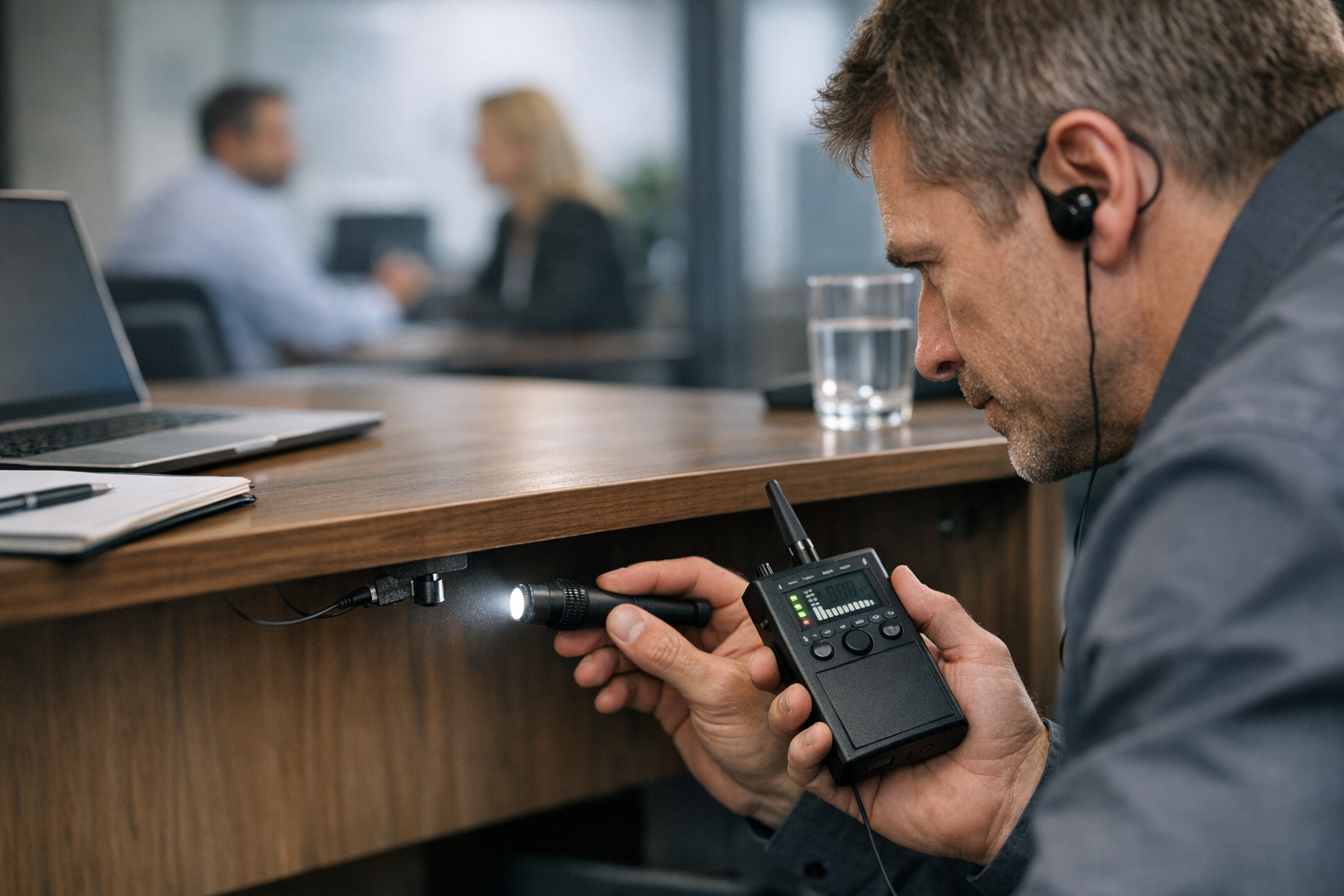
Why the recorder itself matters as much as the microphone
When buyers talk about spy microphone range, they often focus entirely on the capsule. In reality, the recorder platform is just as important. A strong microphone attached to a weak recorder can still produce disappointing audio.
Bitrate and compression settings
Some compact covert recorders use aggressive compression to save storage and battery. While this can be practical for long-duration surveillance, it may remove subtle speech detail, especially at lower bitrates. At short range, the loss may be acceptable. At longer distances where the speech is already weak, additional compression can make words harder to distinguish.
If the mission prioritizes intelligibility over storage efficiency, choose recording modes that preserve more detail when available. Higher-quality encoding often improves the usefulness of low-level or acoustically challenged speech.
Voice-activated recording versus continuous recording
Voice activation can extend battery life and reduce file review time, but it may also miss quiet openings, initial consonants, or short exchanges. In environments with fluctuating noise, a voice-activated recorder may trigger inconsistently or remain active due to ambient sound. This can create operational gaps that are mistaken for poor microphone range.
Continuous recording typically offers more reliable coverage, especially when conversations begin softly. However, it increases power and storage requirements. The right choice depends on whether the deployment is short and critical, or extended and power-constrained.
Automatic gain control and its side effects
Many hidden audio devices use automatic gain control to adapt to changing sound levels. AGC can help when speakers move closer and farther from the microphone, but poor implementations can raise room noise during pauses, then clamp down awkwardly when someone speaks loudly. This pumping effect can reduce intelligibility and create the impression that the microphone has inconsistent range.
Well-tuned level control can be beneficial. Poorly tuned AGC is a common reason inexpensive covert audio devices sound worse in realistic environments than in product demos.
Estimating realistic recording distance by environment
There is no universal chart that guarantees performance, but practical expectations can be framed by environment type. The following examples are intentionally conservative because they focus on clear speech capture, not mere audibility.
Quiet office or small meeting room
In a quiet office with limited HVAC noise and moderate furnishing, a good hidden microphone can often capture understandable speech from several meters away if positioned well. If placed on or near the same furniture cluster as the speakers, the results are usually much stronger than if hidden across the room. As distance increases, reflections and subtle noises begin to mask lower-volume dialogue.
Key advice:
- Prefer placement near the main conversation zone rather than at room perimeter
- Avoid concealment inside heavily damped materials
- Test with realistic speaking levels, not intentionally loud speech
Large room with echo
In larger rooms, especially those with hard floors and sparse furnishing, distance degrades clarity quickly. Even a capable covert microphone may struggle to preserve sharp consonants if the direct voice is weak relative to reflections. In this context, moving the device closer often matters more than changing to a more sensitive microphone.
Vehicle cabin
Vehicles are acoustically difficult. Even parked vehicles can have fan noise, body vibration, and narrow reflective surfaces. Moving vehicles add engine, tire, wind, and road noise. The best speech recordings generally come from placements close to expected speakers and isolated as much as possible from structural vibration.
A hidden microphone that sounds excellent in a room may produce mediocre results in a vehicle if mounted to a vibrating panel or placed too far from the speaking position.
Public or semi-public spaces
In cafés, reception areas, workshops, or other shared environments, there are simply too many competing sounds for broad distance expectations to be meaningful. Effective range collapses quickly when multiple voices overlap. In these settings, microphone placement, directionality, and timing become more important than advertised sensitivity.
The often ignored issue of structure-borne vibration
Not all unwanted sound reaches the microphone through air. In covert deployments, recorders hidden in furniture, vehicles, wall-adjacent objects, or equipment housings can pick up mechanical vibration. This may include table knocks, footsteps, road rumble, panel resonance, and appliance vibration. Such noise can overwhelm speech even when the acoustic path seems favorable.
To reduce this problem:
- Do not rigidly mount the recorder to vibrating surfaces if avoidable
- Use concealment locations that are acoustically open enough for speech but mechanically quieter
- Test for low-frequency rumble before relying on a position
This is a major reason why “same room” does not always equal “good recording.”
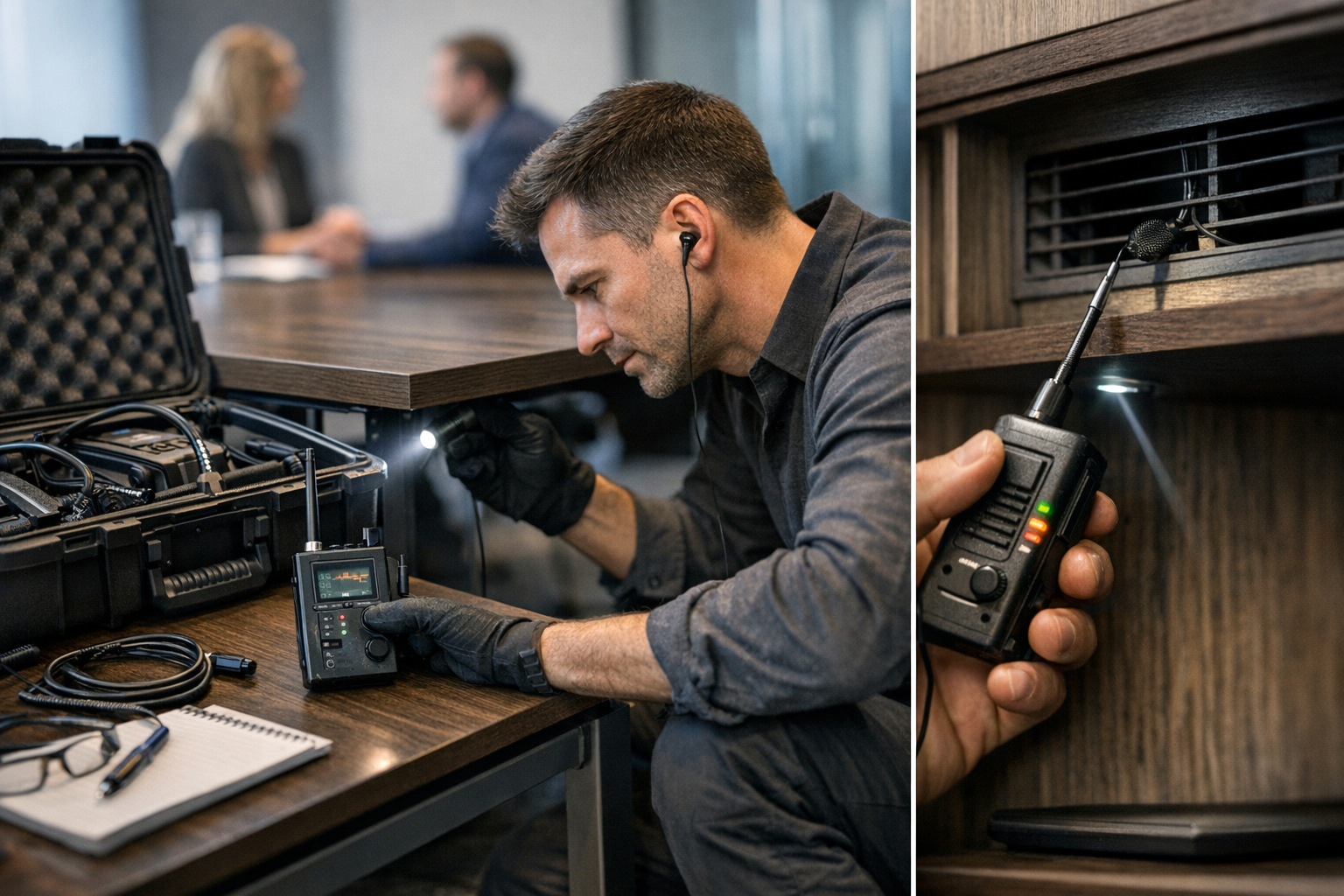
How to test a spy microphone properly before deployment
One of the biggest mistakes in covert audio work is relying on a device without scenario-specific testing. Bench tests in a silent room do not tell you enough. To estimate real-world range accurately, test the exact setup in conditions as close as possible to deployment.
Step 1: Simulate realistic speaking behavior
Do not ask test subjects to speak directly and loudly into the room. Have them sit, turn, interrupt each other, lower their voices, and speak as people normally do. If the target environment is an office, include keyboard taps and chair movement. If it is a vehicle, test under real driving conditions when lawful and safe to do so.
Step 2: Review on normal playback devices
Speech that sounds acceptable on studio headphones may still be difficult to understand on standard laptop speakers or mobile playback. Since recordings are often reviewed quickly and outside ideal listening conditions, always assess whether important words remain understandable on ordinary devices.
Step 3: Compare multiple placements
Move the microphone by small increments and compare results. A change of 30 to 50 centimeters can produce a significant improvement if it avoids a reflective surface, obstacle, or vibration source. In covert work, the best location is often found empirically rather than theoretically.
Step 4: Evaluate file quality, not just volume
Louder is not always better. Listen for:
- Consonant clarity
- Background hiss
- Pumping from automatic gain control
- Muffled highs caused by concealment material
- Low-frequency rumble masking speech
The goal is not maximum loudness. It is maximum intelligibility.
Practical ways to improve usable recording distance
Although there is no magic way to make a small covert microphone perform like a close-range studio setup, there are several practical methods to improve real-world results.
Get closer whenever possible
The most effective way to improve audio clarity is almost always to reduce the distance between the speaker and the microphone. This seems obvious, but buyers often spend time comparing sensitivity ratings when a better concealment position would solve the problem more reliably.
Choose concealment that does not heavily block high frequencies
Concealment materials matter. Thick foam, layered fabric, dense cases, and padded enclosures can dull speech detail. Whenever feasible, place the microphone behind acoustically lighter material or at an opening that preserves direct sound.
Reduce competing noise at the source
If the environment can be influenced lawfully, even small reductions in background noise can improve effective range. Turning off a fan, closing a window, or relocating the device away from a machine may improve clarity more than switching products.
Use the right recording mode for the mission
For short, high-value periods, prioritize better quality settings and continuous recording if power allows. For extended unattended monitoring, carefully validate voice activation thresholds so quiet speech is not missed.
Isolate from vibration
In furniture and vehicles, use mounting approaches or concealment points that reduce contact with resonant surfaces. Mechanical noise often destroys usable speech before airborne distance becomes the main limitation.
Common buyer mistakes when evaluating microphone range
Believing a single meter rating applies everywhere
This is the most common error. There is no fixed range figure that applies equally in a bedroom, boardroom, warehouse, and car. Environmental conditions dominate performance.
Confusing sensitivity with quality
A highly sensitive microphone can still deliver poor recordings if self-noise, distortion, or bad gain control are present. Clean amplification and low noise often matter more than headline sensitivity.
Ignoring placement geometry
Users frequently hide the recorder in the most convenient place rather than the most acoustically effective one. A poor angle, blocked path, or vibration-prone surface can waste the potential of an otherwise good covert recorder.
Over-compressing to save storage
At longer distances, subtle speech detail is already fragile. Excessive compression may erase what little intelligibility remains.
Testing with unrealistic speech
If tests are done with loud, front-facing speech in silence, field performance will disappoint. Realistic testing is non-negotiable.
Use cases: what “good range” looks like in practice
Case 1: Small private office
A user needs to document discussions occurring around a desk in a compact office. Rather than seeking a “10-meter microphone,” the smarter strategy is to use a quality hidden recorder positioned within the active conversation area, outside direct contact with noisy equipment, and not buried under dense material. In this scenario, a moderate-distance setup can outperform a supposedly long-range device left at the room edge.
Case 2: Temporary meeting-room deployment
The objective is to capture several seated speakers around a table. A central or near-central concealment point with an omnidirectional covert microphone may offer better overall intelligibility than a directional device hidden far away. The reason is simple: shorter average source distance usually beats narrow pickup if speakers move and alternate.
Case 3: Vehicle audio monitoring
A compact surveillance recorder is placed inside a vehicle. Initial recordings are poor despite a short apparent distance to occupants. Testing reveals that panel vibration and road rumble are overwhelming speech. Relocating the device away from the vibrating structure improves the recording more than any change in sensitivity specification would have.
Case 4: Shared indoor environment with intermittent conversation
A voice-activated hidden microphone seems to miss key moments. The issue is not lack of range but threshold behavior: quiet speech starts below the trigger point, so the first seconds are lost. Switching recording mode or adjusting trigger sensitivity resolves the problem more effectively than replacing the microphone.
Legal and operational caution
Before deploying any spy microphone, hidden microphone, covert audio recorder, or listening device, verify the laws and consent requirements that apply in your jurisdiction and context. Audio recording is often more legally sensitive than video recording, especially where private conversations are concerned. Rules differ widely by country, state, workplace context, and whether one-party or all-party consent applies.
Operationally, users should also think about:
- Data security for stored recordings
- Access control to prevent unauthorized playback
- Retention policies to avoid unnecessary risk
- Chain of handling if recordings may later need formal review
The goal should always be lawful, proportionate, and security-oriented deployment rather than indiscriminate collection.
How to judge a product beyond marketing claims
When comparing spy microphones or covert recorders, ask better questions than “What is the maximum range?” A more useful evaluation framework includes:
- How quiet is the microphone and preamp circuitry?
- Does the product preserve speech detail or just amplify everything?
- What recording formats and bitrates are available?
- How does voice activation behave with soft speech?
- Is the device better suited to close concealment or broad room capture?
- How well does it resist vibration and handling noise?
- Can the product be tested and reviewed under realistic conditions before critical use?
These questions lead to better decisions because they focus on actual performance rather than simplistic distance claims.
Conclusion
So, how far can a spy microphone really record clear audio? The honest answer is that clear recording distance is not a fixed number. It is the result of an interaction between the speaker, the room, the noise floor, the microphone capsule, the recorder electronics, the placement strategy, the concealment method, and the recording settings.
A hidden microphone may technically detect voices from surprisingly far away, but usable covert audio depends on intelligibility, not mere audibility. In real surveillance conditions, a closer, well-placed device with clean electronics and appropriate recording settings will usually outperform a more aggressively marketed “long-range” option positioned poorly.
If you remember only one principle, make it this: the best range is the shortest effective distance you can achieve with lawful placement and realistic testing. When evaluating a covert microphone, focus on speech clarity, noise control, and deployment geometry rather than headline meter claims. That is how professionals choose audio surveillance equipment that produces recordings people can actually use.
In the world of spy microphones, distance is never just about meters. It is about acoustics, context, and disciplined setup. Buyers who understand that are far more likely to select the right hidden audio recorder and obtain reliable results in the field.
Frequently Asked Questions
What does “spy microphone range” really mean in practice?
In practice, range is not a fixed distance where audio is clear and then suddenly unusable. The article explains that a hidden microphone may detect sound from far away while still failing to capture intelligible speech. What matters is whether words remain understandable under real acoustic conditions, including noise, reflections, barriers, microphone placement, gain behavior, and the overall signal-to-noise ratio.
Why are advertised recording distances for hidden microphones often misleading?
Many product listings mention distances like 10 or 15 meters without explaining the test conditions behind those figures. According to the article, those numbers may come from quiet rooms with one speaker, little background noise, and favorable settings. In real environments such as offices, cars, or furnished rooms, competing noise and reflections can reduce intelligibility significantly, so the advertised figure rarely predicts actual usable speech capture.
Can a hidden microphone hear voices without recording understandable speech?
Yes. The article makes a clear distinction between hearing sound and understanding speech. A recorder may capture that people are talking, yet fail to preserve enough detail to identify words, names, or key statements. This happens because distance, background noise, and room reflections can mask consonants and other speech details that are essential for intelligibility, even when the recording sounds loud enough overall.
What is more important than maximum audibility when judging a covert microphone?
The article says professionals focus on speech clarity, signal-to-noise ratio, and consistency across changing environments rather than simple maximum audibility. A microphone that detects distant sound is not necessarily useful if the recording is full of hiss, reverberation, or ambient noise. The real benchmark is whether the device can preserve understandable speech reliably under realistic deployment conditions.
How does speaker volume affect the usable recording distance of a spy microphone?
Speaker volume strongly affects usable distance. A raised voice can usually be captured more clearly from farther away than a whisper or soft conversation. However, the article notes that people do not speak consistently. They may lower their voice, turn away, cover their mouth, or move around. Because of that, any claimed range that ignores actual speaking behavior gives an incomplete picture of real-world performance.
Why does background noise reduce clear recording range so much?
Background noise raises the noise floor and competes directly with the target conversation. The article lists common sources such as HVAC systems, traffic, computers, televisions, appliances, and road noise. Increasing sensitivity or gain does not solve this problem because it boosts unwanted sound too. As a result, the same microphone may work from several meters in a quiet room but struggle even at close range in a noisy setting.
How do room acoustics change what a surveillance microphone can capture clearly?
Room acoustics affect more than volume. As distance increases, the microphone receives less direct speech and more reflected sound from walls, ceilings, glass, floors, and tables. The article explains that this reverberation can blur consonants and make recordings sound hollow or smeared. Hard, echo-prone rooms generally produce worse long-distance speech recordings than spaces with carpet, curtains, upholstery, and other softer surfaces.
Do barriers between the speaker and the microphone affect intelligibility?
Yes. The article explains that fabrics, furniture, cabinets, decorative panels, and other obstacles can weaken higher frequencies, which are often critical for speech intelligibility. This means concealment always involves compromise. A deeply hidden recorder may remain visually discreet but lose important detail. In some cases, a microphone farther away with a cleaner acoustic path can outperform one that is closer but blocked by heavy material.
Why do placement height and angle matter for hidden microphones?
Placement geometry has a major effect because speech is directional and the microphone receives different amounts of direct voice, reflections, and physical noise depending on its position. The article notes that microphones placed too low may pick up chair sounds, clothing movement, and vibration, while devices hidden too high may capture more room ambience. Even a small change in height or angle can noticeably improve or reduce intelligibility.
Can two hidden microphones with similar sensitivity perform very differently?
Yes. The article says similar advertised sensitivity does not guarantee similar field results. Two devices that look alike can behave very differently because microphone capsule quality, self-noise, preamp design, gain handling, and recorder electronics all affect the final recording. One unit may produce a cleaner signal path, while another may add hiss or distortion that reduces usable speech capture, especially at longer distances.
What role does microphone self-noise play in long-distance recording?
Self-noise is the low-level hiss created by the microphone and its circuitry. The article explains that when speech is faint or distant, this hiss competes with the wanted signal and can reduce clarity. That is why high sensitivity alone is not enough. A microphone that responds strongly to sound but adds a lot of hiss may perform worse than a lower-noise design in quiet or low-level recording situations.
Why is preamp quality important in a covert audio device?
After the microphone captures sound, the preamp boosts it to a usable level. The article warns that poor preamps can add hiss, distortion, pumping artifacts, or unstable gain behavior. These flaws become more obvious when distant speech requires heavier amplification. Good preamp quality and proper gain staging help preserve speech at healthy levels without clipping loud moments or burying quiet passages in noise.
Are omnidirectional hidden microphones always the best choice?
Not always. The article explains that omnidirectional microphones are common because they are easy to conceal and forgiving when people move around. They work well for meetings or multiple speakers, but they also capture noise and reflections from all directions. More directional setups may improve effective range in some situations, though they are less forgiving if the subject moves or turns away.
How does the recorder platform affect spy microphone performance?
The article says the recorder matters just as much as the microphone capsule itself. A good microphone connected to weak recording electronics can still produce poor results. Compression settings, voice activation behavior, automatic gain control, and overall signal handling all influence intelligibility. That is why judging performance only by the microphone specification can be misleading when evaluating covert audio equipment.
Can low bitrate or aggressive compression make distant speech harder to understand?
Yes. According to the article, some compact covert recorders use stronger compression to save storage and battery. While practical for long recordings, this can remove subtle speech detail. At short range the loss may be acceptable, but when speech is already weak due to distance or difficult acoustics, added compression can make words less distinguishable and reduce the usefulness of the recording.
Is voice-activated recording reliable for capturing quiet conversations?
It can be useful, but the article highlights important limitations. Voice activation may miss soft beginnings, short exchanges, or initial consonants, especially in changing noise conditions. It may also trigger inconsistently or stay active because of ambient sound. For short, important deployments, continuous recording is described as more reliable, though it uses more battery and storage than voice-activated modes.
How can automatic gain control affect the clarity of covert recordings?
Automatic gain control can help when speakers move closer or farther from the microphone, but poor implementations create problems. The article explains that some devices raise room noise during pauses and then clamp down abruptly when someone speaks loudly. This pumping effect can make the microphone seem inconsistent and can reduce intelligibility, especially in realistic environments where sound levels fluctuate throughout a conversation.
What kind of range can be expected in a quiet office or small meeting room?
The article avoids fixed numbers but says that in a quiet office with limited HVAC noise and moderate furnishing, a good hidden microphone can often capture understandable speech from several meters away if placed well. Results are usually stronger when the recorder is near the same furniture cluster as the speakers. Performance drops as reflections and subtle noise begin to mask softer dialogue.
Why do large echo-prone rooms make clear recording more difficult?
In large rooms with hard floors and sparse furnishing, reflected sound becomes a bigger problem as distance increases. The article says that even a capable covert microphone may struggle to preserve sharp consonants when the direct voice is weak compared with room reflections. In these situations, moving the device closer generally helps more than simply choosing a microphone advertised as more sensitive.
Why are vehicles difficult environments for hidden microphones?
Vehicles combine several acoustic problems at once. Even when parked, there may be fan noise, body vibration, and reflective surfaces. In motion, engine, tire, wind, and road noise increase the challenge. The article explains that the best speech results usually come from placements close to the expected speakers and with as much isolation as possible from vibrating structures that can transfer low-frequency noise into the recorder.
Do public places like cafés or reception areas reduce effective recording distance?
Yes. The article states that in public or semi-public spaces there are often too many overlapping sound sources for broad distance claims to mean much. Multiple voices, surrounding activity, and environmental noise can cause usable range to collapse quickly. In these conditions, microphone placement, directionality, and timing become more important than simply relying on a high advertised sensitivity rating.
What is structure-borne vibration and why does it matter in covert audio?
Structure-borne vibration is unwanted noise that reaches the recorder through solid objects rather than through the air. The article mentions table knocks, footsteps, road rumble, panel resonance, and appliance vibration as examples. This mechanical noise can overwhelm speech even if the acoustic path seems good. That is why a recorder hidden in furniture, vehicles, or equipment housings may sound worse than expected despite being in the same room.
How can structure-borne vibration be reduced in a hidden recorder setup?
The article suggests avoiding rigid mounting on vibrating surfaces when possible, choosing concealment locations that are mechanically quieter, and testing for low-frequency rumble before depending on a position. The goal is to keep the setup acoustically open enough for speech while limiting physical vibration transfer. This is an often overlooked factor that can have a major effect on whether recordings remain understandable.
Why is testing before deployment so important for a spy microphone?
The article says one of the biggest mistakes in covert audio work is relying on a device without scenario-specific testing. Silent-room bench tests do not reflect real deployment conditions. To estimate realistic performance, the exact setup should be tested in conditions that closely match the intended environment. This helps reveal how noise, reflections, placement, and recorder behavior affect actual intelligibility before use matters.
What should you focus on when evaluating whether a hidden microphone is successful?
The article suggests judging success by whether the recording preserves enough clarity for interpretation and review, not by whether sound is merely present. Useful questions include whether names, numbers, times, and short phrases remain understandable, whether speech stays intelligible when a speaker turns away, and whether multiple voices can be handled without collapsing into noise. Those factors reflect practical usability far better than raw distance claims.