
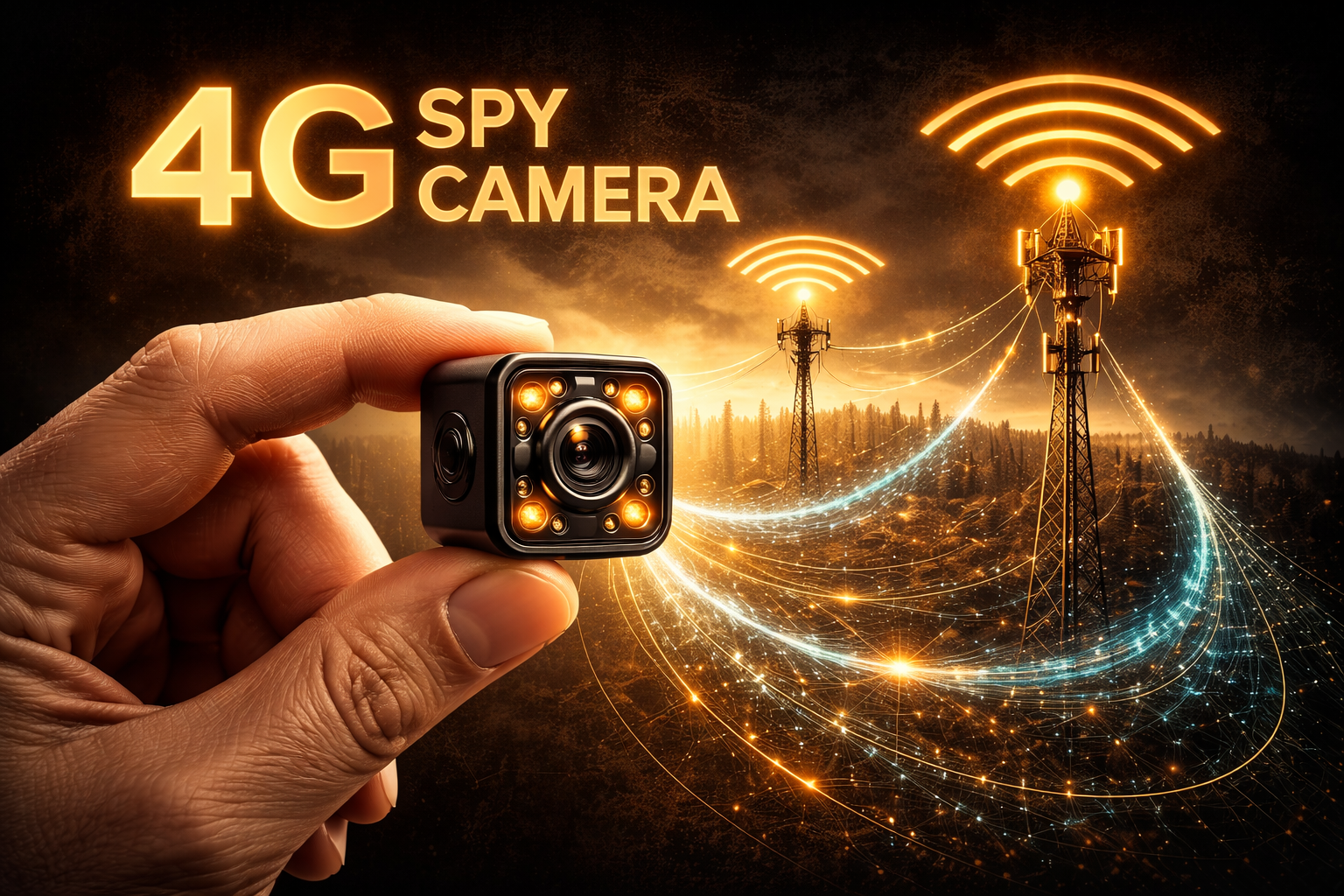
4G Spy Camera: How It Works, Benefits and How to Monitor Remotely Without WiFi
The 4G spy camera represents a major evolution in the field of discreet surveillance. Unlike WiFi spy cameras that rely on a local internet connection, this type of device uses the 4G mobile network to transmit video footage. By using a SIM card, the camera can operate in locations where no internet router or WiFi network is available.
This technology provides great flexibility for installation. A 4G hidden camera can be used in a vehicle, a construction site, an isolated warehouse or any other environment that is difficult to connect to the internet. In most cases, it allows users to access live footage remotely from a smartphone, tablet or computer, just like a connected surveillance camera, but without relying on a local network.
Spy cameras using the mobile network are especially popular in situations where mobility or geographical isolation makes traditional surveillance systems difficult to install. Thanks to the wide coverage of GSM and 4G networks, these devices can transmit video almost anywhere a mobile signal is available.
In this complete guide, we will explain in detail how a 4G spy camera works, its main advantages and limitations, the situations where it is most effective and the key criteria to consider when choosing the right model.
What Is a 4G Spy Camera?
A 4G spy camera is a discreet surveillance camera capable of transmitting video using the mobile network. Unlike WiFi cameras that must connect to an internet router or wireless network, this type of device operates through a SIM card and communicates directly with the cellular network, in the same way as a smartphone.
This technology makes it possible to install a camera in places where no traditional internet connection is available. A 4G spy camera can therefore be used in a vehicle, on a construction site, in an isolated warehouse, on private land or in any location where only a mobile network is accessible.
Like other hidden surveillance cameras, 4G models are designed to remain discreet while offering advanced monitoring features. Once the SIM card is inserted and the camera configured, users can generally access live video through a mobile application, receive motion alerts and review recordings remotely.
One of the main advantages of this technology is its independence from WiFi networks. As long as a mobile signal is available in the installation area, the camera can operate and transmit the data required for remote monitoring.
How Does a 4G Spy Camera Work?
The operation of a 4G spy camera relies on the use of the mobile network to transmit video and provide remote access. Unlike WiFi cameras that must connect to a local internet router, this type of device communicates directly with the cellular network through a SIM card.
Once the camera is configured and connected to the mobile network, it can send images, trigger alerts and allow users to access video from a smartphone, tablet or computer. This system makes the camera particularly suitable for remote areas or mobile installations.
Using a SIM Card
Most 4G spy cameras require the insertion of a SIM card that provides access to the mobile network. This SIM card supplies the connection needed to transmit data and access the camera remotely.
Depending on the device and how it is used, the SIM card may operate with a mobile data plan or with a prepaid solution adapted to the amount of data consumed.
Video Transmission Through the Mobile Network
Once connected to the 4G network, the camera can transmit images directly to the application used for monitoring. This allows users to watch live footage or access recorded videos even when they are far from the monitored location.
The quality of the transmission mainly depends on the mobile network coverage available in the installation area.
Remote Access From a Smartphone
Most 4G spy cameras are associated with a mobile application used to control the device. Through this application, users can watch live video, review recordings and receive notifications when the camera detects movement.
This system makes it possible to monitor a location remotely without needing to be connected to the same network as the camera.
Video Storage
Like many surveillance devices, 4G spy cameras can store recordings on a microSD card or internal memory depending on the model. This local storage ensures that footage is preserved even if the network connection is temporarily interrupted.
The available storage capacity directly affects how long recordings can be kept before older footage is automatically overwritten. To learn more about recording options, you can read our guide on spy camera storage: microSD vs cloud.
What Are the Advantages of a 4G Spy Camera?
A 4G spy camera offers several important advantages compared to WiFi models or cameras that only record locally. By using the mobile network, it allows users to monitor a location remotely without relying on a traditional internet connection.
This independence from a WiFi network makes this type of camera particularly suitable for mobile, remote or temporary environments. It also provides great installation flexibility, since there is no need for an internet router or local network at the surveillance location.
Works Without WiFi
One of the main advantages of a 4G hidden camera is that it can operate without any WiFi network. Thanks to the SIM card and the mobile network, the camera can transmit video from almost anywhere covered by the cellular signal.
This makes it possible to install the device in places where traditional internet connections are unavailable, such as remote land, construction sites or vehicles.
Remote Monitoring From Anywhere
Like other connected surveillance devices, a 4G spy camera usually allows users to access live video remotely through a mobile application. From this interface, users can watch the live feed, check a situation or review recorded footage from their phone or computer.
This capability makes it possible to keep an eye on a location even when you are miles away from the monitored area.
Ideal for Remote Locations
Spy cameras that use the mobile network are especially effective in environments where no internet infrastructure exists. This may include an isolated warehouse, private land, an outdoor parking area or a temporary surveillance site.
In these situations, the 4G connection ensures that the camera remains accessible without needing to install a local WiFi network.
Flexible Installation
A 4G spy camera also provides a high level of installation flexibility. It can be used in both fixed and mobile locations and does not require a connection to a home router or office network.
This flexibility allows users to deploy a surveillance solution quickly in a wide variety of environments.
Limitations of 4G Spy Cameras
Although a 4G spy camera offers great flexibility and allows remote monitoring without WiFi, it also has certain limitations that should be considered before choosing this type of device. Like any technology based on the mobile network, its performance depends on several factors such as network coverage, data consumption and power supply.
Understanding these constraints helps determine whether a 4G surveillance camera is truly suitable for a specific situation or if another option, such as a WiFi spy camera or an autonomous recording camera, may be more appropriate.
Dependence on Mobile Network Coverage
The operation of a 4G spy camera depends directly on the strength and stability of the mobile signal available in the installation area. If the network coverage is weak or unstable, video transmission may become slower, interrupted or less fluid.
Before installing a camera in a remote location, it is therefore recommended to verify the mobile network coverage provided by the operator used with the SIM card.
Mobile Data Consumption
Transmitting video through the mobile network requires internet data. The higher the video resolution and the more frequently live viewing is used, the greater the amount of data consumed.
In some cases, choosing an appropriate mobile data plan is necessary to avoid speed limitations or additional costs associated with mobile network usage. You can also learn more about video quality and bandwidth requirements in our guide on spy camera resolution and video quality.
Battery Life and Power Supply
Like WiFi models, 4G spy cameras require energy to record and transmit video. When the camera runs only on battery power, its operating time may be limited depending on the battery capacity and usage intensity.
For long-term surveillance, it may be preferable to use a permanent power source or external energy solutions such as batteries or dedicated power systems. For more details, you can read our guide about spy camera battery life and power supply.
4G Spy Camera vs WiFi Spy Camera: What Are the Differences?
Choosing between a 4G spy camera and a WiFi spy camera mainly depends on the environment where the surveillance system will be installed. Both technologies allow users to access video remotely, but they rely on different connection methods and are designed for different technical constraints.
A WiFi spy camera operates by connecting to an existing wireless network, usually through an internet router or home WiFi box. This makes it particularly suitable for fixed locations such as a house, apartment or office where a stable internet connection is already available. If you want to understand this technology in more detail, you can read our guide on WiFi spy cameras.
In contrast, a 4G spy camera uses a SIM card and the mobile network to transmit images. This means it can operate in locations where no WiFi network exists. This solution is particularly useful for remote areas, vehicles, construction sites or temporary installations.
The main difference between these two technologies therefore lies in the infrastructure required for operation. WiFi cameras depend on an existing local network, while 4G surveillance cameras provide more independence by relying on the mobile network.
| Feature | WiFi Spy Camera | 4G Spy Camera |
|---|---|---|
| Connection type | Connection to a WiFi network (internet router or wireless box) | Connection through the mobile network using a SIM card |
| Access to video | Via internet from smartphone or computer | Via the mobile network from smartphone or computer |
| Required infrastructure | Requires an internet router or WiFi network | Only requires a SIM card and mobile network coverage |
| Ideal environment | Home, apartment or office | Construction sites, vehicles, remote land or isolated areas |
| Mobility | Mainly for fixed installations | Suitable for mobile or temporary installations |
| Network dependency | Depends on WiFi signal strength and stability | Depends on mobile network coverage |
| Operating cost | No additional subscription if WiFi already exists | May require a data plan or prepaid SIM card |
| Typical use case | Indoor home or office surveillance | Outdoor monitoring or locations without internet |
When Should You Use a 4G Spy Camera?
A 4G spy camera is particularly suitable for situations where no WiFi connection is available or when installing a traditional internet network is not possible. By using the mobile network and a SIM card, this type of camera can be installed in remote or temporary locations while still allowing remote access to the footage.
This installation flexibility makes a 4G hidden camera a very effective solution for surveillance scenarios where WiFi spy cameras cannot operate properly.
Monitoring a Construction Site or Remote Location
Construction sites, isolated land or remote industrial areas do not always have a stable internet connection. A 4G spy camera can therefore be used to monitor these locations by simply relying on the available mobile network.
In this type of environment, the camera can transmit images directly to the user’s mobile application, allowing activity on the site to be monitored remotely.
Vehicle Surveillance
4G surveillance cameras can also be used in vehicles since they do not depend on a fixed WiFi network. This solution can be useful for monitoring a parked car, a commercial vehicle or mobile equipment.
Thanks to the mobile connection, users can access the video remotely without needing to be physically near the vehicle.
Monitoring Land or a Remote Property
In some situations, it may be necessary to monitor land, a secondary building or a property located far from any internet connection. A 4G spy camera allows surveillance to be installed in this type of environment as long as mobile network coverage is available.
This type of setup is often used for monitoring rural areas, storage buildings or remote facilities where internet access is limited.
Temporary Surveillance Installations
A 4G hidden camera is also ideal for temporary installations. Since it does not require a local WiFi network, it can be installed quickly in a location for a limited period of time and then moved to another site if needed.
This mobility makes it easy to adapt surveillance according to changing security needs.
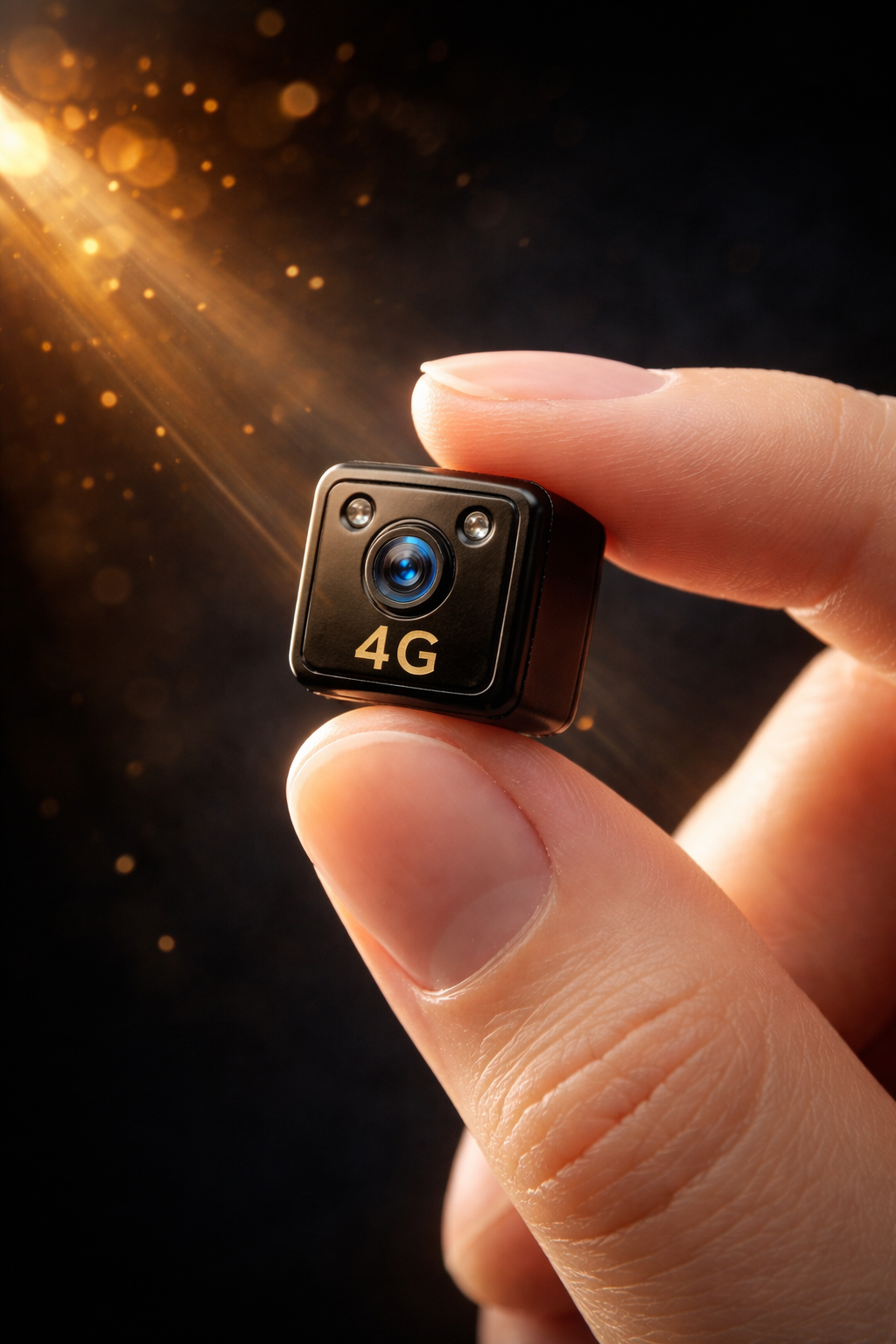
How to Choose a 4G Spy Camera?
Choosing a 4G spy camera depends on several technical factors that directly influence the quality and reliability of the surveillance system. Unlike traditional WiFi cameras, 4G models must be able to operate independently, manage video transmission through the mobile network and maintain sufficient autonomy depending on the installation environment.
Before selecting a device, it is important to analyze the actual surveillance needs as well as the technical constraints of the location where the camera will be used. Factors such as video quality, battery life and storage capacity play a key role in the effectiveness of the system.
Video Quality and Resolution
Video resolution determines the level of detail visible in recorded footage. Modern spy cameras typically offer resolutions ranging from 1080p up to 4K. Higher resolution provides clearer images and more precise details, but it also increases video file size and mobile data consumption.
To better understand the differences between available formats, you can read our guide on spy camera resolution and video quality.
Battery Life
Battery life is an essential factor for a 4G surveillance camera, especially when the device is installed in locations where a permanent power source is not available. The operating time depends on battery capacity, recording frequency and the use of mobile data transmission.
To extend operating time, some users rely on external batteries or dedicated power systems. You can learn more in our guide on spy camera battery life and power supply.
Storage Capacity
Videos recorded by a 4G spy camera can be stored on a microSD card or internal memory depending on the device. Storage capacity determines how long recordings can be kept before older files are overwritten.
A larger storage capacity generally allows more footage to be saved without needing to retrieve the files frequently. To explore the different recording options, you can consult our guide on spy camera storage: microSD vs cloud.
Network Compatibility and SIM Card
The camera must be compatible with the mobile network available in the installation area. It is also important to check the SIM card format supported by the device and the amount of mobile data required depending on how the camera will be used.
A strong mobile signal is essential to ensure stable video transmission and reliable remote access to the footage.
Conclusion: Is a 4G Spy Camera the Right Choice?
A 4G spy camera is an effective solution for monitoring a location remotely when access to a WiFi network is not available. By using the mobile network and a SIM card, this type of device can operate in remote, mobile or temporary environments while still allowing users to access the footage from a smartphone or computer.
This technology offers great installation flexibility and allows surveillance systems to be deployed in places where traditional solutions cannot be used. It is particularly suitable for construction sites, remote land, vehicles or temporary installations.
However, choosing the right 4G camera requires considering several key elements such as network coverage, mobile data usage, battery life and video storage capacity. By carefully evaluating these criteria, it becomes easier to select a device that fits the specific surveillance needs.
To explore other discreet monitoring solutions and compare the different technologies available, you can also visit our complete spy camera guide.
FAQ – 4G Spy Cameras
1. What is a 4G spy camera?
A 4G spy camera is a surveillance device that transmits video through the mobile network using a SIM card instead of relying on a WiFi connection.
2. How does a 4G spy camera work?
It connects to the mobile network through a SIM card and sends video footage to a mobile application or monitoring platform.
3. Do 4G spy cameras need WiFi?
No. These cameras operate independently using the cellular network, making them suitable for locations without WiFi.
4. Can I watch a 4G spy camera remotely?
Yes, most models allow remote access from a smartphone, tablet or computer through a dedicated application.
5. What type of SIM card is required?
Most 4G cameras use a standard nano SIM card with a mobile data plan.
6. How much data does a 4G spy camera use?
Data usage depends on video resolution and viewing frequency. Continuous live viewing will consume more mobile data.
7. Can a 4G spy camera work in remote areas?
Yes, as long as the location has mobile network coverage from a compatible operator.
8. Are 4G spy cameras suitable for vehicles?
Yes, they are commonly used in vehicles because they do not depend on a fixed internet connection.
9. Can a 4G camera record without network coverage?
Many models can continue recording locally on a microSD card even if the mobile signal is temporarily lost.
10. Do 4G spy cameras support motion detection?
Yes, most modern models include motion detection features that trigger recording and send alerts.
11. Can I receive alerts on my phone?
Many 4G cameras send instant notifications to your smartphone when motion is detected.
12. Do 4G spy cameras have night vision?
Some models include infrared night vision allowing recording in low light or complete darkness.
13. What resolution should I choose?
Most cameras offer 1080p, 2K or 4K resolution. Higher resolution provides more detail but uses more data.
14. Do 4G spy cameras require a power supply?
They can operate on battery or external power depending on the model.
15. How long does the battery last?
Battery life varies depending on usage, recording mode and battery capacity.
16. Can I use external batteries?
Yes, external battery packs or power systems can extend the operating time significantly.
17. Where are videos stored?
Most cameras store footage on a microSD card or internal memory.
18. How much storage is needed?
This depends on video resolution and recording frequency. Larger cards allow longer recording periods.
19. Are 4G spy cameras difficult to install?
No. Most models only require inserting a SIM card and configuring the device through a mobile app.
20. Can they be used outdoors?
Some models are designed for outdoor use, especially for construction sites or remote surveillance.
21. What are the advantages compared to WiFi cameras?
4G cameras do not depend on a local internet network and can operate almost anywhere with mobile coverage.
22. Are 4G cameras more expensive to use?
They may require a mobile data plan, which can create additional operating costs.
23. Are they suitable for temporary surveillance?
Yes, they are ideal for temporary installations because they do not require network infrastructure.
24. Can I move the camera easily?
Yes, most models are portable and can be relocated easily if needed.
25. Can multiple users access the camera?
Some applications allow multiple authorized users to access the live video feed.
26. Are 4G spy cameras secure?
Most models use encrypted connections and password protection to secure access.
27. Do they support HD live streaming?
Yes, many models support HD or even 4K live video streaming depending on network quality.
28. Can they be used in rural areas?
Yes, they are particularly useful for rural areas where internet infrastructure is limited.
29. Are 4G spy cameras suitable for property monitoring?
Yes, they are often used to monitor remote properties, land or secondary buildings.
30. Is a 4G spy camera the right choice?
If you need remote surveillance in locations without WiFi, a 4G spy camera is often one of the most effective solutions.