
EUROPE CONNECTION · LAW AND PRACTICAL CASES
Counter-surveillance law: equipment, hotels, Airbnb, work vehicles and lawful investigations
Can we use a hidden camera detector in a hotel, have a company car inspected or search for a microphone in an office? The answer depends on the material, the location, the access authorization and the operations carried out. This guide presents the rules of counter-surveillance, concrete examples and situations that require legal verification before acting.
To understand the technologies and their limitations, consult our complete guide to counterespionage. The tool families are presented in the counterespionage category. The presence of a reference in a catalog does not constitute authorization to hold it, import it or use it in all countries.
References verified on November 2, 2026. This guide provides general information: the legal classification of a situation depends on the facts, the jurisdiction and the applicable texts. A discovery linked to an investigation or an authority measure calls for appropriate legal advice before any intervention on the object or data.
1. Ownership, detection and recording: separate legal questions
The question “is counterespionage legal?” » is too broad to receive a single authorization. It is necessary to distinguish between the compliance of the equipment, the right to access the place or system and the legality of the operation. Common equipment can be misused; certain specialized equipment may also be subject to its own restriction, regardless of the stated purpose.
Purpose does not replace authorization
Protecting your privacy or a trade secret is an understandable goal. This purpose does not automatically authorize opening equipment belonging to others, accessing their account, intercepting a conversation or disrupting a network. The control must cover an authorized perimeter and use methods compatible with the rights of individuals.
Observing a broadcast is not listening to its content
Observing radio activity and capturing a private communication are separate operations. An instrument can offer several functions; the technical possibility of activating one does not demonstrate the right to do so. Reading an ID, recording a log or storing images should also be assessed based on the information obtained.
In practice, describe the mission with precise verbs: observe, measure, photograph, open, record, copy, neutralize. Two services bearing the same commercial name may trigger different rules if one is limited to an inspection and the other includes a collection of communications.
2. United Kingdom: privacy, equipment and lawful investigations
United Kingdom: interception and private information
Section 3 of the Investigatory Powers Act 2016 addresses unlawful interception of communications in the circumstances defined by the Act. It should not be treated as a universal rule covering every room recording. Privacy, data protection, access to property and other offences may also be relevant. Owning a receiver or a building does not establish authority to access another person’s communications.
Radio equipment and deliberate interference
Ofcom’s guidance on radio equipment and the law explains licensing, exemptions and unlawful interference. Ofcom does not authorise or license the use of jammers. A private security inspection is not a general exemption. Check the functions of an instrument that can transmit as well as receive, and the conditions applicable to its particular model.
Monitoring work vehicles
The ICO’s guidance on monitoring workers requires a proper assessment of purpose, necessity, proportionality and transparency. Vehicle ownership does not remove employees’ privacy interests. An authorised inspection of a fleet should distinguish added equipment, legitimate business systems and personal data. A concern about tracking should be raised through appropriate channels rather than treated as automatic permission to disconnect a system.
Lawful investigations and the course of justice
For England and Wales, the Crown Prosecution Service explains public justice offences. Perverting the course of justice requires acts with the relevant tendency and intention, in the context of the course of public justice. It is not a label to attach automatically to every privacy precaution. Interfering with evidence or a lawful investigation can have serious consequences. Scotland and Northern Ireland have their own legal contexts, which require separate advice. Consulting a solicitor, exercising lawful procedural rights and challenging a measure through the courts are distinct from criminal interference.
3. Which counter-surveillance tools can be used legally?
You need to check the real function of the device rather than just its name. “Detector”, “scanner”, “blocker” and “protection” can refer to very different means. Manufacturer's documentation, configuration and country restrictions should be reviewed before purchasing or moving.
| Family | Inspection usage | Legal point to consider |
|---|---|---|
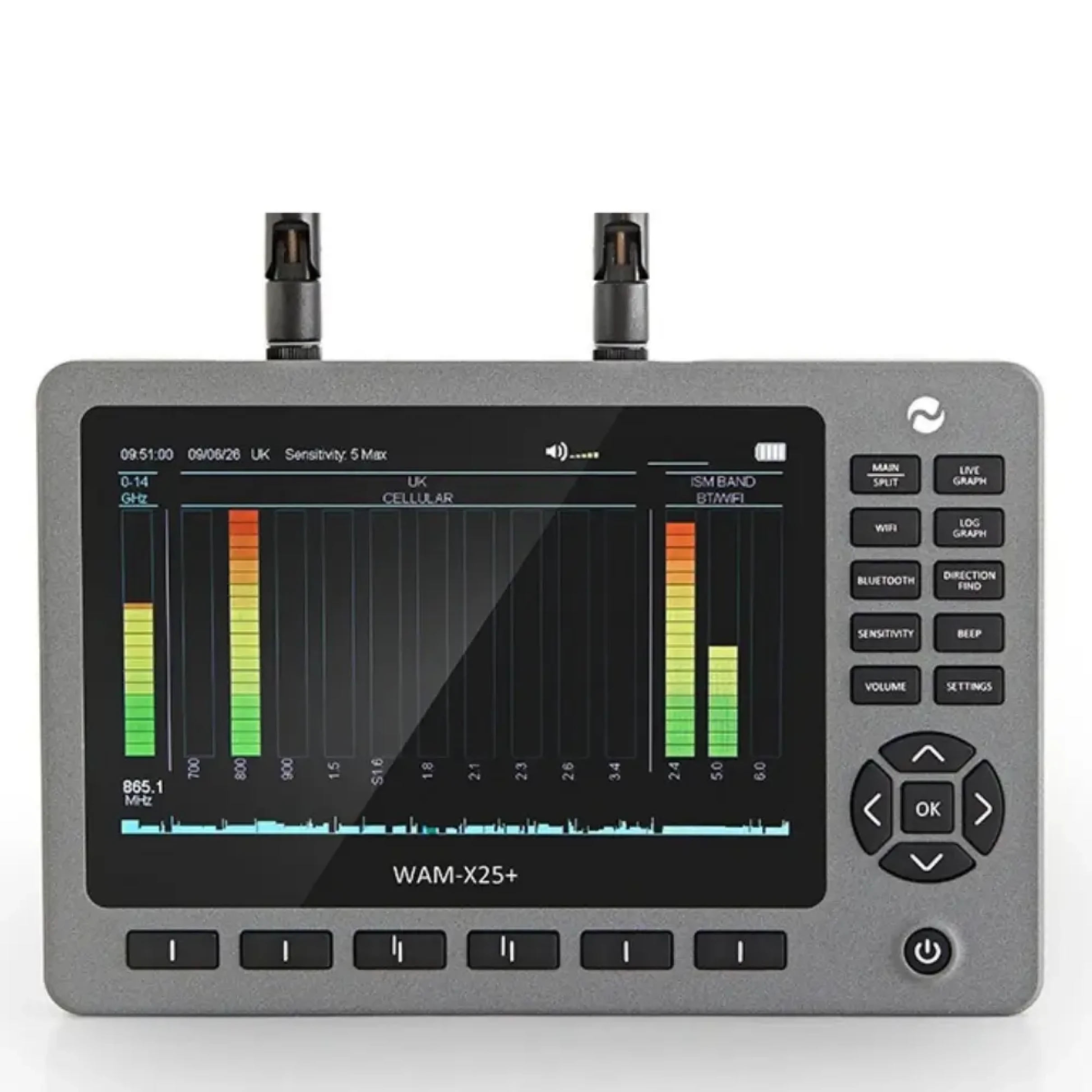
| RF detector and spectrum analyzer | Observe radio activity | Reception, interception, recording and possible transmission functions |
| Optical camera detector | Look for a visible objective | Access to the location, respect for privacy and optical security |
| NLJD | Search for electronic response | Active emission, compliance, frequency conditions and inspection authorization |
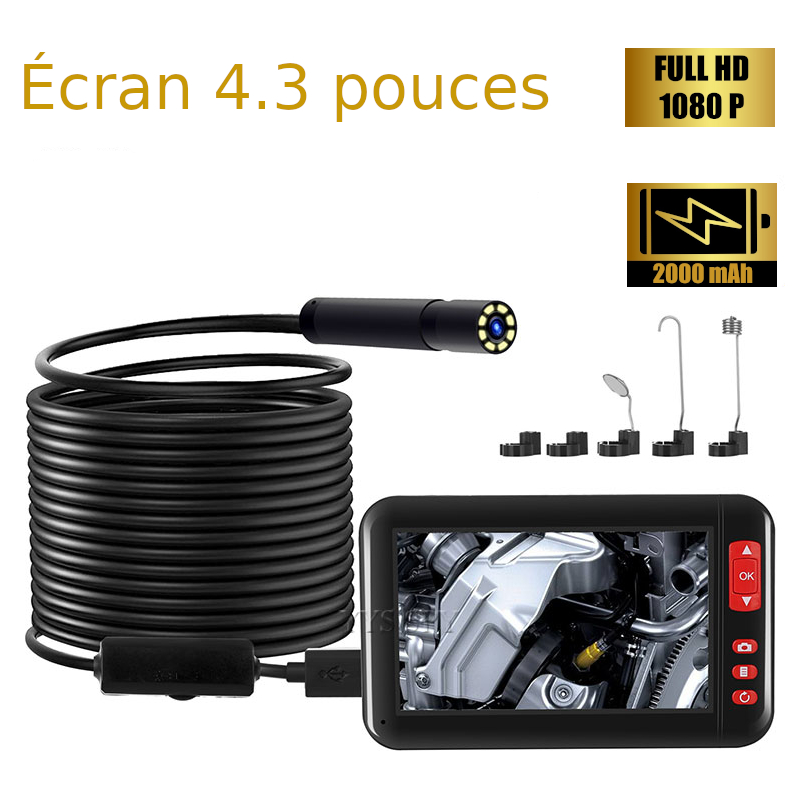
| Thermal camera or endoscope | Observe accessible surfaces or cavities | Image capture, access, dismantling and ownership of objects |
| X-ray imaging | Expertise certain objects | Radiation protection, qualification, authorizations and control of the area |
| Faraday pouch or box | Attenuate communications under specific conditions | Rights on the device, applicable obligations and possible measure of authority |
| Radio jammer | Deliberately disrupting a connection | Specific regime of jammers and risk for authorized communications |
An NLJD itself emits a signal
A nonlinear junction detector is not just about passive reception. The operator must check the conditions applicable to its emissions and its environment of use. The conformity of a reference in one market must not be transposed to a different version or to another territory.
X-rays and access to facilities
An imaging service does not become a simple domestic control because the generator is transportable. Local security and authorizations must be established. Likewise, an endoscope does not give the right to dismantle an electrical outlet or explore a cavity belonging to another occupant. The estimate and mandate must specify the material limits of the intervention.
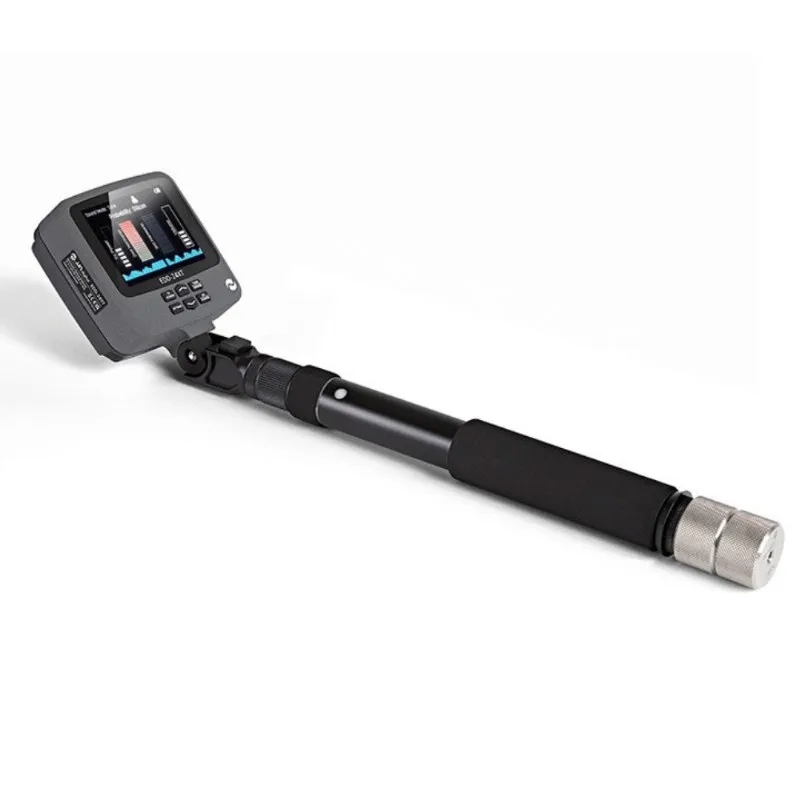
Equipment examples: check legal requirements before use
The photographs open the files for this store. They illustrate the tools and do not constitute legal authorization.
4. Is it legal to listen to neighbours with an RF detector?
No: the existence of a right of inspection in one's home does not constitute a general authorization to listen to the communications of others. The ability of a device to receive a signal is not enough. The type of communication, its private nature and national rules remain decisive.
Example: a strong signal comes from the neighboring home
A person observes radio activity during a home inspection. This observation may justify seeking a technical explanation, but not recording neighboring conversations or trying to decipher their traffic. A strong signal does not establish a spy device or the identity of a perpetrator.
The prudent approach consists of documenting the anomaly in a proportionate manner and requesting appropriate expertise. A very broad collection of content or identifiers concerning third parties can create a new breach even though the initial problem is not established.
Do not confuse detection and counterattack
Suspicion does not allow you to connect to an unknown network, send commands to an object or attempt to delete its files. Examining a network or terminal requires a warrant compatible with the operation. respect for the confidentiality of communications remains a question distinct from the technical competence of the speaker.
5. Is it legal to check a hotel room for hidden cameras?
Non-destructive visual inspection of the space occupied must be distinguished from a search of the establishment's facilities. The right to use a room does not automatically give the right to dismantle its equipment, access neighboring rooms or examine the hotel's computer accounts.
Example: an unusual object seems oriented towards the bed
You can describe what you observe and ask for an explanation, avoiding dangerous manipulations. An isolated optical reflection or RF reaction is not camera evidence. An object may contain a legitimate sensor, power supply, or safety equipment whose function needs to be verified.
If the elements appear serious, maintain your privacy by leaving the affected area and use a reliable means of communication. Reporting to the manager and, depending on the facts, to the authorities makes it possible to organize an audit. The qualification and conservation of elements are more important than immediate distribution on social networks.
What goes beyond simple room control
Forcing a box, opening a false ceiling, disconnecting safety equipment or examining a technical room can give rise to other responsibilities. A professional must verify who is authorized to authorize each operation. A general mandate given by the hotel guest does not replace all necessary rights to the building and its facilities.
6. Hidden camera in an Airbnb: platform policy and applicable law
Airbnb prohibits indoor cameras in affected listings, subject to details in its official recording device policy.
The platform rule, the rental contract and the criminal law are three levels to examine. A violation may justify a report to Airbnb without the traveler having to identify an infraction themselves. Conversely, apparent compliance with an announcement does not alone establish the legality of all recordings.
Example: an indoor camera was announced by the host
The fact that a piece of equipment appears in the advertisement does not mean that it is authorized. Check the policy applicable to the accommodation type and local rules. Also, do not view acceptance of a reservation as a blanket waiver of traveler privacy.
Example: a noise sensor is present
A sensor measuring a sound level is not necessarily a conversation recorder. The exact functions, data produced and access must be established. A commercial description or similar appearance is not sufficient to claim that a device is filming or listening.
During an incident, keep useful information from the announcement, your discussions and your observations, within the authorized limits. Ask the platform and the competent authorities what action to take before moving an object that could have evidentiary value.
7. At home: owner, tenant and other occupants
An owner does not have an unlimited right to the privacy of other people who live in the accommodation or stay there. A tenant may also have rights over the space he occupies, without being able to authorize access to the property or personal accounts of all occupants.
Example: a couple shares accommodation
Searching for an anomaly in a common room does not automatically give you the right to open the other person's phone, check their messages or record their exchanges. A relational concern does not establish authorization for digital investigation. The protection of privacy also applies to the person who is the subject of doubt.
Example: an employee or a worker works at home
The presence of home help, a service provider or another participant may introduce additional obligations regarding the images, sounds and information collected. The domestic setting does not systematically exempt people from information or applicable work rules.
If the discovery involves threats or violence, technical procedures must be coordinated with personal security. Immediate removal of access or manipulation of a device may change the situation. Appropriate support allows you to choose the approaches without putting the person in danger.
8. Who can authorise a company vehicle inspection for hidden GPS trackers?
A distinction must be made between the driver, the owner and the employer. The employee who uses a vehicle does not necessarily have the power to authorize all dismantling. The owner-employer does not, however, have general authorization to monitor the private lives of drivers.
Example: an employee discovers a box on the diagnostic socket
The box may correspond to a fleet service, insurance or an added device. The discovery justifies a verification of its function and the information provided to the driver. It is not enough to qualify the system as illegal, nor to authorize its withdrawal without examining the applicable framework.
The process consists of asking for the purposes of monitoring, operating periods, recipients and available rights. The methods of contesting or deactivating during private periods must be examined according to the country and the lawful policy of the employer. An authorized deactivation of the tracking mode is different from an improvised technical neutralization.
Example: the company orders an inspection of its fleet
The mandate must identify the vehicles, the authorized operations and the information to which the intervener can access. The search for third-party equipment should not become an indiscriminate collection of users' conversations, telephones or personal journeys. Rental, leasing or warranty vehicles may impose additional limits on dismantling.
9. Corporate counter-surveillance: protecting trade secrets lawfully
The protection of trade secrets may justify a security organization and an authorized inspection. It must remain proportionate to the information to be protected and compatible with the rights of employees, visitors and partners. A general confidentiality clause does not validate all surveillance methods.
Example: a negotiation meeting must remain confidential
A company can prepare a control of room equipment, remote access and objects present within the perimeter it administers. She must also check the rules applicable to the presence of personal devices, information obligations and retention of the report.
Asking to review a company-owned videoconferencing system is different from secretly reviewing a participant's messages. The rights to the room, the equipment and the data are not necessarily held by the same person.
Service provider, employee and staff representative
The mission must specify who orders, who authorizes and who receives the results. The consultation or information procedures required in the country must be assessed before the operations concerned. Suspicions should not be presented as established facts in a widely communicated report.
A good file distinguishes technical observations, their limitations and hypotheses. The presence of a device known to IT can explain an alert; the absence of visible traces does not guarantee that no leak is possible.
10. Phone, computer and accounts: what right of access for a cyber analysis?
A counter-espionage check may include computer analysis, but this scope must be defined. Paying a subscription, owning a computer or administering a network does not automatically give access to all correspondence and personal data found there.
Example: the employer wants to analyze a professional phone
It is necessary to specify the purpose, the relevant data, the authorized persons and the limits of the examination. Internal rules, labor law and data protection intervene depending on the context. A technical administrator authorization does not constitute, in itself, the legal basis for all consultations.
Example: a person thinks their account is being monitored
An analysis of your own accesses and sessions may be relevant. On the other hand, entering a third party's account to prove the suspicion exposes you to other legal risks. Account recovery must go through department procedures and an appropriate mandate if a professional intervenes.
In the presence of an incident that may be of legal interest, the needs for data preservation and continuity must be coordinated. Erasing a terminal in a hurry can remove useful items. Technical advice and legal advice must complement each other.
11. Counter-surveillance and lawful investigations: where are the legal boundaries?
Counter-surveillance must not be used to carry out unlawful interference with a legally authorised investigation. A court-ordered measure, or one based on another lawful power, is different from unlawful private surveillance. Whether a particular act is an offence depends on the jurisdiction, the person’s role, their conduct and the required intention.
Example: a discovered device may be part of a lawful surveillance measure
A device’s appearance or radio signal does not establish who installed it or under what authority. Before interfering with the object or its data, obtain advice from a solicitor and the appropriate authorities. A security contractor should establish the scope and legal basis of the assignment rather than promise to disable every form of surveillance.
Evidence and communications
Altering evidence, concealing an object or interfering with communications may create liability under the applicable rules. A particular order may also impose specific obligations. Describing an action as privacy protection does not determine its legality.
Defence rights remain distinct
Obtaining legal advice, exercising lawful rights and challenging a measure through legal procedures are distinct from criminal interference. Silence and protection against self-incrimination have their own legal framework. It would be wrong to claim that every privacy precaution becomes an offence whenever an investigation exists. The country-specific section explains relevant distinctions. This guide gives no instructions for defeating law-enforcement operations.
12. Detector, radio jammer, ultrasound and Faraday: distinct regimes
An RF detector searches for activity. A radio jammer seeks to disrupt communication. Passive protection and an acoustic device are part of yet other mechanisms. These technical differences count in the legal analysis.
Example: blocking a vehicle’s GPS
Interference may affect other users and essential services. The desire to protect one's privacy does not constitute a general permission to disrupt the spectrum. Local prohibitions and exceptions should be checked before purchase, import and use.
Example: a meeting equipped with an ultrasound device
The fact that a product is not an RF jammer does not mean that all its uses are authorized. It is necessary to consider the people present, the location, the desired effect, security and the applicable obligations. A measure intended to prevent legally imposed capture cannot be validated on its technical level alone.
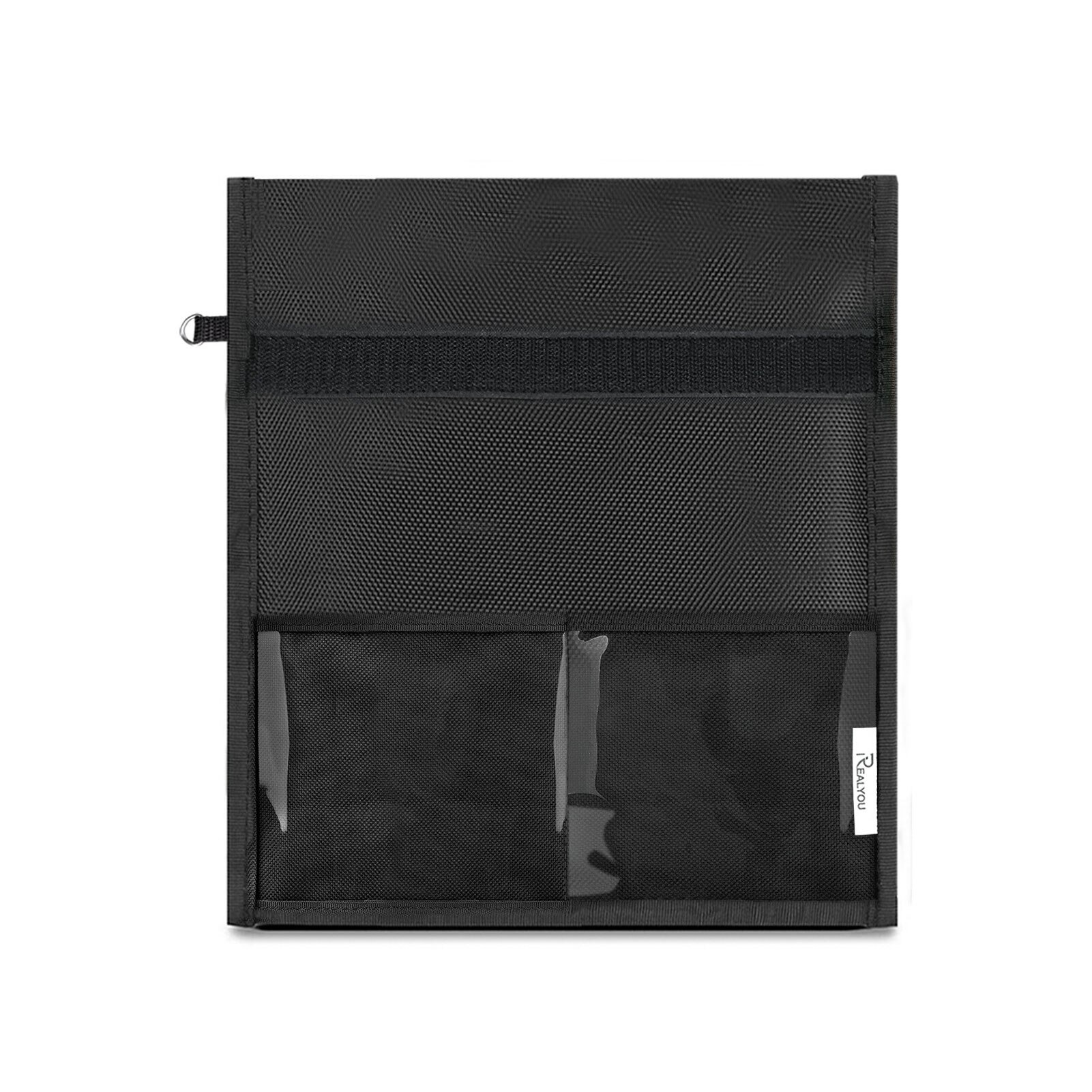
Example: placing a phone in a Faraday pouch
A pouch is not a universally authorized means of insulating any device. The rights to the terminal, the security constraints and the possible obligations of a procedure remain to be examined. A professional must know the mandate and purpose of the insulation, not just the size of the pouch.
Equipment examples: check legal requirements before use
The photographs open the files for this store. They illustrate the tools and do not constitute legal authorization.
13. Suspicious device: how to preserve the elements and report the facts?
A discovery of a suspicious device must be handled methodically. First identify the immediate risks to people and facilities. In a stable situation, note the location, date and context without multiplying manipulations.
Photographing does not allow you to publish everything
Images of an object, places and people can have informative or evidentiary value. Their public release may also reveal personal data, damage reputation or compromise verification. Keep them for the justified recipients rather than presenting a suspicion as an accusation.
Organize traceability
A useful report specifies who observed the object, when, under what conditions and what manipulations were carried out. Conservation and transmission must be adapted to the file. The professional must not promise that an isolated photograph is sufficient to guarantee the admissibility of evidence in any court.
When the object may be linked to an offense or an official measure, the steps to follow must be coordinated with a lawyer and the competent services. Personal protection, information for the manager of a place and the conservation of elements meet complementary objectives.
14. Reports, identifiers and recordings: what obligations regarding data?
An inspection may produce photographs, event logs, network names, or user information. Some of this data may identify an individual. The counterespionage report is itself a document to be protected.
Define what is needed
The person responsible for the mission must determine the useful information, their recipients and their retention period. Broader collection than necessary is not justified simply because the tool can do it. Elements unrelated to the scope must be processed using a suitable procedure.
Contract and participants
When the GDPR or a comparable framework applies, roles and obligations must be qualified according to the facts. A service provider is not automatically a subcontractor in all missions. The contract must describe operations, confidentiality, access, security and reporting or deletion of data, subject to retention obligations.
Submission of a report to a manager does not justify its distribution to all employees or partners. International transfers and the use of a cloud service for images must also be included in the preparation of the file.
15. Countries with the same language, Europe and international missions
Other English-speaking countries
Do not export a UK conclusion to the United States, Canada, Australia or New Zealand. Recording and interception rules, federal and local requirements, device restrictions and investigative powers can differ. In Australia, the ACMA explains restrictions on jammers. That is a local authority reference, not a statement of the rules in every English-speaking jurisdiction.
European and worldwide assignments
Identify where the inspection occurs, where data is stored and who can access the report. Data protection compliance does not itself authorise interception, harmful interference or entry onto property. Confirm import and operating requirements before travelling with specialist equipment, and obtain local advice for any matter involving law enforcement.
16. Practical table: what should be checked before acting
| Situation | Essential verification | Action to avoid without a suitable framework |
|---|---|---|
| Hotel room or rented accommodation | Function of the object, right of occupancy, politics and local law | Unauthorized dismantling or immediate public accusation |
| Company vehicle | Purpose of the box, driver information, owner's mandate | Improvised removal or jamming of a tracking system |
| Meeting room | Authorization on the room, devices and data examined | Third-party listening or access to personal telephones outside of mandate |
| Neighbor radio signal | Technical explanation and collection limits | Interception of private communications |
| Judicial measure possible | Legal notice and procedural obligations | Alteration of elements or attempted interference |
| International travel | Import, transmission, location access and data processing | Deduce the local legality of a purchase made in another country |
This table helps to prepare the questions; it does not replace a qualification of the facts. A mission can combine several situations: vehicle rented by a company, used privately, equipped with a connected service and concerned by a dispute. In this case, the mandate must specify each border rather than using a general formula of “complete control”.
17. How to prepare a compliant counterespionage service?
- Describe the objective: technical anomaly, protection of a meeting, digital incident or other specific need.
- Identify the authority of the principal over the premises, vehicles, devices and systems.
- Delimit operations: visual inspection, measurement, dismantling, copying of data or other intervention.
- Check equipment: functions, emissions, import restrictions and local conditions of use.
- Protect people and data: information, confidentiality, access to the report and justified retention.
- Plan for action after discovery, particularly in the presence of a measure of authority or probative evidence.
- Document the limits: inaccessible areas, excluded systems and observation conditions.
The estimate and the report must remain consistent with this preparation. A security service does not give the customer or service provider police prerogatives. A confidentiality clause does not override the law and a purchase of equipment does not transfer the necessary authorizations.
The tools presented in the galleries are used to illustrate the technical families. Their photographs and files do not constitute legal validation of each use. For detection capabilities, see counterespionage pillar; for a decision on a real case, have the country law and mandate checked.
Specialist guides, practical cases and equipment choices
These practical guides complement the legal framework. They explain methods and limitations and do not provide authority to inspect or interfere with equipment.
Counter-surveillance equipment · Complete guide to counter-surveillance and TSCM
Related guides for this type of inspection
18. FAQ: legality of counter-surveillance equipment
Is a hidden camera detector automatically legal everywhere?
No. It is necessary to check the exact equipment, its functions, the country and the use. The right to inspect a place does not automatically give the right to dismantle equipment there or collect communications.
Can I monitor my hotel room with a detector?
A non-destructive visual inspection of the occupied space must be distinguished from an intervention on the hotel's facilities. Check the local framework and avoid unauthorized disassembly. An isolated detection result does not prove unlawful surveillance.
Is a camera advertised in an Airbnb necessarily authorized?
No. Platform policy, hosting type and local law should be reviewed. The host's declaration is not a general permission to film intimate spaces.
Can I remove a tracker from a company vehicle?
You must first identify its function, the rights to the vehicle and the monitoring rules. Requesting information or exercising recourse is not to be confused with improvised technical neutralization. A real situation calls for verification of the applicable framework.
Can an office owner record all conversations?
Ownership of the location is not enough to authorize all captures. Communications secrecy, privacy, labor law and data protection may apply depending on the facts.
Does an RF detector allow you to legally listen to captured communications?
Measuring radio activity and intercepting its content are two different operations. Device functions and local permissions must be checked separately.
Do radio jammers and ultrasonic devices have the same status?
They rely on different mechanisms. The regime of RF jammers must be checked specifically. Another mechanism does not automatically make all uses lawful, particularly in the presence of judicial obligations or third party rights.
Can counter-surveillance equipment be used to thwart a legal investigation?
The material must not be used to obstruct justice. The qualification of an act depends on national law, the intention and the role of the person. Before intervening on an object or data that may fall under a measure of authority, seek legal advice.
Is consulting a lawyer or challenging surveillance an obstruction?
The regular exercise of the rights of defense and legal recourse must be distinguished from acts of obstruction. There is no universal rule that makes any protection of confidentiality illegal once an investigation exists.
Can I post a photo of a suspicious device with the name of its supposed owner?
An accusation and public dissemination can create further harm. Preserve useful information for justified interlocutors and verify the facts before assigning responsibility.
Can a provider access all accounts on a work device?
The mandate must describe the authorized systems, data and operations. Administrative access or ownership of the terminal is not sufficient to establish the right to consult all personal correspondence.
Can a device purchased abroad be used in my country?
Sale in another country does not demonstrate local compliance. Review import, emissions, hardware-specific restrictions, and eligibility to use intended functions prior to travel.
Related guides and equipment
- Counter-surveillance: the complete guide to TSCM equipment, inspections and cyber protection
- Counter-Surveillance
- Signal Detectors
- Inspection Endoscopes
- Spy Camera Detectors
- Non-Linear Junction Detectors
- Counter-Surveillance Guide: How to Detect Hidden Cameras, Spy Microphones and GPS Trackers Effectively
- Counter-Surveillance Equipment Guide: What Tools You Really Need to Detect Hidden Devices
- After You Find a Hidden Camera or Bug: Counter-Surveillance Response, Evidence Protection and Security Recovery
- How to Find a GPS Tracker on a Car: Counter-Surveillance Guide for Real Vehicle Searches