
How to Choose a Spy Microphone for Clearer Audio Inside a Car
Choosing a spy microphone for vehicle use is very different from choosing one for a quiet office, a bedroom, or a fixed indoor meeting room. A car is a compact but acoustically difficult space: engine vibration travels through panels, tires generate low-frequency rumble, ventilation creates constant broadband noise, rain can strike the roof like percussion, and speech levels change continuously as passengers turn their heads or sit at different distances from the microphone. In practice, this means a device that sounds excellent on a product page can produce disappointing recordings once installed in a moving vehicle.
The key question is not simply whether a microphone can record sound. Almost any device can do that. The real question is whether it can capture intelligible speech when the environment is full of competing mechanical and aerodynamic noise. That requires thinking about microphone sensitivity, placement geometry, enclosure effects, recording mode, power strategy, and how you plan to retrieve or monitor the audio. For buyers comparing products across the broader spy microphones range, vehicle use is one of the clearest examples of why application matters more than raw marketing claims.
In this guide, we will focus specifically on in-car audio capture. We will look at the acoustic realities of a vehicle cabin, explain why some microphone types perform better than others, discuss local recording versus live transmission, and show how installation choices can make the difference between useful evidence and unusable noise. The goal is simple: help you choose a setup that records understandable speech rather than just proving that a loud sound happened somewhere inside a moving car.
Why recording inside a car is more difficult than most buyers expect
Many people assume that a car should be an easy place to capture sound because it is a small enclosed space. That sounds logical, but it misses several important acoustic problems. First, vehicle cabins are full of reflective surfaces such as glass, plastic, leather, vinyl, and hard trim. These surfaces create short reflections that blur consonants and reduce speech clarity. Second, the noise floor inside a car is rarely stable. The sound changes with speed, road texture, weather, fan setting, window position, and whether the vehicle is idling, accelerating, or braking.
A hidden microphone does not understand context. It does not know that speech matters more than tire noise. It records all of it. If the microphone is too sensitive, low-frequency rumble may overload the useful dynamic range. If it is not sensitive enough, soft speech disappears into the background. If voice activation is poorly tuned, the unit may fail to trigger on quiet conversation but activate repeatedly on slamming doors, indicator clicks, or rough road vibration.
This is why vehicle audio capture should be approached as an acoustic system problem, not as a gadget purchase. The microphone, the recorder, the mounting method, the power source, and the car interior all interact. The smallest and most concealed product is not always the best choice if its placement forces the capsule into a noisy panel cavity or too far from where people actually speak.
Start with the real use case, not the product category
Before comparing technical specifications, define the exact operating scenario. Are you trying to record parked-car conversations, moving-car conversations, short trips, long journeys, or occasional access events such as someone entering and making a call? Do you need to listen live, or is it enough to recover files later? Will the device be installed temporarily or left in place for days or weeks? Each answer changes the ideal product profile.
For example, if you can recover the device later and your priority is file reliability, compact voice recorders with local storage may be more appropriate than a transmitting microphone. If you need real-time awareness because you cannot wait for later retrieval, then remote options such as GSM spy microphones or WiFi spy microphones become more relevant, but only if network conditions and power constraints support them.
If concealment is the top priority because the device must blend into trim, seat structures, or storage compartments, then browsing concealed spy microphones makes sense. But concealment should never be evaluated in isolation. A perfectly hidden device mounted behind thick insulation foam or deep inside a vibrating dashboard may be far less useful than a slightly less discreet one placed closer to the center of cabin speech activity.
The most important acoustic factors inside a vehicle
1. Distance from the speaker
In almost every real-world recording environment, distance is one of the strongest predictors of speech clarity. Inside a car, even small changes matter. A microphone 30 cm from a speaker can deliver dramatically better intelligibility than one 90 cm away, especially when road noise rises. This is because speech level falls with distance while ambient vehicle noise remains relatively dominant throughout the cabin.
That means placement near the expected speech zone usually beats placement chosen solely for concealment. A microphone near the center console, roof lining, seatback cavity, or steering column area may capture more usable speech than one hidden in the trunk-facing rear shelf or inside an insulated door void.
2. Engine, road, and airflow noise
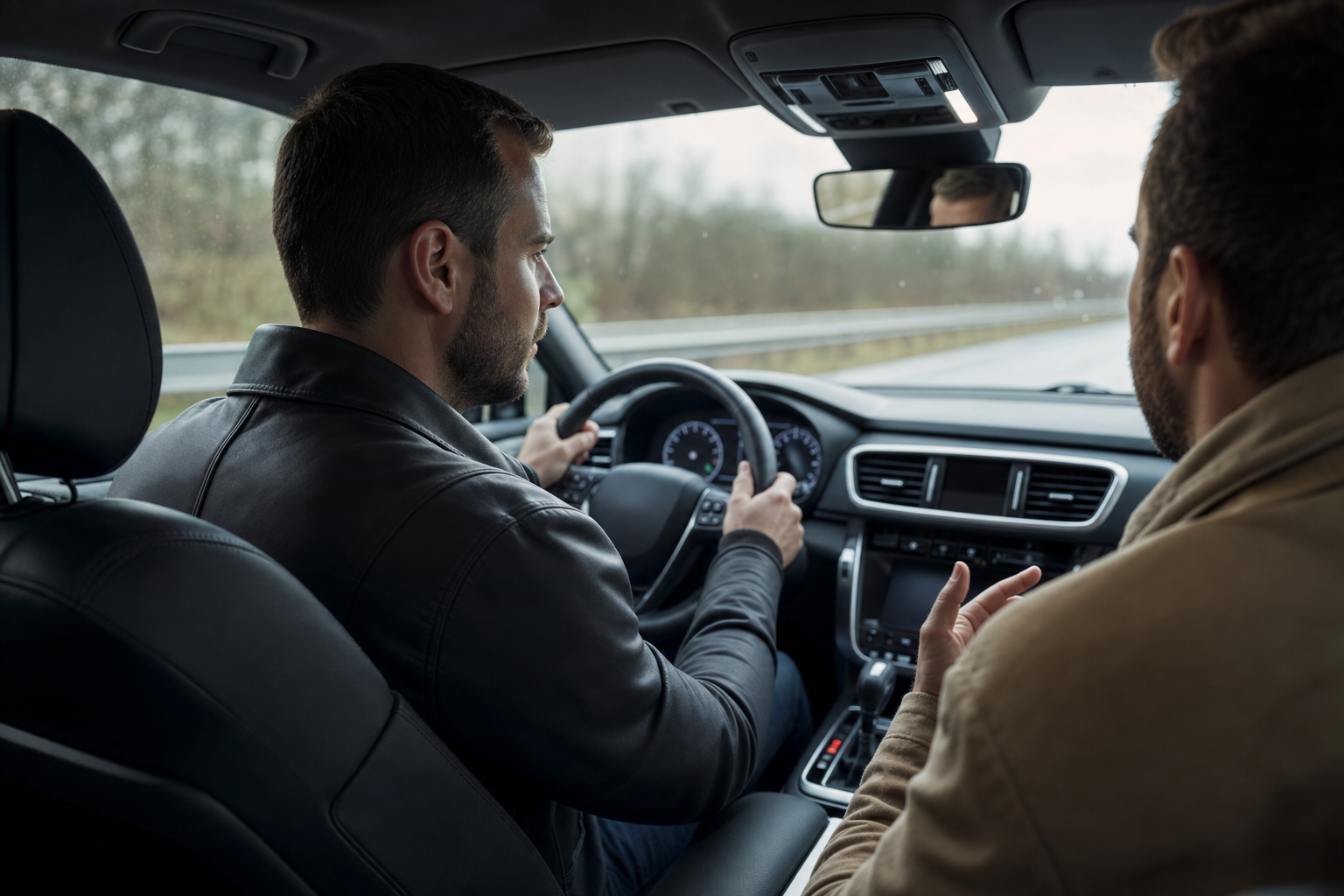
Cars produce a complex mix of low-frequency and mid-frequency noise. Engine vibration creates structure-borne energy that can transfer directly into the device body. Tire and road contact produce broad low-frequency rumble. HVAC systems add constant hiss. Open windows introduce turbulent airflow that can overwhelm speech entirely. Because much of this noise is continuous, it reduces the contrast between voices and background sound.
"
Some buyers assume software can simply remove such noise later. In reality, aggressive noise reduction often damages speech intelligibility by smearing consonants and introducing artifacts. It is far better to prevent bad signal capture through smarter placement and better hardware choices than to rely on post-processing to rescue poor recordings.
3. Vibration transfer
In a vehicle, not all unwanted sound is airborne. A large portion travels through structure. If a recorder is attached directly to a vibrating panel, that vibration may be mechanically coupled into the microphone capsule or housing. The result can be thumps, buzz, resonance, or a constant low-end smear that masks voices. Soft mounting, strategic isolation, and avoiding highly resonant surfaces can therefore be just as important as choosing the microphone itself.
4. Speech direction and seating positions
People in cars do not speak in a fixed studio posture. The driver often faces forward, passengers turn sideways, and some speech is partially blocked by seatbacks, clothing, or body position. A microphone placed for one seat may perform poorly for another. If the goal is to capture conversation between front-seat occupants, placement around the front-center cabin usually works better than mounting low down near the footwell. If rear-seat speech matters, the geometry changes again.
Which microphone types make sense for vehicle use?
The market includes many categories of covert listening products, but not all of them are equally suitable for a car. Understanding why helps avoid costly mistakes.
Local recording microphones and audio recorders
For many vehicle scenarios, local recording remains the most practical option. A recorder stores files internally, so there is no need for continuous network coverage during use. This often improves power efficiency, reduces complexity, and limits transmission-related failure points. If the device has adequate storage, stable timestamps, and sensible voice activation behavior, it can be an excellent fit for parked or moving vehicle monitoring where later retrieval is possible.
Local recording is especially useful when the vehicle passes through poor cellular zones, underground parking, or areas with congested WiFi. It also avoids some of the bursty current consumption associated with radios. The trade-off is obvious: you do not hear events in real time. If the mission requires immediate response, stored audio alone may not be sufficient.
GSM listening devices
GSM-based units can be useful in vehicles when remote listening is essential. You call the device, and it transmits audio live over the cellular network. This can work well for incident response, status checks, or situations where you cannot physically retrieve the unit quickly. However, GSM performance depends on signal strength, network compatibility, and power budget. Continuous or repeated live listening will drain batteries much faster than passive local recording.
Another practical issue is cabin noise itself. Live listening does not magically improve clarity. If the microphone is badly installed or the vehicle is moving on a noisy road, you may hear a lot of noise in real time but still struggle to understand speech. Remote access is valuable, but only if the acoustic front end is competent.
WiFi-based devices
WiFi can be effective in fixed indoor spaces, but it is often less natural for moving vehicles unless the car remains within a known network environment or uses a dedicated onboard connectivity setup. For a parked vehicle near a building, WiFi-based monitoring may be possible. For normal driving use, dependence on local network association introduces obvious limitations. Buyers considering WiFi should think carefully about whether the car is stationary enough and close enough to network infrastructure to justify this route.
FM/UHF transmitters
Short-range radio transmitters can serve specialized use cases, especially where a nearby receiver is part of the deployment plan. If the listening position is relatively close, products in the FM UHF microphones category may be relevant. But they are not universal vehicle solutions. Range depends heavily on the environment, body shielding, interference, and receiver placement. In many practical situations, they are more niche than beginners expect.
Wall, parabolic, and laser microphones
Some categories are technically interesting but generally mismatched to in-car covert monitoring. wall microphones are designed for structure-borne listening through surfaces rather than direct in-cabin capture. parabolic microphones are intended for distance capture in open environments, not concealed use inside a small cabin. laser microphones are highly specialized remote-vibration tools and are not realistic substitutes for a concealed vehicle recorder. Understanding these distinctions helps narrow the field quickly.
How to choose between live listening and local recording in a car
This is one of the most important decisions because it affects every other variable: battery life, concealment, installation complexity, risk of failure, and what kind of evidence you end up with.
Choose local recording when:
- You can retrieve the device later.
- You want longer standby or recording autonomy.
- The vehicle travels through uncertain network coverage.
- You care more about complete file capture than immediate monitoring.
- You want a simpler installation with fewer communication dependencies.
Choose live listening when:
- You need immediate awareness of conversations or events.
- You cannot wait for later file access.
- You have adequate cellular or WiFi conditions for the deployment area.
- You understand that active transmission usually shortens operating time.
- You accept that real-time audio quality still depends on placement and cabin noise.
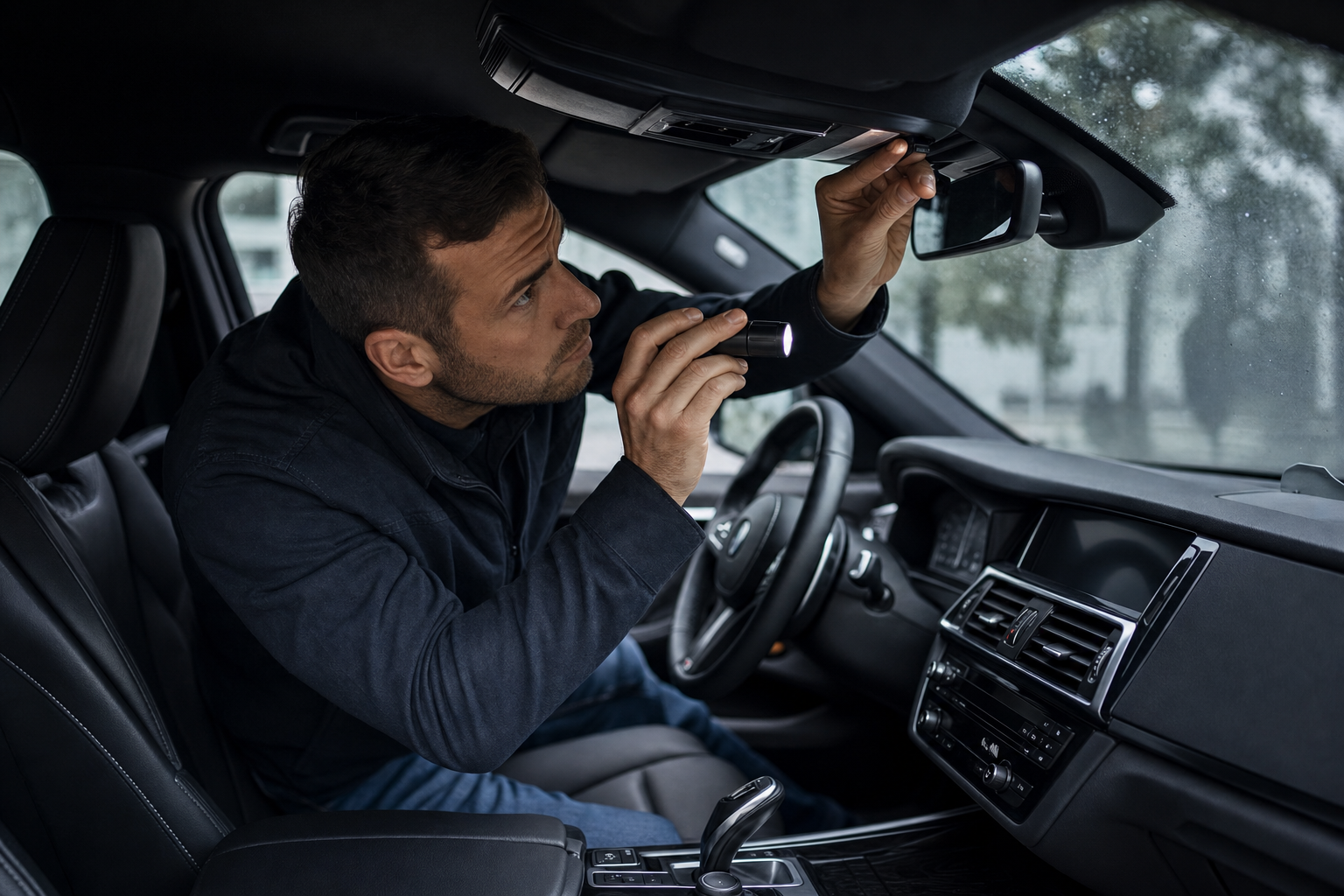
In many professional buying decisions, the answer is not “which technology is best?” but “which failure mode is more acceptable?” A local recorder may miss immediate intervention opportunities but preserve a reliable archive. A live transmitter may provide instant access but fail if power drops or connectivity degrades. The right choice depends on your operational need, not on which feature sounds more advanced.
Placement strategy: the difference between usable speech and useless noise
When buyers say a microphone “did not work,” poor placement is often the real reason. Inside a car, placement strategy should be approached systematically.
Aim for the speech zone, not the most empty cavity
It is tempting to hide a device in the deepest available compartment. But thick cavities, enclosed trim spaces, and metal recesses often degrade speech. Sound reaching the microphone may be muffled, reflected, or dominated by local vibration. Prioritize locations that are both discreet and acoustically open enough to the occupants.
Avoid direct contact with resonant panels
Door cards, plastic dashboard trim, loose glove compartments, and thin metal sections can resonate strongly. A device pressed firmly against them may pick up rattles and vibration instead of clean airborne speech. If possible, isolate the microphone mechanically and avoid high-vibration mounting points.
Be careful with under-seat installations
Under-seat placement can be discreet, but it has acoustic drawbacks. Seats absorb and block sound, passengers move constantly, and the floor area collects road noise and low-frequency vibration. Depending on the target seat and vehicle design, an under-seat location may still work, but it should never be assumed to be optimal by default.
Consider center-cabin geometry
In many passenger vehicles, speech from front occupants is best captured by a location near the centerline of the cabin and above or between them rather than far to one side. The ideal compromise depends on the car type, but center-oriented placement often produces more balanced pickup than edge-of-cabin mounting.
Power management matters more in cars than buyers think
A microphone that records beautifully for one hour but dies before the relevant event is not a good solution. In-vehicle deployments often fail because buyers underestimate real power demands. Battery claims are frequently based on ideal conditions: low transmission usage, moderate temperatures, or intermittent activation. Cars are harsher.
Temperature swings are especially important. A vehicle parked in sun or winter cold can expose electronics to conditions that reduce battery performance and shorten usable runtime. If the device relies on voice activation, remember that a noisy cabin may trigger recording more often than expected, filling memory and draining power faster. If it transmits audio live, active radio use can collapse autonomy dramatically compared with standby figures.
For this reason, buyers should match the power strategy to the mission duration. Short, occasional deployments can work with compact battery-powered devices. Multi-day or unpredictable schedules demand more conservative planning. If long unattended operation is required, review product categories and specifications with skepticism, and build margin into your estimate rather than trusting the headline battery number.
When comparing options, it can also be worth checking newer devices and updated product lines such as the latest spy microphone releases, since improvements in standby logic, charging design, and storage efficiency can materially affect real-world usability.
Storage reliability and file quality in mobile environments
Inside a car, file reliability matters just as much as microphone sensitivity. A recorder that captures audio but segments files badly, loses timestamps, or corrupts recordings after vibration or sudden power loss creates a different kind of failure: you have audio, but not in a usable form.
Look at recording modes carefully. Continuous recording provides completeness but consumes more power and storage. Voice activation conserves resources, but in a car it must be tuned well enough not to trigger endlessly on road noise or miss quiet speech at traffic lights. Timestamp quality is also crucial if the recording may later need to be correlated with routes, calls, stops, or other events.
Compression settings influence intelligibility too. Extremely low bitrate audio may preserve long duration but lose consonant detail, which is exactly what you need when speech competes with engine noise. On the other hand, very high bitrate settings consume memory quickly and may not meaningfully improve understanding if the microphone placement is poor. A balanced approach is best: enough quality to preserve speech detail, with enough capacity to capture the full operational window.
Concealment without self-sabotage
Concealment is important, but many users damage performance by hiding the device too aggressively. Thick wrapping, deep enclosure, tight compression against fabrics, or embedding the microphone behind dense materials can all reduce intelligibility. The goal is not to make the microphone disappear acoustically; it is to make it disappear visually while still allowing useful sound to reach the capsule.
This is why purpose-built hidden products often outperform improvised concealment. A properly designed covert housing may balance visual discretion with workable acoustic access. Buyers exploring the market often compare specialized product forms and seasonal pricing, and in some cases the spy microphones on sale section can be useful for identifying viable form factors at a lower budget, provided the selection is still judged by deployment needs rather than price alone.
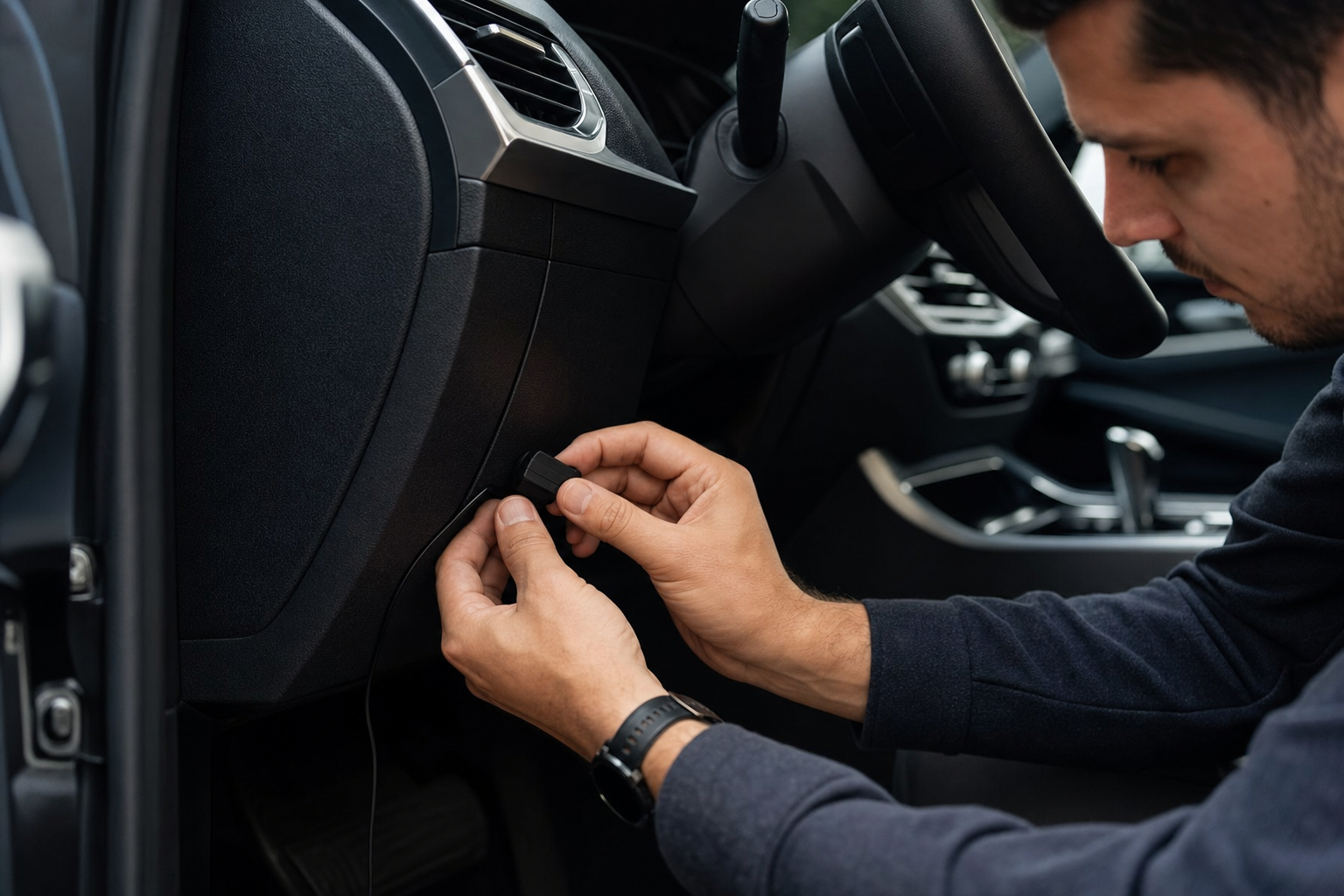
How parked-car recording differs from moving-car recording
Not all vehicle use cases are equal. A parked car in a quiet area is a radically easier environment than a moving car on rough roads.
"
Parked vehicle scenarios
When the engine is off and surroundings are calm, the cabin noise floor drops significantly. In these conditions, smaller microphones and more conservative power modes can perform well, and voice activation becomes more practical. The main concerns become placement distance, whether doors opening and closing overload the input, and how discreetly the device can remain installed.
Moving vehicle scenarios
Once the vehicle is in motion, everything becomes harder. Speech must compete with engine, road, airflow, and structural vibration. This is where microphone quality, mounting strategy, and sensible expectations matter most. A setup that sounds crystal clear during a bench test in a room may become mediocre on a motorway. If your real target environment is a moving vehicle, evaluate every specification through that lens.
What specifications are actually worth paying attention to?
Product listings often emphasize battery claims, miniature size, or vague “high sensitivity” language. For vehicle use, more useful questions include:
- How well does the microphone preserve speech intelligibility in moderate noise?
- Does the device offer reliable continuous recording as well as voice activation?
- How realistic is the battery figure under active use?
- How easy is file retrieval and timestamp review?
- Can the microphone be positioned usefully without destroying concealment?
- Does the chosen transmission method match the real coverage environment?
- Is the unit likely to resist vibration, temperature variation, and handling stress?
These questions are less glamorous than advertised listening range or theoretical standby duration, but they are much closer to what determines success in practice.
Common mistakes buyers make when selecting a car microphone
Choosing by size alone
Smaller is not always better. Ultra-miniature devices can be harder to place effectively, may have more limited battery capacity, and can encourage hiding locations that damage audio.
Believing one “range” figure tells the whole story
Speech capture distance is not a fixed number. A microphone might detect sound from far away, but intelligible speech in a noisy vehicle is another matter entirely.
Ignoring retrieval workflow
Some users focus only on recording, then discover later that exporting, sorting, or reviewing files is inconvenient and time-consuming. Operational usability matters.
Assuming network transmission solves everything
Live listening is helpful only when coverage, power, and placement all cooperate. A poor acoustic setup stays poor, even if it is connected.
Testing in the wrong environment
A microphone tested in a quiet room is not meaningfully tested for in-car use. Always judge likely performance against the real noise conditions of the vehicle scenario.
A practical buying framework for car-based spy microphones
Step 1: Define the mission window
How long must the device remain operational? One commute, one day, several days, or longer? This narrows the power strategy immediately.
Step 2: Decide whether you need live access
If immediate listening is essential, shortlist GSM or WiFi options that genuinely match the vehicle's coverage context. If not, favor local recording for simplicity and endurance.
Step 3: Map the speech priority zone
Is the target mainly the driver, front passenger, rear passengers, or general cabin conversation? Choose placement around who actually speaks.
Step 4: Estimate the noise profile
Urban stop-start driving, motorway travel, diesel engine idling, loud ventilation, and rough-road conditions all affect what microphone quality is needed.
Step 5: Balance concealment with acoustic access
Reject hiding spots that seriously muffle sound or transmit strong vibration, even if they seem visually ideal.
Step 6: Verify recording mode and file handling
Make sure storage capacity, file segmentation, and activation logic fit the expected duration and review process.
Step 7: Build in margin
If you think you need 10 hours, do not buy on a claim that says 10 hours. Real deployments are messier than spec sheets.
When a vehicle is the wrong environment for covert audio alone
It is also important to recognize when audio may not be enough. Some vehicle scenarios are simply too noisy, too unpredictable, or too dependent on exact seat positions for audio-only evidence to be consistently strong. In those cases, the buyer should think more broadly about the overall surveillance objective rather than forcing the wrong tool into the wrong environment. A microphone can be effective in many cars, but it is not magic. Mechanical noise, changing occupancy, and inconsistent speaking behavior place hard limits on what any hidden audio system can recover.
Final thoughts: buy for intelligibility, not for marketing promises
The best spy microphone for a car is rarely the one with the boldest claims. It is the one whose design, recording logic, power profile, and placement possibilities fit the acoustic reality of a vehicle cabin. In practice, useful in-car audio depends on reducing the gap between the speaker and the microphone, controlling vibration transfer, matching the device to the required autonomy, and choosing transmission only when it truly serves the mission.
If you approach the purchase by asking whether the result will be understandable, retrievable, and reliable under real driving conditions, you will make better decisions than if you focus on size, headline range, or generic sensitivity claims. Cars are unforgiving audio environments, but with the right selection process, they can still yield recordings that are far more intelligible and operationally useful than most buyers expect.
"Frequently Asked Questions
Why is recording speech inside a car harder than recording in a quiet room?
A car may be small, but it is acoustically difficult. Hard surfaces like glass, plastic, leather, and trim create short reflections that blur speech. At the same time, engine vibration, tire rumble, ventilation noise, rain, and airflow constantly raise the noise floor. Because these sounds change with speed, weather, and driving conditions, a microphone often captures far more competing noise than buyers expect.
What matters most when choosing a spy microphone for use in a car?
The main goal is not simply recording sound, but capturing intelligible speech despite mechanical and aerodynamic noise. The article highlights microphone sensitivity, placement geometry, enclosure effects, recording mode, power strategy, and how audio will be retrieved or monitored. In vehicle use, the real application matters more than broad marketing claims or a product that only sounds good on a product page.
Is the smallest hidden microphone always the best choice for a vehicle?
No. The source explains that the smallest and most concealed device is not always the most useful one. If concealment forces the microphone into a noisy panel cavity, behind insulation, or too far from where people actually speak, recordings can become unclear. A slightly less discreet device placed closer to the center of cabin speech activity may produce much better results.
How important is microphone placement inside a car?
Placement is critical. The article says distance is one of the strongest predictors of speech clarity, and even small changes can make a major difference. A microphone placed about 30 cm from a speaker can capture much clearer speech than one 90 cm away, especially when road noise increases. In practice, being near the expected speech zone often matters more than maximum concealment.
Where inside a car can a microphone capture clearer speech?
The guide suggests that positions near the center of cabin speech activity often work better than remote or insulated spots. It mentions areas such as the center console, roof lining, seatback cavity, or steering column area as potentially more useful than locations like the trunk-facing rear shelf or an insulated door void. The best placement still depends on who is speaking and from which seats.
Why can vibration ruin in-car recordings even if the microphone is hidden well?
Not all unwanted sound in a car travels through the air. The article explains that vibration can travel through the vehicle structure and couple directly into the microphone body or housing. This can create thumps, buzz, resonance, or a constant low-end smear that masks speech. That is why soft mounting, isolation, and avoiding highly resonant surfaces can be just as important as the microphone itself.
Can software noise reduction fix a bad car recording later?
The article advises against relying on software to rescue poor audio. While some buyers assume noise can simply be removed afterward, aggressive noise reduction often damages speech clarity by smearing consonants and adding artifacts. The better approach is to prevent bad capture in the first place through smarter placement, better hardware choices, and reducing vibration and background noise as much as possible.
What problems can voice activation cause in a moving car?
If voice activation is poorly tuned, it may not trigger on quiet speech but activate repeatedly on unrelated sounds. The source gives examples such as slamming doors, indicator clicks, or rough-road vibration. In a car, where the noise floor changes constantly, this can lead to missed conversations or too many useless recordings, which is why activation behavior matters when choosing a device.
Should I choose local recording or live listening for a car?
It depends on your operating scenario. Local recording is better when you can retrieve the device later, want longer autonomy, expect uncertain network coverage, or prefer simpler installation and more reliable file capture. Live listening is more suitable when immediate awareness matters and you have adequate network conditions. The article stresses that this decision affects battery life, concealment, complexity, and failure risk.
Why is local recording often practical for vehicle monitoring?
According to the guide, local recording avoids the need for continuous network coverage and often improves power efficiency while reducing complexity. It can work especially well when the car moves through poor cellular areas, underground parking, or congested WiFi zones. If the device has enough storage, stable timestamps, and sensible voice activation, it can be a strong fit for both parked and moving vehicle scenarios.
Are GSM listening devices a good option for use in a car?
They can be useful when remote listening is essential. A GSM unit allows live audio transmission over the cellular network, which can help when you cannot retrieve the device quickly. However, the article notes that GSM performance depends on signal strength, network compatibility, and power budget. Live listening also drains batteries faster, and poor installation or noisy roads can still make speech hard to understand.
Do WiFi spy microphones work well in moving vehicles?
Usually, WiFi is less natural for moving vehicles unless the car stays within a known network environment or has dedicated onboard connectivity. The article says WiFi-based monitoring may be possible for a parked vehicle near a building, but for normal driving it introduces obvious limitations because it depends on local network association. Buyers should think carefully about whether the vehicle is stationary enough for WiFi to make sense.
Are FM or UHF transmitters a practical solution for in-car audio?
They may fit specialized use cases, especially when a nearby receiver is part of the plan. However, the article makes clear they are not universal vehicle solutions. Their effective range depends on the environment, shielding from the car body, interference, and receiver placement. In real conditions, they are often more niche than beginners expect, rather than a simple answer for all car monitoring needs.
Which microphone categories are generally not suited to covert recording inside a car?
The guide says some categories are poorly matched to in-car covert monitoring. Wall microphones are meant for listening through structures, not direct cabin recording. Parabolic microphones are designed for distance capture in open environments, not concealed use in a small cabin. Laser microphones are described as highly specialized remote-vibration tools and not realistic substitutes for a concealed in-vehicle recorder.
How do seating positions and speech direction affect microphone choice?
People inside a car do not speak in one fixed direction. Drivers often face forward, passengers may turn sideways, and speech can be partly blocked by seatbacks, clothing, or body position. Because of this, a microphone that works well for one seat may work poorly for another. The article suggests front-center cabin placement often works better for front-seat conversations than mounting the device low in the footwell.


