
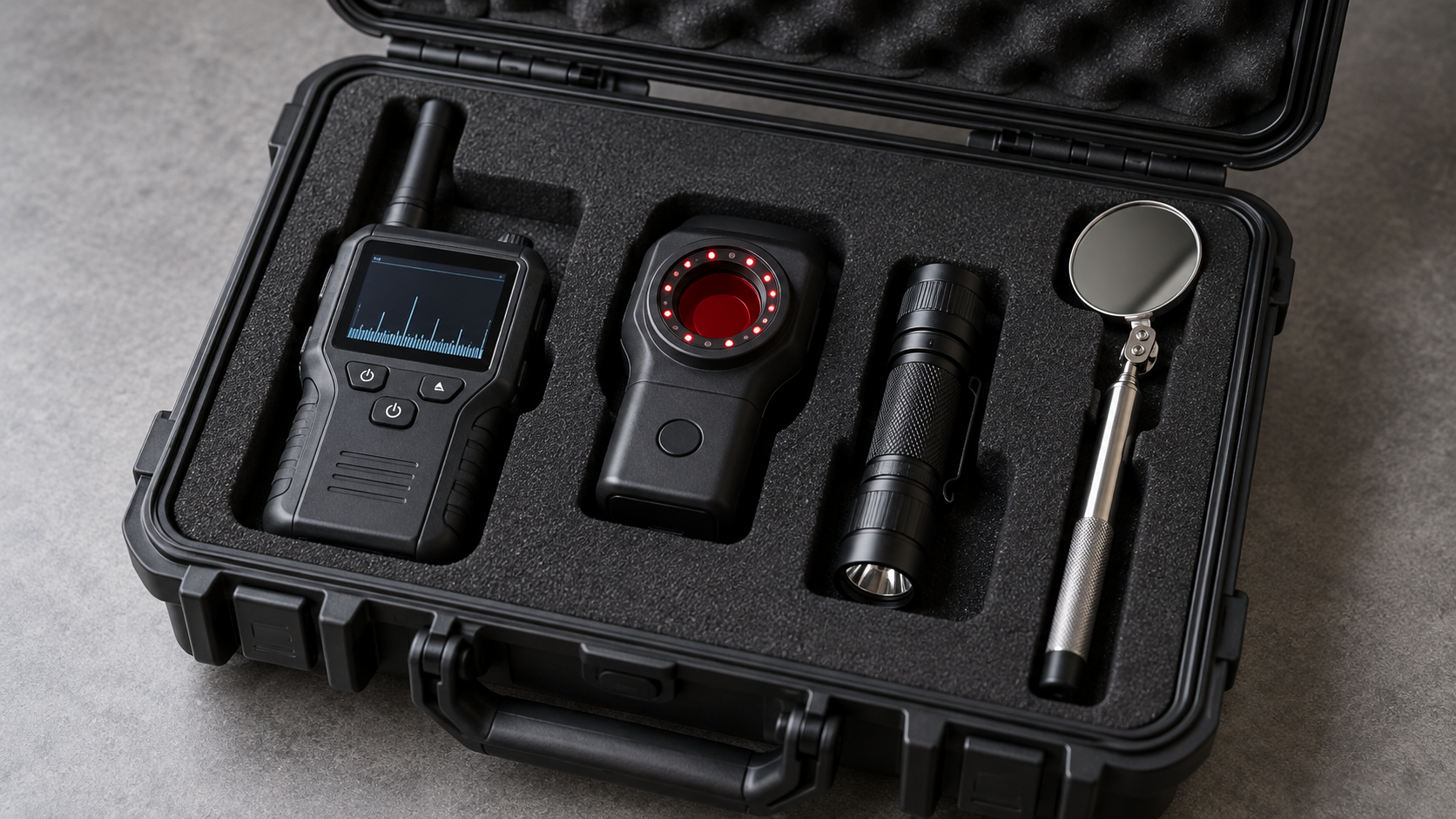
- The product choice is the format: a basic operational kit
- A kit for the moment before conclusions
- Use it to make routine checks genuinely comparable
- Where this kit fits in a broader privacy strategy
- The right use case: a defined space, a defined authority, a defined reason
- How to integrate a basic kit into a credible routine
- 1. Establish the normal environment
- 2. Check after meaningful changes, not only after suspicions
- 3. Separate the inspection from the response
- 4. Keep the scope proportionate
- Choosing basic first is a practical decision
- Our product view: make privacy checks operational
- Frequently Asked Questions
Basic Counter Surveillance Operational Kit: Start Every Privacy Check with a Clear Operational Baseline
Counter-surveillance work becomes unreliable when it starts with a vague concern and an improvised response. A room feels unusual; a vehicle has been accessed; a meeting is sensitive; a controlled workspace needs a privacy reset. In each case, the useful first move is not to turn an inspection into a dramatic search. It is to establish a disciplined baseline.
That is exactly the role of our Basic counter surveillance operational kit. It is a basic counter-surveillance operational kit: a focused product format for organisations and private users who need to approach an authorised privacy check methodically. We select this format for the moment when a scattered collection of assumptions must become a repeatable operational task.
It belongs in a practical privacy-protection approach: one that distinguishes a physical inspection from a signal check, separates observations from conclusions, and treats any suspicious finding carefully. This is not a theatrical gadget purchase. It is an operational starting point for lawful checks in spaces, vehicles and assets under the user’s authority.
The product choice is the format: a basic operational kit
“Basic” is important here. It defines the purpose of the kit. A basic operational kit is suited to creating a first, consistent layer of counter-surveillance practice: establishing a routine, applying it to a defined environment and documenting what deserves further attention. It is a sensible choice where the objective is an organised initial assessment rather than the creation of a large, highly specialised technical-security capability.
The operational-kit format matters just as much. Counter-surveillance is not simply about owning individual devices. It is about using the right process in the right order. An inspection carried out one way on Monday and another way on Friday provides little basis for comparison. A deliberately structured kit helps turn the check into an operational sequence: prepare the area, reduce avoidable interference, inspect, record observations and restore the normal environment.
This makes the Basic counter surveillance operational kit especially relevant for routine privacy reviews of a meeting room, a home office, a small professional premises, a short-term accommodation used for sensitive work, or an authorised vehicle check. The common denominator is not paranoia. It is the need for a controlled method when privacy is operationally important.
A kit for the moment before conclusions
The most valuable stage of counter-surveillance is often the stage before anyone labels an object or signal as a threat. Everyday environments are full of legitimate electronics: routers, access points, smart displays, chargers, sensors, vehicle systems and personal devices. A responsible inspection must preserve that distinction.
We recommend using a basic kit to produce observations that can be checked, not instant accusations. A new object in a room, an unexpected cable route, an unfamiliar power accessory, an unexplained alteration to furniture or a signal pattern that does not fit the normal operating environment may justify a closer look. On its own, however, an observation is a lead—not a finding.
That restraint is what makes a basic operational format useful in real workplaces. It supports an orderly response when the question is, “Has something changed in this controlled space?” The purpose is to identify anomalies against a known layout and a known routine. It is not to interfere with communications, access private systems or conduct inspections outside the user’s lawful authority.
Use it to make routine checks genuinely comparable
A counter-surveillance sweep has far more value when it can be repeated. Start by defining the scope: which room, which vehicle, which storage area or which temporary work location is being reviewed? Then make the inspection conditions consistent. Record the date, time, persons present, visible changes and any equipment that is normally active in the area.
In a meeting room, this means noting the standard configuration of power points, screens, conference hardware, cable routing and furnishings before a sensitive session. In a vehicle, it means using an authorised inspection process that accounts for normal installed systems and recent maintenance. In a home office, it means separating recognised domestic devices from anything newly introduced or unexpectedly relocated.
These basics may sound administrative, but they are the difference between a useful privacy-control measure and an unrepeatable search. The Basic counter surveillance operational kit is selected for this first operational layer: a defined task, a controlled environment and a clear record of what was seen.
Where this kit fits in a broader privacy strategy
Counter-surveillance is most effective when it is connected to sensible operational habits. A kit can support the inspection phase, but it should sit alongside access discipline, visitor controls, clean-desk practice, device-management rules and appropriate incident escalation. Physical privacy and digital privacy also meet at the boundary of connected equipment: an unfamiliar device in a room is not only a visual anomaly; it can change the risk profile of the whole space.
For that reason, the Basic counter surveillance operational kit is a strong starting point for users who want to formalise their checks before moving into a larger selection of counter-surveillance equipment. It gives the inspection a purpose: identify what is normal, identify what is not, and maintain a clean chain of observations.
It also complements a planned room-security approach. An intrusion alarm serves a different mission: detecting or deterring unauthorised access. Counter-surveillance addresses a separate question—whether the environment should be reviewed for conditions that could undermine privacy. The two are complementary because access events and privacy checks should inform each other, without being treated as the same task.
Likewise, visual protection and counter-surveillance should not be confused. Lawful video surveillance is designed to monitor a defined area for security, safety or operational reasons. Counter-surveillance is the discipline of examining an environment for anomalies that may affect confidentiality and privacy. One protects a site through visible, declared security coverage; the other helps maintain confidence in a sensitive working environment.
The right use case: a defined space, a defined authority, a defined reason
The Basic counter surveillance operational kit is best deployed where responsibility is clear. That includes authorised checks of an organisation’s meeting areas, managed offices, controlled accommodation, owned premises, company assets and vehicles inspected with the appropriate authority. It also suits users who need a repeatable pre-meeting routine before confidential discussions, commercial negotiations or internal reviews.
The strongest use case is usually a practical one: a space has changed, access has broadened, a sensitive session is planned, or a routine inspection schedule is being put in place. The inspection then has a clear operational reason and a clear endpoint. The team checks the agreed scope, records anomalies, preserves the area where necessary and applies the organisation’s response procedure.
That final point is crucial. If an inspection produces a genuinely suspicious observation, avoid contaminating the scene through unnecessary handling or casual discussion. Protect the integrity of the observation, limit access to the area and follow the appropriate internal, legal or specialist response process. A counter-surveillance check is most useful when it leads to proportionate, disciplined decisions.
How to integrate a basic kit into a credible routine
We advise treating a basic kit as part of a short operational protocol, rather than storing it away for an undefined emergency. The routine does not need to be burdensome. It needs to be consistent.
1. Establish the normal environment
Document the room or asset in its approved, expected state. This includes furniture placement, obvious power and data connections, installed equipment and items that routinely remain on site. A written inventory, photographs taken under authorised procedures or a simple room-control record make subsequent checks more meaningful.
2. Check after meaningful changes, not only after suspicions
Apply the procedure after maintenance visits, moves, handovers, access-control incidents, periods of vacancy or before confidential meetings. Waiting for a strong suspicion is often the wrong trigger; a scheduled check after an identifiable change is calmer, more defensible and easier to document.
3. Separate the inspection from the response
The person conducting the initial check should record facts: location, appearance, time and surrounding conditions. The decision on what happens next should be taken through the correct management, security or legal channel. This reduces the risk that a legitimate item is mishandled or that a relevant observation is lost.
4. Keep the scope proportionate
A basic operational kit is particularly valuable when the scope stays clear. Inspect the room being used, the asset being managed or the vehicle covered by the authorisation. Do not turn a routine privacy control into an open-ended search of people, neighbouring premises or systems outside that scope.
Choosing basic first is a practical decision
There is a tendency to equate counter-espionage with the largest or most specialised equipment category available. In practice, the right choice is governed by the inspection environment, the frequency of the check, the operational authority and the ability to follow a consistent procedure.
Choose the Basic counter surveillance operational kit when the priority is to establish a usable baseline and a disciplined inspection habit. It is the appropriate product format for a user who wants counter-surveillance to become an organised part of site privacy—not an occasional reaction driven by uncertainty.
Where the requirement develops into a broader technical-security programme, our counter-surveillance kit range provides a clear route into dedicated operational formats. For users building their understanding of the inspection logic itself, our counter-surveillance guide explains the wider workflow around hidden cameras, microphones and trackers.
And when a specific inspection calls for a signal-focused tool, a dedicated RF signal detector category is the relevant next area to assess. That is a different purchasing decision from selecting a basic operational kit: it concerns the requirements of the environment and the inspection task, rather than the value of having a repeatable starting procedure.
Our product view: make privacy checks operational
The Basic counter surveillance operational kit is for users who understand that privacy is maintained through routine, not guesswork. Its value lies in its position within a disciplined authorised check: a practical beginning, a defined scope and a repeatable process that produces clearer decisions.
For a controlled room, a managed office, an authorised vehicle inspection or a sensitive temporary workspace, this basic operational format helps make the first response more structured. Start with the baseline. Check with purpose. Record what changes. Then act proportionately.
Frequently Asked Questions
What is a Basic Counter Surveillance Operational Kit designed for?
A Basic Counter Surveillance Operational Kit is designed to provide a structured starting point for authorised privacy checks. Its purpose is to help users establish a normal baseline, inspect a defined space or asset methodically, record observations, and identify changes that may deserve further attention. It is intended for routine, controlled checks rather than dramatic searches or immediate conclusions.
Who can use a basic counter-surveillance operational kit?
The kit is suited to organisations and private users who have authority to inspect the relevant space, vehicle, premises, or asset. Suitable contexts include managed meeting rooms, offices, controlled accommodation, owned premises, company assets, home offices, and authorised vehicle checks. The user should have a defined reason for the inspection and remain within the agreed scope of authority.
What types of locations can be checked with this kit?
This operational format can support routine privacy reviews of meeting rooms, home offices, small professional premises, short-term accommodation used for sensitive work, controlled workspaces, and authorised vehicles. It is most useful when the environment is defined and its expected condition can be documented. The goal is to compare the inspected area with its known layout, equipment, and routine.
Does an unusual object or signal prove that surveillance is taking place?
No. A new object, unexpected cable route, unfamiliar power accessory, altered furniture, or unusual signal pattern is an observation or lead, not a finding on its own. Everyday environments contain legitimate electronics, including routers, chargers, sensors, smart displays, vehicle systems, and personal devices. The kit supports careful documentation and further assessment rather than instant accusations.
Why is establishing a baseline important for privacy checks?
A baseline makes repeat checks comparable. It records the expected state of a room, vehicle, or asset, including furniture placement, visible power and data connections, installed equipment, cable routing, and routine items. Without this reference, it is harder to determine whether something has changed. A documented baseline helps turn a privacy check into a consistent operational task rather than an improvised search.
What should be recorded during a counter-surveillance check?
Record the inspection date and time, the people present, visible changes, and equipment normally active in the area. Where an anomaly is observed, document facts such as its location, appearance, time, and surrounding conditions. Room-control records, written inventories, and photographs taken under authorised procedures can make future checks more meaningful and help preserve a clear chain of observations.
When should a routine privacy inspection be performed?
Checks can be performed after meaningful changes rather than only when there is a strong suspicion. Relevant triggers include maintenance visits, office moves, handovers, access-control incidents, periods of vacancy, and preparation for confidential meetings, commercial negotiations, or internal reviews. A scheduled check after an identifiable event is calmer, easier to document, and more defensible than an unstructured reaction.
What should happen if a genuinely suspicious observation is found?
Avoid unnecessary handling or casual discussion that could contaminate the scene or compromise the observation. Limit access to the area where necessary, preserve the integrity of what was observed, and follow the appropriate internal, legal, or specialist response process. The initial inspector should record factual details, while decisions about next steps should be made through the correct management, security, or legal channel.
How does counter-surveillance differ from an intrusion alarm?
An intrusion alarm is intended to detect or deter unauthorised access. Counter-surveillance addresses a different question: whether a space or asset should be reviewed for conditions that may undermine privacy or confidentiality. The two functions can complement each other because access events may inform privacy checks, but they should not be treated as the same operational task.
How does counter-surveillance differ from video surveillance?
Lawful video surveillance monitors a defined area for security, safety, or operational reasons. Counter-surveillance involves examining an environment for anomalies that could affect confidentiality and privacy. Video surveillance provides visible, declared site coverage, while counter-surveillance supports confidence in a sensitive workspace through authorised inspection, baseline comparison, and documented observations.
What are the limits of a basic counter-surveillance operational kit?
A basic kit is intended for an organised initial assessment, not for building a large specialised technical-security capability. It should not be used to interfere with communications, access private systems, inspect people, search neighbouring premises, or examine systems outside the user’s authority. Its value comes from keeping the task defined, proportionate, repeatable, and focused on observations within a controlled environment.
When might a dedicated RF signal detector be relevant instead?
A dedicated RF signal detector may be relevant when a specific inspection requires a signal-focused tool. That is a separate decision from choosing a basic operational kit, which prioritises a repeatable inspection procedure and operational baseline. The appropriate choice depends on the environment and the particular inspection task, rather than on the general value of having a disciplined routine.



Comments (0)
Post a comment