
- Three counter-surveillance systems for analysing radio transmissions
- Technical comparison: Delta S vs Delta X G2/6 vs Delta X G2/12
- Delta S: an RF search system covering up to 6 GHz
- Delta X G2/6: additional capabilities for a TSCM audit
- Delta X G2/12: extending searches to transmissions between 6 and 12 GHz
- How to choose a spy microphone and hidden camera detector
- Frequently asked questions about DigiScan Labs detectors
- Are the Delta S and Delta X G2/6 equivalent because both reach 6 GHz?
- Does the Delta X G2/12 detect all 5G communications?
- Can you listen to conversations from an encrypted digital microphone?
- Which model should a business choose?
Looking for a spy microphone detector or a professional system for inspecting your premises? The DigiScan Labs Delta S, Delta X G2/6 and Delta X G2/12 all use radiofrequency analysis, but their capabilities differ. To choose the right one, consider spectrum coverage, measurement tools and the additional checks your inspection requires.
The Delta S focuses on RF searches from 60 MHz to 6 GHz. The Delta X G2/6 extends analysis into lower frequencies and adds a multifunction probe. The Delta X G2/12 follows the same approach while extending coverage to 12 GHz. This comparison explains what those differences mean and how to choose for your needs.
Three counter-surveillance systems for analysing radio transmissions
These are electronic counter-surveillance systems, also known as TSCM equipment. They combine a receiver unit with a Windows laptop or tablet. The software displays signal levels, the spectrum, changes over time and alarms. An operator can investigate a suspicious signal and look for its source.
All three models offer dedicated modes for mobile communications, wireless devices and RF jammer detection. They can analyse Wi-Fi and Bluetooth transmissions within their supported bands, mask the background RF environment and keep logs for extended monitoring.
In practice, every detected signal needs checking: a phone, Wi-Fi access point or authorised device can also transmit. Detecting a transmission does not, by itself, prove that a spy device is present.
Technical comparison: Delta S vs Delta X G2/6 vs Delta X G2/12
| Feature | Delta S | Delta X G2/6 | Delta X G2/12 |
|---|---|---|---|
| Frequency range | 60 MHz – 6 GHz | 9 kHz – 6 GHz | 9 kHz – 12 GHz |
| Analogue-to-digital conversion | 12 bits | 14 bits | 14 bits |
| Stated dynamic range | 72 dB | 84 dB | 84 dB |
| Spectral resolution | 11 / 21.9 kHz | 9.8 kHz | 9.8 kHz |
| Displayed level unit | dB | dBm, calibrated analyser | dBm, calibrated analyser |
| Sweep with / without Burst Hunt | 8 / 10 GHz per second | 7 / 11 GHz per second | 7 / 11 GHz per second |
| Real-time bandwidth | 24 / 27 MHz | 27 MHz | 27 MHz |
| Multifunction probe included | Not listed in the standard package | Yes: cables, low frequencies and infrared | Yes: cables, low frequencies and infrared |
| Demodulation | AM, FM | AM, FM, CW, USB, LSB | AM, FM, CW, USB, LSB |
| Weight with antennas, without computer | 3 kg | 3.5 kg | 3.5 kg |
Manufacturer specifications consulted on 9 October 2026. Sweep speeds do not mean that the entire frequency range is observed simultaneously. Check the product pages for Delta S, Delta X G2/6 and Delta X G2/12 for the available package options.
Delta S: an RF search system covering up to 6 GHz
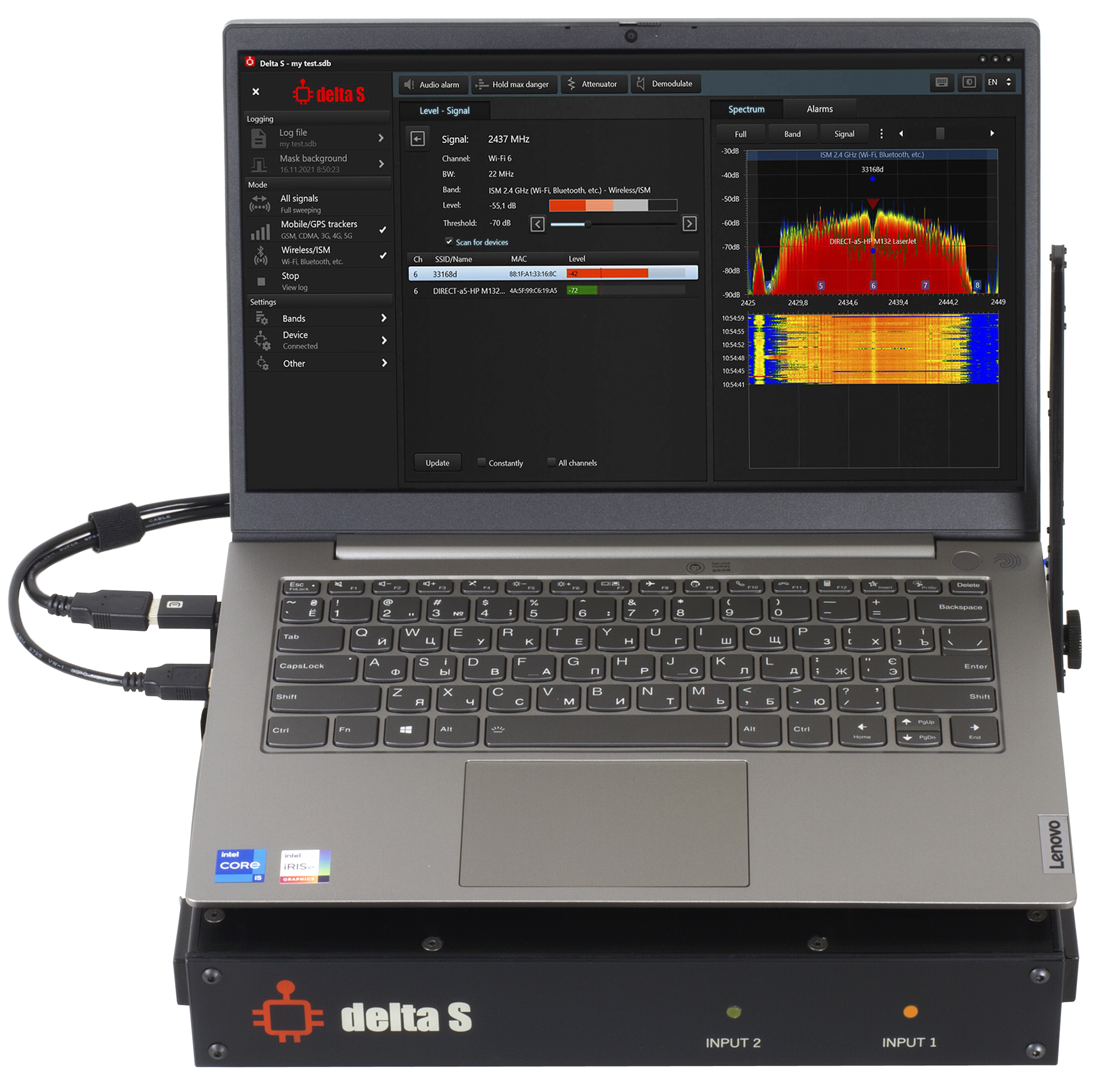
The DigiScan Labs Delta S suits an inspection focused on radio transmissions within its operating range. In offices or meeting rooms, it lets an operator examine the RF environment before investigating unusual signals in greater detail.
Its main frequency limitation is at the lower end: it does not cover frequencies below 60 MHz. The Delta X multifunction probe is also not listed in its standard package. Its 12-bit conversion and 72 dB dynamic range distinguish it from the Delta X models.
Our view: consider the Delta S when your inspection scope is clearly focused on detecting radio transmissions. For an audit that also covers cabling and lower-frequency signals, the Delta X models provide additional tools.
Delta X G2/6: additional capabilities for a TSCM audit
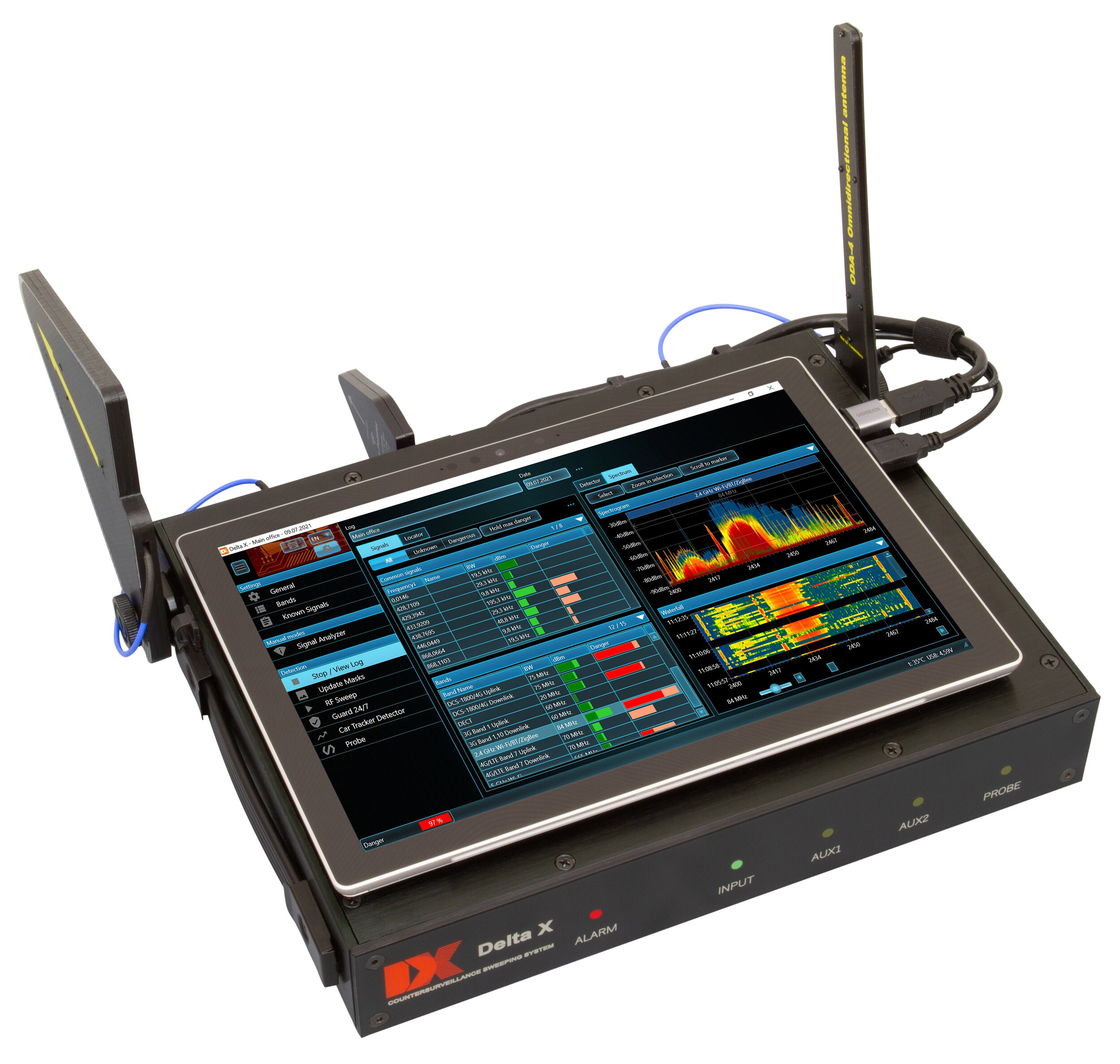
The Delta X G2/6 retains the 6 GHz upper limit but starts at 9 kHz. It uses a calibrated dBm analyser, 14-bit conversion and a stated 84 dB dynamic range. These features provide a different measurement platform from the Delta S.
The included multifunction probe supports dedicated inspections of signals in cables, infrared transmissions and low-frequency electromagnetic emissions. It complements searches performed with the antennas. Each probe mode has its own operating range: it does not perform infrared analysis “up to 6 GHz”.
Our view: the G2/6 is a suitable option for professionals who want to extend inspections beyond typical radio transmissions without requiring RF coverage above 6 GHz.
Delta X G2/12: extending searches to transmissions between 6 and 12 GHz
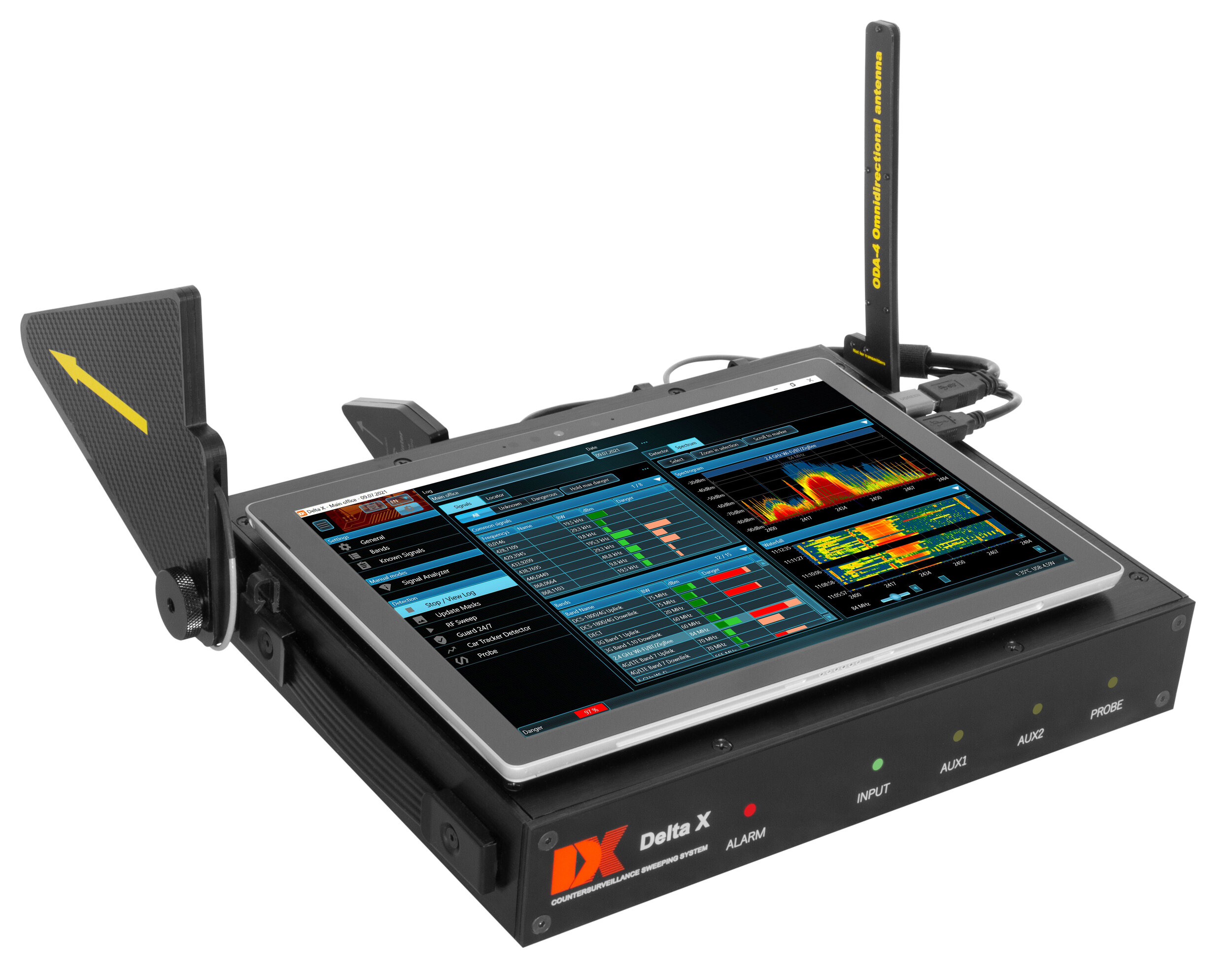
The DigiScan Labs Delta X G2/12 shares the G2/6’s main measurement features and multifunction probe. The decisive difference is coverage up to 12 GHz, with a dedicated antenna input for the 6–12 GHz range.
The benefit is specific: a signal above 6 GHz within that range can fall within the G2/12’s search coverage, while it lies outside the other two models’ ranges. 12 GHz does not mean twice the detection distance or twice the sensitivity. The main advantage is the extension of the frequencies examined.
Our view: choose the G2/12 when your inspection requirements include searches above 6 GHz. This advice is based on its coverage; it does not guarantee detection of every threat.
How to choose a spy microphone and hidden camera detector
Start by defining what you need to inspect. Searching for radio transmissions within a known range, checking cabling as well, and carrying out a sweep above 6 GHz are different requirements. The right equipment should cover that scope and provide tools the operator knows how to use.
Remember the computer requirements. DigiScan Labs specifies, among other requirements, Windows 10 or 11, at least 8 GB of RAM, a 128 GB SSD and two USB ports, including one SuperSpeed port. These systems draw power from the connected computer; they do not operate as standalone devices with a built-in screen. Check the package contents before buying.
For RF searches, a device must transmit during observation for its transmission to be detected. A recorder that stores data only on a memory card, without a detectable radio emission, requires other inspection methods. The quality of an audit also depends on the physical inspection and the operator’s procedure.
You can compare other formats in our selection of RF signal detectors and counter-surveillance equipment.
Frequently asked questions about DigiScan Labs detectors
Are the Delta S and Delta X G2/6 equivalent because both reach 6 GHz?
No. The G2/6 reaches lower frequencies, uses a different measurement architecture and includes a multifunction probe. Sharing the same upper frequency limit does not make their capabilities identical.
Does the Delta X G2/12 detect all 5G communications?
Its RF coverage ends at 12 GHz. A transmission above that limit lies outside its range, regardless of the standard used. Check the frequencies you need to inspect instead of relying only on a “5G” label.
Can you listen to conversations from an encrypted digital microphone?
Detecting the spectrum of a transmission does not imply access to its content. The Delta X manual distinguishes signal detection from analogue audio demodulation: the latter does not let an operator listen to the digital or encrypted communications described.
Which model should a business choose?
Our recommendation depends on the inspection scope: Delta S for RF searches from 60 MHz to 6 GHz; G2/6 to add lower frequencies and the probe; G2/12 when the 6–12 GHz range also needs to be covered.
Unsure which of these three DigiScan Labs systems to choose? Tell Europe-Connection which premises you need to inspect, which transmissions you are looking for and what your mission requires. We will help you choose equipment suited to your use.



Comments (0)
Post a comment