
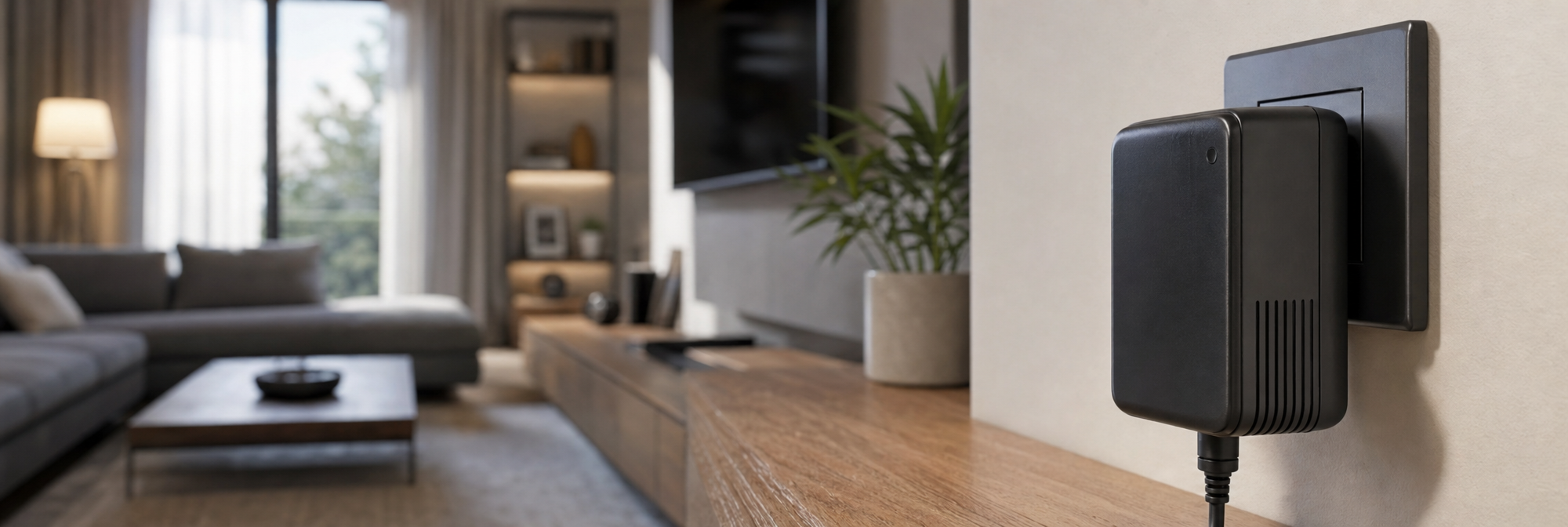
12V Mains Charger 4K Wi-Fi Spy Camera: Discreet 4K Observation in a Charger Format
Some observation requirements call for a camera that does not visually announce itself as a camera. Not because visibility has no place in security—clearly signposted systems remain highly relevant—but because the objective may be to document a specific indoor area without turning the device itself into the centre of attention. That is precisely the role of our 12V mains charger 4K Wi-Fi spy camera.
We selected this model around a very specific combination: a 12V mains-charger format, 4K video designation and Wi-Fi connectivity. It is a product for authorised users who need a discreet visual point in an indoor setting where a charger-shaped object is coherent with the surrounding environment. The value is not in making a dramatic promise about “invisible” surveillance. It is in choosing a form factor that can fit a genuine room layout while retaining two meaningful technical criteria: 4K and Wi-Fi.
For a broader view of the available formats, our spy camera range includes solutions built for very different environments and observation objectives. This particular product is not an outdoor trail camera, a conventional visible CCTV unit or a tiny bare-board camera. Its strength is the deliberate meeting point between a familiar charger form and connected, high-resolution video.
A camera selected for a believable indoor location
With concealed equipment, the object format is never an afterthought. A camera may be technically capable, yet poorly suited to the place in which it is installed. A charger-format camera belongs in locations where 12V charging equipment has a real practical reason to be present. This makes the installation decision more disciplined: begin with the room and its legitimate use, then decide whether this format is appropriate.
Typical authorised contexts include protecting a private area under the user’s control, monitoring access to a designated indoor space, or documenting repeated incidents in a managed environment where appropriate notice, consent and legal grounds are in place. In each case, the intended scene should be defined before the product is positioned. The meaningful question is not simply, “Where can this be placed?” It is, “What defined area needs to be observed, and does a 12V charger format genuinely belong there?”
That distinction matters. A believable installation is not achieved by placing an everyday-looking object anywhere. It comes from matching the object to a credible use location and from keeping the observation purpose proportionate. Our hidden-camera selection is built around this principle. If the room calls for an integrated everyday-object format, explore the wider hidden spy camera category; if the environment requires overt coverage and deterrence, a conventional video-security approach is often the more appropriate choice.
Why 4K is central to this product’s positioning
The 4K designation is not merely a headline specification. In a discreet indoor observation setup, video detail is often the reason for choosing the camera in the first place. A scene that appears adequately covered can still contain small but important visual elements: hand movements near an item, the sequence of an interaction, objects being moved, or a person entering and leaving a defined zone. Higher-resolution capture is relevant because it gives the operator more visual information to work with when reviewing what happened.
That does not mean that resolution alone determines whether an image will be useful. Scene design remains decisive. A camera pointed at an overly broad room may record much more space than necessary while making the activity of interest too small within the frame. Conversely, a carefully limited view of a doorway, workstation, cabinet area or other authorised point of interest can make the available detail more relevant to the event being documented.
For this reason, we recommend deciding on the observation zone before making the installation permanent. Stand at the intended position and consider the line of sight in practical terms: where do people naturally move, where does the relevant action occur, and what elements in the background add no value? A tighter, purpose-led composition is usually more useful than a broad, indiscriminate one. It also supports a more proportionate use of surveillance.
4K should therefore be treated as a quality-oriented selection criterion, not as a substitute for placement. It gives this charger-format camera a clear role for users who place a premium on visual detail within a deliberately chosen indoor scene. Readers comparing resolution labels and their practical implications can also consult our spy camera resolution resource, while keeping this product presentation focused on the specific 12V charger format.
Wi-Fi: the connected dimension of a discreet camera
The second defining characteristic is Wi-Fi. A Wi-Fi camera belongs to a connected-camera workflow rather than to a purely standalone category. That is a material choice in the planning stage, because the installation environment must be approached as both a physical location and a networked setting.
In practical terms, the camera’s placement must make sense on both levels. The charger form must be suitable for the room, and the intended Wi-Fi environment must be considered as part of the overall setup. Treat these as a single decision rather than as two unrelated tasks. A discreet object positioned only for visual appearance, without planning for its connected use, is not a well-designed deployment.
Our Wi-Fi spy camera category is useful when Wi-Fi is the main product filter. Within that family, this model stands apart through its 12V mains-charger appearance and its 4K designation. It is a focused answer for users who require both attributes in the same discreet indoor device.
Connected equipment should also be handled with the same seriousness as any other networked security device. Access to the associated network, device management and the people authorised to handle recorded material should be planned from the start. Good practice is not an accessory to a camera installation; it is part of what makes the installation professionally controlled.
When this charger-format camera is the right choice
This product is particularly relevant when the observation point is indoors, the charger format is credible in that specific location, 4K is a selection priority, and Wi-Fi is part of the required camera workflow. It suits a narrow brief well: discreet visual observation at a fixed, authorised point where an ordinary charger-shaped object is more appropriate than a visibly mounted camera.
It is also a sensible selection when the user wants to avoid over-specifying the project. Not every requirement needs a large visible camera system, an outdoor housing or a mobile network camera. Selecting a device that matches the actual environment is generally more effective than adapting an unsuitable category to it. The 12V mains charger 4K Wi-Fi spy camera is built around a particular environment rather than trying to be every type of camera at once.
Choose another category when the mission changes
A product presentation should be candid about category fit. If the objective is overt deterrence, broad coverage of a property or an established security installation, consider video surveillance rather than a concealed charger-format camera. Visible systems can communicate that an area is monitored, which is a different security outcome from discreet documentation.
If the requirement is exterior observation, a charger-format indoor object is not the natural starting point; outdoor-focused cameras are designed around another type of deployment. If the observation location has no relevant Wi-Fi environment, the key product requirement has changed and the Wi-Fi criterion should be reconsidered before selecting a camera. And where the objective is inspection of a confined or inaccessible area rather than room observation, an inspection camera is the more relevant family.
These are not minor distinctions. They prevent a common procurement error: choosing by appearance first and operational purpose second. We advise doing the reverse. Define the legitimate scene, decide whether the camera should be discreet or overt, establish whether a charger-shaped device belongs in that location, then select the product attributes that serve that plan.
Installation thinking: keep the scene intentional
The best result begins with a short observation brief. Identify the exact event, route or area that needs to be documented. Set the boundaries of the scene so the camera is directed towards that legitimate purpose, not towards unnecessary private activity. Consider normal room use, likely changes in lighting and the practical position of the charger-format object. A well-considered scene is easier to review and easier to justify.
Then consider the visual logic of the room. In a charger-format deployment, the object should sit where such an item has a practical place. Avoid forcing the format into a location that makes little sense. This product’s discreet value comes from coherence: the camera’s form, the intended visual field and the room’s ordinary equipment should all align.
Finally, keep the setup disciplined after installation. Limit handling of footage to authorised people, maintain a clear reason for the monitoring activity and review whether continued recording remains necessary. Where an organisation is involved, these habits support accountable operation rather than ad-hoc use.
Lawful, proportionate use comes first
Concealed camera use carries responsibilities precisely because the equipment is discreet. Use this product only for lawful, authorised purposes, in spaces and circumstances where recording is permitted. Privacy, notice, consent, employment rules, data-protection obligations and evidence-handling requirements can vary according to the country and the context. The correct approach is to define the lawful basis and the appropriate safeguards before deployment—not after an incident occurs.
Europe-Connection’s spy camera laws resource provides the wider legal context for evaluating a planned use. It complements this product presentation without changing its core point: the 12V mains charger 4K Wi-Fi spy camera is a specialist choice for an authorised, fixed indoor observation point where charger-format discretion, 4K and Wi-Fi are all relevant.
Our verdict: a precise product for a precise brief
The 12V mains charger 4K Wi-Fi spy camera earns its place in our range because it answers a distinct need rather than a generic one. Its charger format supports discreet integration in an appropriate indoor environment; its 4K designation prioritises visual detail; and its Wi-Fi connectivity places it in a connected-camera workflow.
Select it when those three elements genuinely belong together in your authorised project. Start with the observation purpose, make the charger location credible, frame only the area that matters and treat connected-camera management as part of the installation. That is how this product delivers its real value: not as a conspicuous security device, but as a considered 4K Wi-Fi observation tool in a familiar 12V mains-charger form.
Frequently Asked Questions
What is a 12V mains charger 4K Wi-Fi spy camera?
It is a discreet indoor camera designed in the form of a 12V mains charger. Its key characteristics are a 4K video designation and Wi-Fi connectivity. It is intended for authorised observation of a defined indoor area where a charger-shaped object has a credible practical place, rather than for outdoor use, broad visible CCTV coverage or inspection of confined spaces.
Where is a charger-format spy camera most appropriate?
This format is most appropriate indoors, in a location where 12V charging equipment genuinely belongs. The article recommends starting with the room’s legitimate use and the exact area to be observed. Suitable authorised contexts may include a private area under the user’s control, access to a designated indoor space, or a managed environment with the necessary notice, consent and legal grounds.
Why does this camera have a 4K designation?
The 4K designation is relevant because discreet observation may need to capture visual detail, such as hand movements, items being moved, interaction sequences or entries and exits from a defined zone. However, 4K does not replace good scene design. A tightly framed view of an authorised doorway, workstation or cabinet area can be more useful than a broad view where relevant activity appears too small.
Does 4K resolution guarantee useful footage?
No. Resolution is only one factor in useful footage. The camera should be positioned around a specific observation zone, with attention to where people move, where the relevant activity happens and which background elements add no value. The article recommends assessing the line of sight before making installation permanent and favouring a limited, purpose-led composition over broad, indiscriminate coverage.
What does Wi-Fi change when planning this camera’s installation?
Wi-Fi makes this a connected-camera product rather than a purely standalone device. Planning must therefore address both the physical installation and the intended network environment. The charger-shaped form should make sense in the room, while network access, device management and the people authorised to handle footage should be considered from the start as part of one controlled setup.
Who should handle the recorded material?
Recorded material should be handled only by authorised people. The article advises planning access to the associated network, device management and footage handling before deployment. Limiting access, keeping a clear reason for monitoring and reviewing whether continued recording remains necessary are presented as important practices, particularly when an organisation is involved.
When is this 12V charger camera the right choice?
It is a suitable choice when the observation point is fixed and indoors, the charger format is credible at that location, 4K visual detail is a priority and Wi-Fi is required for the intended workflow. It addresses a focused need: discreet observation of an authorised area where a familiar charger-shaped object is more appropriate than a visibly mounted camera.
When should I choose a visible security camera instead?
Choose conventional video surveillance when the aim is overt deterrence, broad property coverage or an established visible security installation. Visible systems can communicate that an area is monitored, which differs from discreet documentation. The article also advises considering another category when the task is outdoor observation, when no relevant Wi-Fi environment exists, or when inspecting a confined or inaccessible area.
How should I define the camera’s observation area?
Begin with a short observation brief identifying the exact event, route or area to document. Direct the camera only towards that legitimate purpose and avoid capturing unnecessary private activity. Consider normal use of the room, changes in lighting and the practical position of the charger-format object. Clear scene boundaries make footage easier to review and help support proportionate use.
Is this camera designed for outdoor surveillance?
No. The article identifies it as a specialist device for a fixed, authorised indoor observation point. A charger-format indoor object is not presented as the natural starting point for exterior observation. Outdoor-focused cameras are designed for a different type of deployment, so the operational purpose and environment should be established before selecting a camera category.
What legal considerations apply to a concealed charger camera?
It should be used only for lawful, authorised purposes in places and circumstances where recording is permitted. Requirements concerning privacy, notice, consent, employment rules, data protection and evidence handling can vary by country and context. The article advises defining the lawful basis and suitable safeguards before deployment, rather than waiting until after an incident.
What makes an installation believable and proportionate?
A believable installation comes from matching the charger format to a location where it has a practical reason to be present. It should not be placed arbitrarily just because it resembles an everyday object. Proportionate use also means defining a limited observation purpose, framing only the relevant area and ensuring that the device’s form, visual field and the room’s normal equipment are coherent.



Comments (0)
Post a comment